
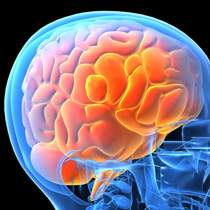
 Is it possible to prevent or mitigate Alzheimer’s disease through supplementation? Researchers are looking at magnesium’s role in protecting the aging brain from the ravages of Alzheimer’s disease. A new, highly absorbent foam type of magnesium-L-threonate (MgT) concentrates in the brain and restores the types of brain deterioration found in Alzheimer’s disease and other types of memory loss. Experimental models predict improvement in both short-term memory and long-term memory.
Magnesium is an important nutrient for proper brain functioning. Recent research has showed that magnesium specifically promotes memory and learning due to its beneficial effect on synaptic plasticity and density. Calcium and magnesium work together.
Continue reading “Neurodegeneration Reversed by Novel Magnesium Compound MgT”

 There is no cure for the degenerative brain disease called Alzheimer’s, and current conventional treatments have a limited effect. However, research into a drug used to treat skin cancer may show “stunning” potential to help with Alzheimer’s disease.
 Can electromagnetic (EMF) pollution represent any harm to the human body? These three research studies may indicate ill effects of EMF pollution on the brain and body. The first studied cell phones’ impact on brain chemistry; the second looked at the impact on the brain of radiation from wireless devices; and the third revealed that the brain may be very sensitive to even very weak electromagnetic fields.
 Do you dread looking in the bathroom mirror when you first wake up? Scared of seeing baggy, puffy eyes or horrible dark circles under your eyes?
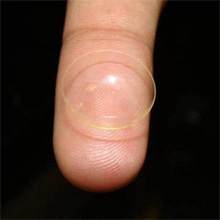 Treatment for the second leading cause of vision loss and blindness, glaucoma, may be improved with a new type of contact lenses that are loaded with Vitamin E. These new Vitamin E contact lenses may serve as delivery devices to treat glaucoma and other eye diseases such as dry eye and cataracts.
 A new study published in the November 2011 Journal of Optometry confirms improved vision in elderly patients with early Macular Degeneration through nutritional supplementation with Zeaxanthin (a carotenoid in the family of lutein).
 Eye floaters are imperfections in the eye that look like dark shapes. They are made of protein and other discarded cell material. Although you may perceive them as being in front of the lens, they are in fact on the inside of the eye.
 A study indicates that melatonin supplements may slow and even reverse the effects of age-related macular degeneration (ARMD). ARMD is the leading cause of serious vision loss in elderly persons.
 A recent study showed that bipolar children spend less time making eye contact with people – looking at their eyes – versus typical children. Instead of looking at the eyes, bipolar children and children with severe mood dysregulation in the study spent less time looking at the eyes when observing faces. Instead, they spent more time with their eyes on the mouth and nose.