Vitamin E Contact Lenses for Glaucoma Instead of Eye Drops

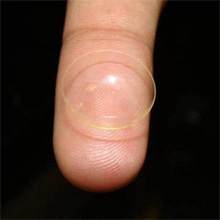
vitamin E contact lensTreatment for the second leading cause of vision loss and blindness, glaucoma, may be improved with a new type of contact lenses that are loaded with Vitamin E. These new Vitamin E contact lenses may serve as delivery devices to treat glaucoma and other eye diseases such as dry eye and cataracts.

Medicated eye drops are typically prescribed as the primary treatment for glaucoma; however, the medicine is washed away in 2 to 5 minutes and most of it doesn’t reach the target tissues. Instead, most of eye drops enter the blood stream, where they may cause unwanted side effects.

Continue reading “Vitamin E Contact Lenses for Glaucoma Instead of Eye Drops”
Baby Boomer Natural Eye Care in the 21st Century

As the “Baby Boomer” generation in the United States approaches their 60’s and beyond, the incidence of eye disease in this aging population will rise. Eye problems become more prevalent as an individual ages. What are the most common eye diseases in older people? How can eye geriatric eye disease be prevented and addressed naturally? And what does Baby Boomer natural eye care look like?

Macular Degeneration

A major reason for visual impairment and blindness in adults aged 50+ is Macular Degeneration, also known as ARMD (Aged-Related Macular Degeneration). Vision in the center of the visual field is impaired, but peripheral vision remains. People with macular degeneration have difficulty writing, driving, recognizing faces and reading. Symptoms include:

  • Colors look dim
  • Words appear blurred or difficult to read
  • Straight lines look wavy
  • Dark or blank areas block the center of your vision
  • Distinct shapes are blurry
  • Fog in the center of your vision

Anyone with any of these symptoms should Continue reading “Baby Boomer Natural Eye Care in the 21st Century”

Cataracts Linked to Nutrition Deficiencies Per US Government Scientists

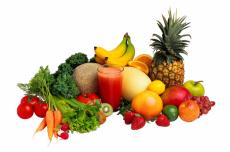
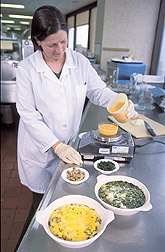
Cataracts - Nutritional Deficiencies
Image via USDA

US government scientists realize the important role that nutrition plays in the health of the eyes.

Cataracts are caused by an accumulation of free radicals that cloud the lens of the eye through a process called oxidation.  Antioxidants, these researchers agree, “are compounds in foods that help maintain healthy cells and tissues in the eye and other organs.”  Prime sources of antioxidants include: leafy greens, eggs, blueberries, and bilberries.

In a study of almost 500 middle aged and older women, it was discovered that those who consumed more riboflavin, folate, beta carotene, lutein, zeaxanthin, and vitamins C and E were less likely to suffer from cataract symptoms than did those who consumes the least amounts of these nutrients.

Another interesting fact that may affect your daily supplement regimen?  Women who took vitamin C supplements regularly over the previous decade were 64% less likely to have

Moreover, those who used vitamin C supplements for 10 or more years were 64 percent less likely to have opacity within the eyes than counterparts who did not take vitamin C.

Source: USDA Agricultural Research Service

Learn more about how to prevent cataracts with our self-help recommendations at our website.

Traditional Chinese Medicine’s Approach to Cataracts and Dark Circles Under the Eyes

Traditional Chinese Medicine offers invaluable tools for diagnosing and treating conditions of the eyes.

For example, dark circles under the eyes relate can be attributed to imbalances in the kidneys, the organs that provide us with our vitality. People who present with a “Kidney Qi Deficiency ” are advised to follow one of the simplest at home remedies around: get sufficient sleep.

Chinese Medicine attributes the onset of cataracts often to deficiencies in the kidney and liver meridians. The resulting reduction of the energy and blood flow to the eyes leads to poor eye nutrition and eventually can cause the lens to become opaque.  Also, the spleen meridian plays a role in the nourishment of the eyes.  A dysfunction along this meridian can cause cataracts.

This information is from a chapter of our book, A Comprehensive Manual for Practitioners of Oriental Medicine.

Cataracts Linked to Diet and Lifestyle Choices

Are cataracts just an inevitable part of getting older?  There is a lot of scientific research that indicates your diet and lifestyle choices actually have a lot to do with your risk of developing cataracts.

Smoking

Another study points to cigarettes as being a major cause of cataracts.  In fact, smoking is implicated as the cause 20% of all cataracts cases.  Men who smoke more than a pack a day increase their risk for cataracts by 205%!  For female smokers, that risk increases a still substantial 63%.

Diet

Vegetarians are less likely to get cataracts, according to British researchers. Because we know that cataract formation is often related to nutrition, scientists decided to study whether eating meat was related to whether one develops cataracts. A study of nearly 28,000 non-diabetic people over age forty determined that one’s risk of cataracts could be tracked based on diet.  Meat eaters were most likely to develop the eye condition followed by those who ate fish but not meat, and then vegetarians.  Vegans were the least likely to develop cataracts.  Source:  American Journal of Clinical Nutrition

Vitamin & Mineral Rich Diet

Researchers have determined that  women who eat a healthy vitamin- and mineral-rich diet may have a lower risk of developing  “nuclear” cataract – cataracts that affect the central part of the lens.  This is most prevalent type of cataract in the United States.  Risk of developing this type is greater as we age. They found in almost 2000 women that 41% had cataracts or had cataracts removed – that the women with no cataracts had a better overall diet than those who did have a cataract history. Published: June, 2010, Archives of Ophthalmology.

Glutathione

One important nutritional compound to lower the risk cataracts is glutathione which helps prevent the free radical damage that can lead to cataract formation. Glutathione is essential to the creation of tissue enzymes and is crucial to the prevention of free radical damage. Studies have shown that people who have cataracts have 80% less glutathione in their eyes than they need. Natural sources of glutathione include eggs, broccoli, avocados, garlic, onions

Sugar

One study indicates that sugar of all kinds can impinge upon the eye’s ability to keep the lens clear.

Cataracts Surgery Can Involve Increased Risk for Patient With Diabetes

People who have diabetes often suffer from cataracts as well; in fact, they are more likely than the general population to develop cataracts.  Diabetics considering cataracts surgery need to consider their increased risk factors before they chose to undergo the procedure.

It is very important that patients’ blood sugar is well-controlled before surgery to increase their post-surgical healing ability.  It is especially important that patients’ inflammation levels are monitored and kept as low as possible during and after surgery.

According to Rupert Menapace, MD, of OSN Supersite, “We need atraumatic surgery to minimize the inflammatory response and avoid induction or exacerbation of diabetic retinopathy and macular edema. Even in uneventful cataract surgery, the risk of developing macular edema is high in diabetic patients, up to 10%.”  Macular edema is swelling of the macula, the small area of the retina responsible for central vision, of which the central 5% of the retina is most critical to vision.

Source: “Cataract surgery with comorbidities requires careful surgical management” at www.osnsupersite.com.

Vegetarians Less Likely to Develop Metabolic Syndrome

Metabolic SyndromeMetabolic syndrome, a precursor to incidences of stroke, diabetes, and heart disease is more prevalent in people who eat meat.

A new study in the journal Diabetes Care describes how vegetarians are 36% less likely to develop metabolic syndrome than meat consumers.  Researchers conclude that a plant based diet can help to ward off the diseases associated with metabolic syndrome.  These findings offer further proof that a healthy diet can reduce one’s chances of developing cardiovascular disease.  Source: Foodconsumer.org

Eating well can also  reduce your risk of developing eye diseases like cataracts and diabetic retinopathy.  At Natural Eye Care we have developed The Vision Diet to help you eat your way to healthier eye sight.


Cataracts and Glaucoma in Children Linked to Genetic Defect

Cataracts & GlaucomaA genetic glitch may be responsible for incidents of cataracts in children.

According to a press release from Maine’s Jackson Laboratory, researchers have found that RNA granules, which are key components in the reproduction of genes, might be linked to eye development.  Problems with RNA granules can result in juvenile cataracts and glaucoma.  If there is a problem with a key gene, Tdrd7, the development of the lens of the eye will be compromised, leading to these potentially blinding conditions.

The study was conducted with mice, but scientists believe that when children are missing the essential protein created by this specific gene they will be born with cataracts.  Furthermore, the genetic mutation will mean that even after the surgical removal of cataracts, the affected children will be likely to develop glaucoma because they  “may not have adequate protection from oxidative stress in the drainage structures of the eye.”

These finding will be published in the journal Science.

Source: The Jackson Laboratory

Update: Corneal Thickness Gene

One risk factor for glaucoma is central corneal thickness.

Researchers looking at ethnic populations in Singapore have identified the genes that affect collagen growth, which in turn affects central corneal thickness.  Knowing how these specific genes work can help provide insight into the cause and progression of glaucoma.

Source: hmg.oxfordjournals.org/

Update: Glaucoma Gene

New research shows that genetics, and not necessarily increased eye pressure, can be responsible for the onset of glaucoma.

A study published in the journal Nature Genetics shows that open angle glaucoma is associated with the pathogenic gene PRSS56.  The study was performed by researchers in Sweden, Tunisia, and the US.  The Tunisian scientists based their research on families who suffered from glaucoma while the Americans focused on animal research.

Source: News Medical

Update: Genetic Gene Mutation

A new breakthrough in genetics research has identified the strands of DNA that can responsible for the development of open angle glaucoma.

Australian scientists publishing in Nature Genetics have found two new genetic mutations that can be linked to increased glaucoma risk.  Though the mutation of the gene myocilin is present in only 3% of those who develop the disease, people with the mutation are 3 times more likely to have glaucoma than the general population.

Study authors indicate that this discovery could lead to better screening techniques and earlier detection of the disease often known as the “silent thief” since it progresses and destroys vision without one’s knowledge. Often, when one realizes their sight has been negatively affected by glaucoma the disease is significantly advanced.

Source: ABC Science

Cataracts Linked to Radiation Exposure

Cataracts & Radiation ExposureMany years after the release of radiation disaster at Chernobyl, Russia, cataract have appeared  as one of the health issues changing the lives of those people who were exposed to radiation when the reactor exploded.  This has been reported by  the United Nations Scientific Committee on the Effects of Atomic Radiation, UNSCEAR.

Researchers publishing in the journal Radiation looked at the eyes of 8,607 Chernobyl clean-up workers 12 and 14 years after they were exposed.  Only 3.9% had nuclear cataracts, but 25% had posterior subcapsular or cortical cataracts from radiation exposure. Finding the prevalence of this other type of cataract leads scientists to believe that the exposure limits set for clean up workers by the International Commission on Radiological Protection (ICRP) were in fact too high.  An article at EyeWorld.com states, “Thus,  conventional wisdom regarding acceptable doses of radiation to the eye for space activities are actually not acceptable, according to this study.”

Hopefully, the world will never see another Chernobyl, but this information is important for people who are exposed to radiation in other ways.  Bone marrow transplant patients, for example, are treated with a course of radiation and often develop cataracts many years later.

Sources: Radiation, Eye World

Astronauts, Space Radiation & Cataracts

Cross-sectional data analysis revealed a small deleterious effect of space radiation for cortical cataracts and possibly for PSC cataracts. These results suggest increased cataract risks at smaller radiation doses than have been reported previously.

SOURCE: Chylack LT Jr, Peterson LE, Feiveson AH, et al. NASA study of cataract in astronauts (NASCA). Report 1: Cross-sectional study of the relationship of exposure to space radiation and risk of lens opacity. Radiat Res 2009;172(1):10-20.

For more information, go to Natural Eye Care for Cataract Treatment and Prevention.

Free Radicals May Help the Heart (But Don’t Toss Your Antioxidants!)

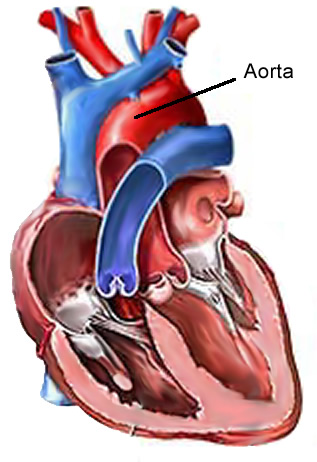
Free Radicals - Heart HealthFree radicals might be a good thing?

At Natural Eye Care, we extol the benefits of antioxidants because they fight the free radicals that lead to oxidation, which in turn cause aging: skin changes such as the appearance wrinkles, and ocular changes, including the development of cataracts and macular degeneration.

Your eyes love antioxidants like those found in bilberry (a close relative to the blueberry) and in high quality supplements.

And yet, a new study published in The Journal of Physiology (online 28 February 2011) describes how free radicals are actually essential to the healthy functioning of the heart.

It is true that high levels of free radicals can lead to heart disease, but the heart does need some quantities of free radicals to help it deal with stressful situations.

As described at Medical News Today, when under stress, the nervous system produces what are called beta-adrenergic receptors.  These beta-adrenergic receptors actually produce free radicals not as a negative byproduct of metabolism (as we usually describe the process), but to make the muscles of the heart contract more strongly when necessary.  The heart is then able to pump more blood throughout the body to nourish and sustain us in stressful situations.

This is not to say that you should toss out your antioxidants, but it does remind us that the body is an amazing and complex creation that rarely allows us to use a one-size-fits-all approach to disease or nutrition.