
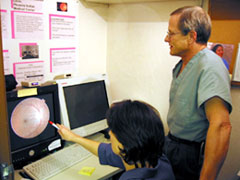
Eye disease and aging generally go hand-in-hand. That means that more people are likely to need surgery for cataracts, but that also means that those same patients are likely to suffer from other conditions like macular degeneration, glaucoma, and diabetic retinopathy. According to the OSN Supersite, this changes the ways that doctors counsel their patients and how they proceed with treatment plans, especially in relation to cataract surgery.
Some sources say that the risk of AMD decreases after one undergoes cataract surgery, but no conclusive scientific studies on the topic have yet been published.
Avoid Multifocal IOL Implants
According to Rosa Braga-Mele, MD, FRCSC, OSN Cataract Surgery Section Editor, people with AMD should probably avoid multifocal IOL implants (lenses intended to help you live without glasses because nearsightedness and farsightedness are meant to be corrected). Dr. Braga-Mele says that these lenses are not ideal for cataract surgery patients with AMD “because of the fact that contrast sensitivity is decreased with a multifocal implant and contrast sensitivity is already decreased” when people have macular degeneration. Source: “Cataract surgery with comorbidities requires careful surgical management” at osnsupersite.com.
Manage Your AMD
It is especially important that those who suffer from cataracts as well as macular degeneration manage their AMD. Take natural approaches to preventing the deterioration of your sight due to AMD by eating well, wearing UV protection sunglasses, reducing stress, and taking high quality supplements as described in our “self-help” protocol.
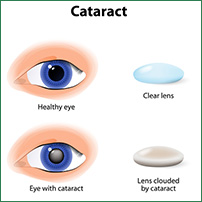 A large study has found no association between prior cataracts surgery and the development of Age-Related Macular Degeneration (ARMD).[1. Association between Previous Cataract Surgery and Age-Related Macular Degeneration. Taylor & Francis. Rim, Tyler Hyungtaek; Lee, Christopher Seungkyu; Chul Lee, Sung; Kim, Sangah; Kim, Sung Soo; Society, Epidemiologic Survey Committee of the Korean Ophthalmological Retrieved: 16 24, May 05, 2016 (GMT)] This study supports the long-term safety and low possibility of side-effects from replacing a cataract-damaged lens with an artificial lens.
 Aflibercept is currently a treatment for wet Age-Related Macular Degeneration (AMD), but it may also prove useful for patients with dry AMD.
 Scientists are putting significant focus on Age-Related Macular Degeneration in their research. This eye disease strikes mostly older adults, over aged 50. The “Baby Boomer” generation is well above age 50, as are their living parents. Understanding the causes and potential treatments for Macular Denegation (ARMD) are important, because vision-impaired elderly people need extra help with their daily activities. Also, quality of life is lowered when vision is poor.
 Lutein absorption can be improved by adding solid-lipid particles to the formula. What does that mean? Lipids are fats and solid-lipids are fats which are solid at room temperature. Researchers have noted that lutein from egg yolks is more readily absorbed than the ester form of lutein. Researchers wanted to know whether combining ester lutein with egg-like phospholipids and fatty acids would improve its absorption rate.
 Age-Related Macular Denegation is a significant cause of vision loss that can often be managed and even improved through targeted nutritional support. It affects mostly people over age 50. While the precise cause of ARMD is not clear, oxidative damage is suspected as being a major factor. It strikes the elderly possibly due to poor diet and nutritional intake over a lifetime, less efficient absorption of nutrients and poor circulation as the body ages. The care needed by vision-impaired elderly could become overwhelming. Let’s take a look at some of the newest research in preventing macular degeneration, as well as treatment and support options.
 Antioxidants have been studied as a way of preventing eye diseases such as macular degeneration and cataracts. Oxidative damage (free radical damage) may be a contributing cause of these diseases. People concerned about developing these problems may consider taking both dietary and supplemental
  Chinese scientists have identified nutrients that come from marine algae that may prove to provide even better support for vision health problems due to
 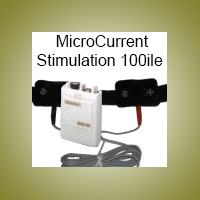 A small study has shown microcurrent stimulation (electrotherapy) to benefit macular degeneration patients. While the study did not have controls, the research on 25 eyes with dry age-related macular degeneration, and 6 eyes with wet age-related macular degeneration found:
 Eating plenty of fruits and vegetables helps ward off a common eye disease, age-related macular degeneration (ARMD). A study in Acta Ophthalmologica looked at the relationship between intake of antioxidants (including the antioxidant lutein) and the incidence of macular degeneration. It found that people with low intake of antioxidants were twice as likely to have this eye disease versus controls.