
 Blue light is emitted from all handheld electronic devices as well as desktop and laptop computers and televisions. It is the shortest wave length light in the visible spectrum and causes significant damage to many parts of the eye seriously impacting present and future vision capacity. Damage from blue light from smartphones is particularly important because smartphones are often used in dim light and are used close to the eyes. Unlike ordinary computer vision fatigue, damage from blue light is serious, cumulative and irreversible. Continue reading “Computers & Your Eyes II: How Blue Light Damages Vision”
Category: Macular Degeneration
Computers & Your Eyes: A 3-Part Series
Eye strain is the symptom that most people associate with overuse of electronic visual display devices — from television to laptops & desktops — to smartphones — to handheld games and ebooks.
Smartphone ownership has grown explosively with 68% of Americans owning smartphones in 2015 compared to 35% in 2011. Most adults under age 50 (79%-85%) are smartphone owners, and of the middle-age to senior group (age 50-64) more than half own and use smartphones. This growth has lead to increased rates of a number of vision conditions.
Perhaps even more alarming, many health professionals regard smartphone addiction with its negative consequences as an emerging health trend.
In this 3 part series we’re examining the consequences of damage from these electronic devices:
- Part I discusses the impact of computer vision syndrome and how to protect your eyes.
- Part II looks at just how blue light damages vision
- Part III discusses smartphone addiction and its consequences.
Myopic Macular Degeneration
Myopic macular degeneration is not commonly known in the U.S. even though it is the 7th highest ranking cause of legal blindness. In other parts of the world, such as Japan and China, it is the second highest cause of legal blindness. In addition, people of Jewish and middle eastern extraction are greater risk of developing the condition.
What is It?
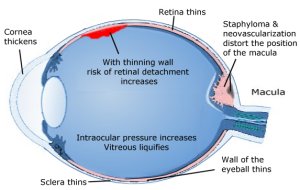 Myopic macular degeneration (MMD) arises primarily from genetic abnormalities. 30% of all cases were present at birth; 60% of all cases develop before the child is 13. It often continues to worsen, becoming quite severe myopia by the late teens or early 20s and by 60, 50% of MMD patients are legally blind.
The condition is caused Continue reading “Myopic Macular Degeneration”
How Carotenoid Supplementation Could Prevent Macular Degeneration and Alzheimer’s Disease
 Carotenoids have been shown to protect against oxidative damage, which can prevent both macular degeneration and factors contributing to dementia-related diseases (i.e., Alzheimer’s disease).[1. “Protective Effects of Dietary Supplementation with a Combination of Nutrients in a Transgenic Mouse Model of Alzheimer’s Disease” Shengyuan Wang et al., PLoS One. 2015; 10(11): e0143135. Published online 2015 Nov 25. doi: 10.1371/journal.pone.0143135 PMCID: PMC4659639] Links have been found between these two diseases: patients with dementia were found to have poor maculas and a higher incidence of Macular Degeneration[2. “Macular pigment, visual function, and macular disease among subjects with Alzheimer’s disease: an exploratory study.” Nolan JM et. al. J Alzheimers Dis. 2014;42(4):1191-202. doi: 10.3233/JAD-140507.].
However, these nutrients do not seem to be able to mitigate damage after dementia sets in. Therefore, making sure sufficient amounts of carotenoids are ingested at all ages Continue reading “How Carotenoid Supplementation Could Prevent Macular Degeneration and Alzheimer’s Disease”
LumiThera Develops Treatments for Vision Loss from Macular Degeneration
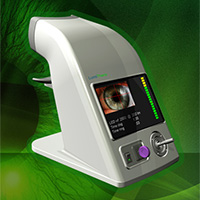 A low-level light treatment called photobiomodulation may be a future treatment for macular degeneration. A company called LumiThera is developing devices for treating vision loss. The devices expose the eye to low-level laser light or light emitting diodes to stimulate cellular function. This is called low level light therapy (LLLT). It is distinct from surgical or aesthetic laser treatments, which destroy tissue.
Visible or near infrared light (NIR) light is produced by a laser or a non-coherent light source. This therapy is in wide use by chiropractors, physiotherapists and sports medicine professionals to treat Continue reading “LumiThera Develops Treatments for Vision Loss from Macular Degeneration”
Mediterranean Diet & Macular Degeneration
The Mediterranean Diet, based on consumption of vegetables and fruits, whole grains, nuts, seeds and legumes, and olive oil has been linked to many health benefits. The diet, based on foods eaten in Greece, southern Italy, and Spain, is low in saturated fats and high in fiber and monounsaturated fats.
When combined with regular exercise this way of eating has been strongly associated with many symptoms of improved health: decreased mortality, lowered cardiovascular risk factors, and weight loss. Research now associates a lowered risk of developing macular degeneration with the Mediterranean Diet.
Continue reading “Mediterranean Diet & Macular Degeneration”
Antioxidant Astaxanthin Helps Prevent AMD, Eye Fatigue & More
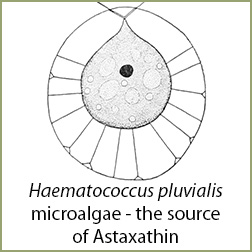 A humble micro-algae produces a powerful antioxidant: astaxanthin. It does so to protect itself from ultraviolet radiation. Research shows that astaxanthin protects the human eyes and brain from serious diseases such as age-related macular degeneration and dementia, including Alzheimer’s disease, as well as conditions like computer eye strain and eye fatigue (asthenopia)[3. https://www.naturaleyecare.com/study.asp?s_num=248]. Astaxanthin supplements are easy to take with no side effects. They are especially helpful as people age and begin to develop serious chronic conditions. Continue reading “Antioxidant Astaxanthin Helps Prevent AMD, Eye Fatigue & More”
Computers & Your Eyes Part I: Computer Vision Syndrome
 Electronics have become primary obsessions in our personal and work lives. This has lead to nearly everyone becoming susceptible to Computer Vision Syndrome. Symptoms include dry eyes, eye strain, blurred vision, headaches, double vision, difficulty in concentrating, fatigue and/or and head, neck and shoulder pain.
Additionally, heavy computer use has been associated with glaucoma[1. https://www.naturaleyecare.com/articles/glaucoma-and-heavy-computer-use.asp] Electronics screens emit blue light that can damage the retina, leading to macular degeneration.[2. Do blue light filters confer protection against age-related macular degeneration? by Margrain TH et. al. Prog Retin Eye Res. 2004 Sep;23(5):523-31. https://www.ncbi.nlm.nih.gov/pubmed/15302349] Close-up work is associated with myopia (nearsightedness).[3. “Risk factors for myopia in a discordant monozygotic twin study.” Ramessur R, Williams KM, Hammond CJ. Ophthalmic Physiol Opt. 2015 Sep 17. doi: 10.1111/opo.12246. https://www.ncbi.nlm.nih.gov/pubmed/26376775] Continue reading “Computers & Your Eyes Part I: Computer Vision Syndrome”
Amino Acid Taurine is Crucial to Healthy Vision
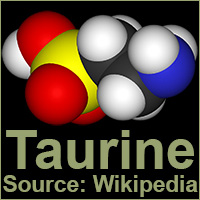 Your body is 1/1000th taurine, a chemical essential to life. The amino acid taurine is crucial for vision. It supports function of the heart, skeletal muscle, and the central nervous system.[1] The pancreas produces taurine, and taurine is a major component of digestive bile. The chemical can be ingested from meats, fish and supplements, such as pills and energy drinks.
In the 1970s, experiments on animals deprived of taurine found they did not develop proper vision. Since then, Continue reading “Amino Acid Taurine is Crucial to Healthy Vision”
Algae May Restore Sight – Channelrhodopsin-2
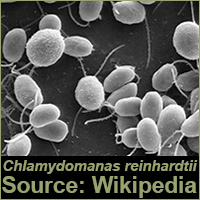 A type of algae offers hope of restoring sight to patients with retinal diseases such as macular degeneration and retinitis pigmentosa. Chlamydomona reinhardtii green algae uses a protein called Channelrhodopsin-2. This protein sits on the membrane of algae and opens or closes a tunnel-like structure in response to light. In essence, it detects light and transmits that information via electricity.
The research by Dr. Zhou-Hua Pan from Wayne State University could, in the future, provide vision restoration Continue reading “Algae May Restore Sight – Channelrhodopsin-2”