
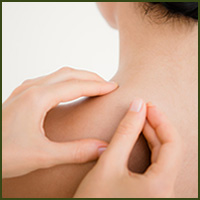
 Acupuncture has been used for millennia to treat eye disease. Today, acupuncture can help preserve vision for those with a wide range of eye conditions including macular degeneration, glaucoma, eye floaters, dry eyes, cataracts and much more. Part of Traditional Chinese Medicine, acupuncture involves a practitioner inserting tiny needles into the skin. It is licensed and regulated by most states in the US. How does acupuncture work, and what are its effects on supporting eye conditions? What could you expect from acupuncture treatments? What can you do at home?
Natural Eye Care owners Michael Edson, L.Ac. and Marc Grossman, OD, L.Ac are both licensed acupuncturists specializing in the eye; Dr. Grossman is also a Doctor of Optometry. Here are the answers to these questions and more. Continue reading “Acupuncture and Eye Disease: An Overview by Natural Eye Care”
 Low antioxidant levels in eye tissue are directly correlated to incidence of macular degeneration. A small study found a relationship between low intake of antioxidants and advanced Age-Related Macular Degeneration. Macular Degeneration is an eye disease associated with aging. Many middle-aged and elderly individuals seek to prolong good vision and prevent eye disease.
 Patients with early Age-Related Macular Degeneration (AMD) improved when taking a combination of nutrients. The nutrients were acetyl-L-carnitine, omega-3 fatty acids, and coenzyme Q10.[1. Ophthalmologica. 2005 May-Jun;219(3):154-66. “Improvement of visual functions and fundus alterations in early age-related macular degeneration treated with a combination of acetyl-L-carnitine, n-3 fatty acids, and coenzyme Q10.” Feher J et. al.]
 Astaxanthin is an extremely powerful antioxidant that is sometimes overlooked. It protects the body from free radical damage. Ten times more powerful than beta-carotene, astaxanthin is a carotenoid that can cross the blood-brain barrier[1. Tso and Lam 1996]. This means it can reach the retina and macula of the eye.
 The sun sustains life, but it also can harm our eyes. Unsafe sun exposure causes or may contribute to several eye conditions and diseases. It can also cause eye injuries. Earth’s ozone layer absorbs most of the ultraviolet (UV) light from the sun, but chemicals have damaged it. Therefore, we must take extra precautions to prevent cataracts, age-related macular degeneration, ocular melanoma (eye cancer), and eye injuries such as pterygium (Surfer’s Eye), photokeratitis (snow blindness), and flash blindness. The sun is also a driving hazard when low on the horizon.
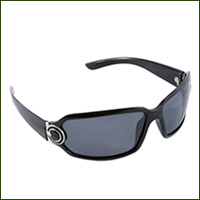 Sunglasses are the primary way to protect your eyes from the hazards of excess sunlight. Ultraviolet (UV) light from the sun can cause cataracts and macular degeneration, serious eye diseases. It can also cause growths on the eye, eye cancer, retinal burns, and
  Several studies have indicated saffron’s power to protect the eye from the effects of Age-Related Macular Degeneration (ARMD). This precious yellow & red spice contains the carotenoids crocin and crocetin, antioxidants that appear to protect the retina. Visual acuity has been shown to be improved in Macular Degeneration patients who take a saffron supplement. These supplements may also increase blood flow to the retinal area, improve light sensitivity, and reduce photo-oxidative damage.
 Middle-aged people and seniors are far more likely to develop Macular Degeneration, glaucoma, cataracts and diabetic retinopathy than those in their youth. It is true that some eye diseases strike the young. These tend to be genetically-based diseases, and they are rare. The incidence of eye diseases in the United States goes up dramatically with age:
 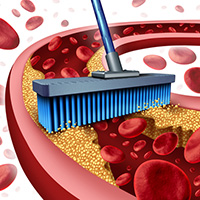 Some patients with dry Age-Related Macular Degeneration (ARMD) have vision improvements after taking high doses a statin. The common cholesterol-lowering drug is called Atorvastatin. It is the statin drug used in a phase I/II clinical trial at Massachusetts Eye and Ear at Harvard Medical School and the University of Crete. A higher-than-normal dose of the drug caused lipid deposits behind the retina to dissolve in some patients.