
 New research indicates a breakthrough in repairing vision for patients with glaucoma. A clinical trial published in JAMA Ophthalmology showed vision improvement from daily computer-based training. Retinal damage due to glaucoma is considered irreversible, but this research indicates vision restoration is possible. By continually activating patients’ residual vision, computer training may be able to strengthen vision.
The clinical trial, conducted by Drs. J. Gublin and B. A. Continue reading “New Vision Training for Glaucoma”
 Keratoconus is a disorder of the cornea that causes visual distortion. Changes in the cellular structures of the cornea cause it to thin and bend into a pronounced cone shape, losing its normal gentle curvature. This leads to several types of visual distortion including blurring, halos around lights, and, in some cases, rapid vision loss. The signature sign of Keratoconus is the perception of multiple ghostly images, called monocular polyopia.
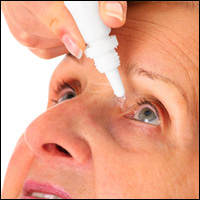 Sjogren’s syndrome is an autoimmune disorder of the rheumatoid type. Rheumatoid type diseases are characterized by inflammation and pain, dry eyes and a dry mouth. There are two types. In Primary Sjogren’s syndrome, the disorder occurs without the presence of an accompanying autoimmune disorder. In Secondary Sjogren’s syndrome, it occurs in conjunction with another autoimmune disorder.
 The macula is a part of the eye crucial to good vision, but as we age, it can be damaged by macular holes and macular puckers. What are the symptoms, and what are the approaches to treating and preventing these problems?
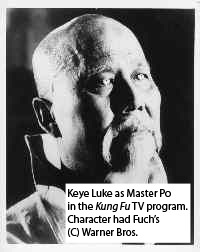 Fuchs’ Corneal Dystrophy is named for the Austrian ophthalmologist Ernst Fuchs, who first described the condition in 1910. He described thirteen patients who suffered from corneal clouding, blisters on the corneal epithelia and loss of corneal sensation.
 Night blindness, also called “Nyctalopia”, is a condition characterized by the inability to see well or to see at all in low light. It can also give a diminished ability to see contrast and difficulty transitioning from bright light to dim light. Night blindness has many causes, some that are treatable and some that are not.
 1. Steve Wynn: Las Vegas casino developer and the owner of such resorts as the Wynn Las Vegas, Wynn Macau, Bellagio, The Mirage, et cetera. Wynn has developed
 Usher Syndrome is a genetic condition that leads to loss of hearing, balance and vision. It is the most common cause of deaf-blindness and accounts for 2-6% of the deaf population. The vision loss from Usher Syndrome is