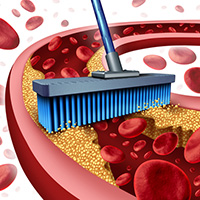
Dry Macular Degeneration May Improve with High-Dose Statin Cholesterol Drug

macular degeneration - statinSome patients with dry Age-Related Macular Degeneration (ARMD)  have vision improvements after taking high doses a statin.  The common  cholesterol-lowering drug is called Atorvastatin.  It is the statin drug used in a phase I/II clinical trial at Massachusetts Eye and Ear at Harvard Medical School and the University of Crete. A higher-than-normal dose of the drug caused lipid deposits behind the retina to dissolve in some patients.

Statin drugs are FDA approved for controlling blood Continue reading “Dry Macular Degeneration May Improve with High-Dose Statin Cholesterol Drug”

Retinal Vein Occlusion: A Complete Overview from Natural Eye Care

retinal vein occlusionRetinal Vein Occlusion is the blockage of veins that drain blood from the retina in the eye. The eye circulatory system depends on releasing blood back to the heart after it has nourished the retina. When the vein is blocked, hemorrhaging occurs, damaging the retina. It is typically caused by atherosclerosis, a common condition especially in older people that damages the arteries. “Occlusion” means the blockage or closing of a blood vessel.
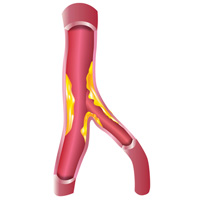

Symptoms and How Retinal Vein Occlusion Is Diagnosed

A sudden change in vision may indicate retinal vein occlusion.

  • A blurred or missing area of vision is the most common, indicating a branch vein occlusion
  • Less commonly, there is a severe loss of central vision, associated with a central vein becoming blocked.

Any sudden vision changes should be reported Continue reading “Retinal Vein Occlusion: A Complete Overview from Natural Eye Care”

Study: Statin Drug May be Tied to Cataracts

high cholesterolSubjects who took Zocor, lipitor or similar statins are more likely to get cataracts than non-statin users.[1. J. Leuschen, E.M. Mortensen, et al, Association of Statin Use with Cataracts; A Propensity Score-atched Analysis, JAMA Ophthalmology, November, 2013.]  A number of studies assessing data with different mathematical models find that the risk is increased by 27% to 34%.

Cholesterol can build up in the arteries, clogging them and causing strokes and heart attacks. A popular type of drug calls “statins” reduce cholesterol by blocking a substance that body needs to make cholesterol. Around 25% of Americans over the age of 45 take statin drugs to Continue reading “Study: Statin Drug May be Tied to Cataracts”

Macular Degeneration Treatment Sought in Anti-Cholesterol Drops

macular degeneration treatment?A recent study linking cholesterol and macular degeneration may shed light on a highly significant problem caused by aging and potentially illuminates hope for a treatment or perhaps even a cure.
Macular degeneration is the leading cause in partial or complete blindness of adults over 60 in the United States. The disease targets the macula in the eyes which in large part is what enables us to perceive the fine detail that allows us do things like reading and driving.

A new study, published in the journal Cell Metabolism on April 2 2013, involved the study of macrophages from old mice and humans with macular degeneration. Macrophages, white blood cells that deconstruct cholesterol, have been found in higher than normal concentration in subjects with macular degeneration. In previous studies, this cellular build up has been shown Continue reading “Macular Degeneration Treatment Sought in Anti-Cholesterol Drops”

Statin Drugs and Muscle Injuries

blood test for high cholesterol statin drugsPatients taking statin drugs to lower cholesterol might be more likely to get muscle injuries, especially elderly patients.(1) Side effects and adverse reactions, according to other research, may include increased stroke risk, higher risk of Type II Diabetes, low iron, pancreatic dysfunction, sexual dysfunction, suppressed immune system, muscle pain, and more.
Be aware that increased incidence of cataracts may also be linked with statin drugs.  A study(2) suggests that statin drugs are associated with an increased risk of cataracts in both men and women. In the study, cataracts risk went up within 12 months of starting statin drugs, continued while taking the drug, and dropped back to normal Continue reading “Statin Drugs and Muscle Injuries”

Antioxidants Can Cut Trans Fats In Cooking Oils

image by homyox

Scientists may have found a new way to reduce the trans-fats that are formed when cooking oils are exposed to heat.  They are adding antioxidants to oils during the manufacturing process

While trans fats are naturally found in small amounts in foods, the food industry has found that partially hydrogenating vegetable oil in order to create artificial trans fats can help extend the shelf life in packaged foods.  The problem is that trans fats raise “bad” cholesterol (LDL) and decrease “good” cholesterol (HDL) levels and also increase individuals’ inflammation levels.

A study in the journal Food Chemistry describes how adding certain antioxidant compounds to the oils when they are packaged and to foods when cooked in that oil can help change the molecular structure of the oils and keep them from forming the sort of bonds that are associated with trans fats.

Source: Food Navigator USA

Zinc, inflammation & oxidative stress

An article published in the June, 2010 issue of the American Journal of Clinical Nutrition describes a clinical trial involving older men and women which found reductions in markers of oxidative stress and inflammation among those who supplemented with zinc.

A 2010  clinical trial looked at indicators of oxidative stress and inflammation in elders which found reductions among the subjects who supplemented with zinc.  These two factors – oxidative stress caused by free radicals and inflammation – are considered risk factors for coronary artery disease.  Zinc deficiencies have been noted for this condition as well as for rheumatoid arthritis, diabetes, and various cancers.

Editor’s note: There are a range of essential nutrients that reduce oxidative stress in the body and can help reduce inflammation including glutathione, superoxide dismutase (SOD) and alpha lipoic acid for example. Green leafy vegetables contain a great range of antioxidants that have excellent anti-inflammatory properties. as well.

When supplementing with zinc, copper should also be taken. The proper ratio of zinc:copper is 15:1.

Published: June, 2010,  American Journal of Clinical Nutrition


Two foods to completely avoid

Avoid trans fats, found largely in commercially prepared baked and fried foods, These fats not only raise “bad” LDL cholesterol, but also lower levels of heart-healthy HDL cholesterol. High trans-fat intake has been linked to coronary heart disease, in which fatty plaques build up in the heart arteries, sometimes leading to a heart attack.

The food industry has been widely replacing trans fats with interesterified fat, another unnatural fat to completely avoid.

The interesterification process hardens fat, similar to the hydrogenation process, but without producing oils that contain trans fats. The end product, like trans fat, is less likely to go rancid and is stable enough to use to fry foods.

Avoid trans fats, found largely in commercially prepared baked and fried foods, These fats not only raise “bad” LDL cholesterol, but also lower levels of heart-healthy HDL cholesterol.  High trans-fat intake has been linked to coronary heart disease, in which fatty plaques build up in the heart arteries, sometimes leading to a heart attack.

The food industry has been widely replacing trans fats with interesterified fat, another unnatural fat to completely avoid.

The interesterification process hardens fat, similar to the hydrogenation process, but without producing oils that contain trans fats. The end product, like trans fat, is less likely to go rancid and is stable enough to use to fry foods.

However, like hydrogenation which generates unnatural trans fats, interesterification also produces molecules that do not exist in nature.

Studies show that interesterified fat raises your blood glucose and depresses insulin production. These conditions are common precursors to diabetes, and can present an even more immediate danger if you already have the disease (Nutrition & Metabolism 2007, 4:3doi:10.1186/1743-7075-4-3)

Editor’s Note: Stay with healthy fats such as olive oil, and even saturated fats in moderation such as butter or coconut oil.

To round out your healthy fat intake, be sure to eat raw fats, such as those from avocados, raw dairy products, and olive oil, and also take a high-quality source of animal-based omega-3 fat, or if vegetarian, supplement with Krill oil.

Statins Don’t Lower Pneumonia Risk

Taking popular cholesterol-lowering statin drugs does not lower the risk of pneumonia, according to a study published the British Medical Journal.

Taking popular cholesterol-lowering statin drugs does not lower the risk of pneumonia, according to a study published the British Medical Journal.

There was some hope that statins could help prevent certain infections. But the study, which involved 65- to 94-year-olds with intact immune systems, found that pneumonia risk was, if anything, slightly higher in people using a statin than in those not using any.

Researchers emphasized that statins work well for what they were designed to do, such as lower cholesterol and the risk of heart disease and stroke.

Published 16 June 2009, doi:10.1136/bmj.b2137
Cite this as: BMJ 2009;338:b2137

Editor’s Note: New research continues to show that other factors are greater indicators of heart disease and stroke such as C-reactive protein levels and homocysteine levels.

Learn more about harmful effects of statins.

Supplementing with Red Rice Yeast Can Lower “Bad” Cholesterol

Supplementing with Red Rice Yeast Can Lower “Bad” Cholesterol

By some estimates, as many as 10% of people who take cholesterol-lowering statins experience troubling muscle pain, and many stop taking the drugs because of it.

Now a new study suggests that a dietary supplement sold in nutrition centers and grocery stores may be a useful alternative to statins for some. Common statin drugs include Vytorin, Lipitor and Zetia.

The newly published study included 62 people with high LDL cholesterol who had stopped taking statins because of muscle pain.

Half the study participants took three 600-milligram capsules of red yeast rice a day and half took
placebo capsules that were identical in look and smell to the red yeast rice.

People who took red yeast rice supplements and completed a 12-week lifestyle intervention program
experienced bigger reductions in LDL “bad” cholesterol than patients who completed the same lifestyle program but took placebo pills.

For more related information, learn about managing and understanding cholesterol.