Higher Chances of Stroke Linked to Low DHEAS Hormone Levels

DHEA affects stroke in women The study appeared in Stroke, the journal of the American Heart Association. Researchers from the Brigham and Women’s Hospital and Harvard Schools of Public Health reported that the risk is especially high for older women. They connect lower levels of  the hormone DHEAS, or dehydroepiandrosterone  sulfate, with this higher stroke risk.

The study’s subjects included women from the Nurses’ Health Study of 1976. They had no reported history of strokes when they joined that study.  The levels of DHEAS of these women were tested between 1989 & 1990. The 461 stroke patients were matched up for age, race, Continue reading “Higher Chances of Stroke Linked to Low DHEAS Hormone Levels”

Yoga Improves Balance and Reduced Fall Risks for Stroke Survivors

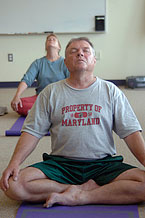
people practicising yoga
Image via nccam.nih.gov

Preliminary research shows that a regular yoga practice can help stroke patients recover more effectively.


A study of 20 stroke survivors of an average age of 66 engaged in twice weekly yoga classes for two months.  It was found that the participants balance improved.  Researchers also found that a practice of yoga could help prevent potentially dangerous falls.

On the whole, balance scores increased by 17% on the Berg Balance Scale and by 34% on the Fullerton Balance Scale.  It is important to not that the average score was upped from 40 to 47 on the Berg Balance Scale, which means that the individuals were no longer on the “high risk” list when it comes to falls.

These findings were presented at he American College of Sports Medicine Annual Meeting in Denver; they have not yet undergone full peer review.  Source: WebMD

We recommend a yoga practice or other regular stress relieving activity as part of a healthy eye regimen.  Yoga can even help improve your overall sense of vision – check out Dr. Grossman’s DVD, Yoga & Vision Improvement.

Non-Invasive Therapy May Help Stroke Victims See Again

cycling
Image via cdc.gov

Stroke patients may have new hope of recovering their eye sight.  The company NovaVision describes how its clinically tested light stimulation technology can help stroke survivors see again.

Vision Restoration Therapy (VRT) seeks to “rewire” the part of the brain responsible for vision.  VRT works to make healthy visual nerves make up for those that are damaged by a stroke or other brain trauma.  Patients who have undergone this therapy describe how they are able to read and enjoy seeking films again.  Some are even able to drive after having to give up their licenses due to vision loss.

Source: Medical News Today

Our Vision Wellness Protocol is dedicated to enhancing eye health and overall health.  A healthy lifestyle is instrumental in preventing medical emergencies like strokes.


Vegans Need Dietary Supplements to Prevent Heart Disease


fruit and veg
Image via NASA

A healthy diet is essential to maintaining your vision.  Plenty of fruits, vegetables, and whole grains are key to the health of the eyes and the body as a whole.  Generally, we do not believe that eating some meat is detrimental to health, but we support the many who people will choose to follow vegetarian and vegan diets.

A new study focuses on how people who follow vegan diets are likely to be deficient in both omega-3 fatty acids and vitamin B12.  They should take supplements of both to ward off heart disease, researchers publishing in the Journal of Agricultural and Food Chemistry. Vegans can potentially run a higher risk of developing blood clots and atherosclerosis (hardening of the arteries), which can lead to heart attacks and stroke.

Historically, medical research indicates that meat eaters are more likely to develop heart disease than vegetarians and vegans, but if people do not eat meat they often have low levels of “good” HDL cholesterol.  Taking omega-3 and vitamin B supplements can help offset this risk.

Source: Nutraingredients


Blood Pressure Medication Administered After Stroke Can Harm Patients

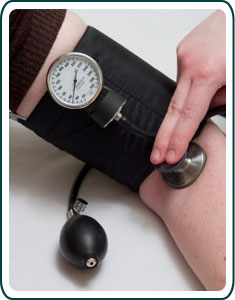
blood pressure cuffBlood pressure medicines and stroke victims don’t mix, says a new study out of Norway.

The study, published in The Lancet, describes how the administration of blood pressure medication to people who have just had a stroke who also have high blood pressure will offer them no benefit and may even be harmful.

Researchers say that stroke victims should not be given anti-hypertensive medications during the week after a stroke.  In some stroke patients the drugs had no effect; in others there were actually negative outcomes associated with the blood pressure medications.  This study indicates that doctors should stick to current guidelines and abstain from trying to lower stroke patients’ blood pressure.  Source: https://www.healthfinder.gov/news/newsstory.aspx?docID=649806

People who have high blood pressure are 4 to 6 times more likely to have a stroke.  Learn more about how to lower blood pressure naturally – before you have to worry about whether you can lower it post-stroke.

Also, visit our website to learn about the negative side effects of commonly prescribed pharmaceuticals.

Healthy Lifestyle Prevents Stroke, Cataracts, Macular Degeneration, Glaucoma

Stroke, Cataracts, Macular Degeneration
image via doh.sd.gov

A healthy lifestyle can reduce your risk of stroke by up to 80%.

Research published in the journal Stroke encourages people to exercise regularly, drink alcohol only in moderation, eat plenty of fruits and veggies, control weight, and not smoke in order to avoid stroke.

These guidelines are the same that we recommend when it comes to avoiding vision conditions like cataracts, glaucoma, macular degeneration, and diabetic retinopathy.

Moderate Alcohol Use

There’s another piece of evidence that suggests moderate drinking – one or two alcoholic beverages each day – can be beneficial for the eyes.

A study of over 3,600 Australians found that when the figures were adjusted to account for other factors (including age, smoking, and diabetes), people who had one or two drinks each day were 50% less likely to have cataract surgery.  The moderate drinkers were less likely to require surgery for cataracts than counterparts who drank more as well as those who did not drink at all.

Source: https://www.osnsupersite.com

Read more about how prevention is the best medicine to ward off eye disease and other conditions that jeopardize your well-being.

Snoring and Insomnia Can Lead to Metabolic Syndrome

trying to sleep
image via nlm.nih.gov

Snoring and insomnia are often seen as nuisances, either to the person who just cannot fall asleep or to the partner who has to listen to all that racket.  They may be real cause for concern, however.

New research finds that both snoring and insomnia can predict one’s likelihood of developing metabolic syndrome.  Snoring and insomnia may even cause metabolic syndrome.  As described in this story’s source, the LA Times’s “Booster Shots” column, “Metabolic syndrome is a constellation of risk factors — excess abdominal fat, high triglycerides, high blood sugar, low HDL cholesterol and high blood pressure — that increase the risk of diabetes, heart disease and stroke.”

University of Pittsburgh researchers publishing in the journal Sleep found that those with insomnia are 80% more likely to develop metabolic syndrome.  People who snore loudly were twice as likely to develop the condition.

The Vision Diet is not only beneficial to the eyes, but it will also improve your overall health; visit our site for details.

Muscles Can Respond to Light and Help Stroke Patients and Others

researchers
Image from bio.sandia.gov

The eyes tend to get all the credit for being the organs that are receptive to light, but scientists at Stanford University are fining that muscles can respond to light as well.  A study of mice whose nerve cells have been coated with specialized light-sensing proteins are helping researchers seeking treatment breakthroughs for people with physical disabilities caused by stroke, spinal cord injuries, or cerebral palsy.

The scientists are pioneers in the field of optogenetics, which uses a special gene derived from algae.  In this case, they are using this technology to control muscle contraction.

The study was published in Nature Medicine.

Source:scienceblog.com

Stroke Survivors Can Improve Balance with Tai Chi

TaiChi Helps Stroke PatientsA new study finds that stroke survivors can improve their balance by practicing the Chinese martial art of tai chi, lessening the risk of a serious fall. Tai chi consists of constant coordinated movement of the head, torso and limbs requiring concentration and balance control.

The study looked at 136 participants in Hong Kong who had suffered a stroke more than six months earlier. Participants were randomly assigned to a tai chi group or to a control group that practiced breathing, stretching and other exercises that involved sitting, walking, memorizing and reasoning.

Participants in the tai chi group were trained in small groups by physical therapists in a weekly class, then practiced at home three days a week for one hour. All participants were then tested for their ability to maintain balance while shifting weight, leaning in different directions, and standing on moving surfaces to simulate a crowded bus. In these tests the tai chi group out-performed the control exercise group, showing significant improvement in just six weeks.

Christina Hui-Chan, professor and head of physical therapy at University of Illinois at Chicago, promotes tai chi as a way to improve balance and minimize falls among healthy elderly subjects. She reports that the benefits of tai chi also include improved strength and cardio fitness. In addition, group classes provide a healthy social gathering for isolated seniors at a fraction the cost of physiotherapy or personal training.

SOURCE: Stroke Survivors Improve Balance With Tai Chi,
ScienceDaily, Mar. 24, 2009, https://www.sciencedaily.com/releases/2009/03/090323110458.htm