
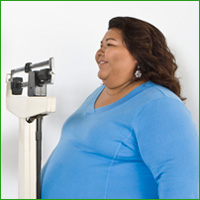
 Diabetic retinopathy is an eye disease that is a complication of diabetes. In diabetes, levels of blood sugar are chronically elevated due to lack of insulin, an insulin insensitivity, or a combination of both. Just as sugar combined with water outside the body forms a sticky substance, excessive sugar in the bloodstream does so as well. Sugar adheres to numerous different tissues in the body, causing problems depending on the tissue. Prolonged excessive sugar in the bloodstream tends to damage the blood vessels of the retina, the back part of the eye that sends light signals to the brain. As the blood vessels Continue reading “Diabetic Retinopathy Guide: When High Blood Sugar Damages the Eyes”
Eye Infections: A Guide to Keratitis, Pink Eye (Conjunctivitis) and More
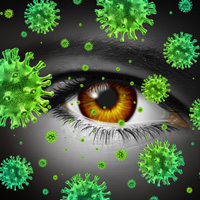 Eye infections are a result of invasion of any part of the eye by disease-causing microorganisms. These include certain pathogens that can invade the eyelid, the conjunctiva, the cornea and, in severe and serious cases, inner parts of the eye as well. Eye infections can affect one or both eyes. Although an eye infection can seem mild, it is important to get proper diagnosis and treatment to prevent potentially serious injury to the eye.
Types of Eye Infections
Pink Eye or Conjunctivitis – In the Western Continue reading “Eye Infections: A Guide to Keratitis, Pink Eye (Conjunctivitis) and More”
New Vision Training for Glaucoma
 New research indicates a breakthrough in repairing vision for patients with glaucoma. A clinical trial published in JAMA Ophthalmology showed vision improvement from daily computer-based training. Retinal damage due to glaucoma is considered irreversible, but this research indicates vision restoration is possible. By continually activating patients’ residual vision, computer training may be able to strengthen vision.
The clinical trial, conducted by Drs. J. Gublin and B. A. Continue reading “New Vision Training for Glaucoma”
Is There a Link Between Keratoconus and Magnesium?
 Keratoconus is a disorder of the cornea that causes visual distortion. Changes in the cellular structures of the cornea cause it to thin and bend into a pronounced cone shape, losing its normal gentle curvature. This leads to several types of visual distortion including blurring, halos around lights, and, in some cases, rapid vision loss. The signature sign of Keratoconus is the perception of multiple ghostly images, called monocular polyopia.
The causes of Keratoconus are not yet known, but one possible link is magnesium deficiency. Numerous Continue reading “Is There a Link Between Keratoconus and Magnesium?”
Antioxidant Omega-3 Fatty Acids May Help Wet Macular Deneration (AMD)
 A new study shows that omega-3 fatty acids could help with wet macular degeneration. Macular degeneration is expected to increase by 50% in older adults in industrialized countries by 2020. As the leading cause of vision loss in the elderly, it is a condition of serious significance. The macula is the central part of the retina. While it makes up only about 2% of the total retina, the brain devotes half of its visual processing network to information from the macula. It is responsible for central vision. The retina is a thin layer of nerves Continue reading “Antioxidant Omega-3 Fatty Acids May Help Wet Macular Deneration (AMD)”
How Sjogren’s Syndrome Dries the Eyes and Damages Health
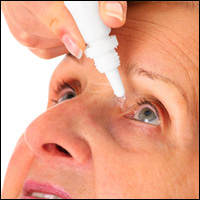 Sjogren’s syndrome is an autoimmune disorder of the rheumatoid type. Rheumatoid type diseases are characterized by inflammation and pain, dry eyes and a dry mouth. There are two types. In Primary Sjogren’s syndrome, the disorder occurs without the presence of an accompanying autoimmune disorder. In Secondary Sjogren’s syndrome, it occurs in conjunction with another autoimmune disorder.
In autoimmune disease, the body’s immune system mistakes some of its own cells as foreign invaders and attacks Continue reading “How Sjogren’s Syndrome Dries the Eyes and Damages Health”
Google Contact Lens May Help Diabetes
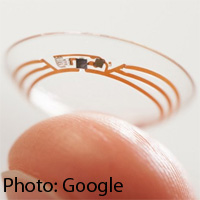 Google has announced plans to build a contact lens that can monitor blood sugar levels. The device that may come replete with miniature, flexible electronics, sensors and antennae. The lens would keep track of blood sugar levels via human tears. Google’s contact lens would be able to alert wearers when their blood sugar levels are too high or too low. For diabetics, this could theoretically free them from the need for frequent finger pricks to check blood sugar. It could also give them tools to better manage their blood sugar. Diabetes can lead to diabetic retinopathy, a serious eye disease (learn more).
While the device still Continue reading “Google Contact Lens May Help Diabetes”
Macular Holes and Macular Puckers Most Common Over Age 60
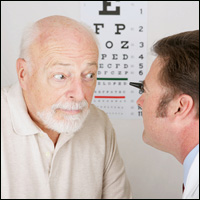 The macula is a part of the eye crucial to good vision, but as we age, it can be damaged by macular holes and macular puckers. What are the symptoms, and what are the approaches to treating and preventing these problems?
Let’s start by asking, what is the macula? The macula is the central part of the retina. It is yellowish in color. It is the part of the retina that creates clear, sharp, focused vision. And it is the part of the retina most heavily populated with cones, the type of eye cell that allows us to see in color. The retina is a thin layer at the back of the eye. It is where the lens of the eye focuses Continue reading “Macular Holes and Macular Puckers Most Common Over Age 60”
What is Fuchs’ Corneal Dystrophy?
 Fuchs’ Corneal Dystrophy is named for the Austrian ophthalmologist Ernst Fuchs, who first described the condition in 1910. He described thirteen patients who suffered from corneal clouding, blisters on the corneal epithelia and loss of corneal sensation.
“Dystrophy” refers to any disorder or condition in which a particular tissue or organ of the body wastes away. In Fuchs’ Dystrophy, the tissue that wastes away is the corneal endothelium. Just as epithelium refers to an external skin layer, endothelium refers to an internal skin layer. The corneal endothelium is the back Continue reading “What is Fuchs’ Corneal Dystrophy?”
Causes of Night Blindness / Nyctalopia
 Night blindness, also called “Nyctalopia”, is a condition characterized by the inability to see well or to see at all in low light. It can also give a diminished ability to see contrast and difficulty transitioning from bright light to dim light. Night blindness has many causes, some that are treatable and some that are not.
In order to understand night blindness, one must understand a little about how the eye works. The retina is located in the back part of the eye, where light falls after passing through the lens. The retina has two types of cells that respond to light: rods and cones. Cones receive bright light and interpret color and detail. They are primarily Continue reading “Causes of Night Blindness / Nyctalopia”