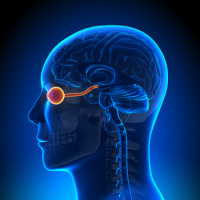
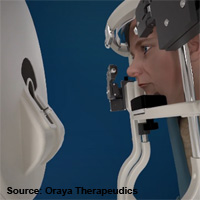
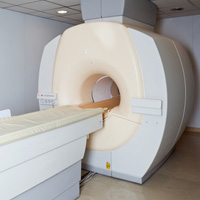
 Researchers from the University of Erlangen-Nuremberg Hospital in Germany have determined that advanced MRI (magnetic resonance imaging) can assist in accurately diagnosing optic nerve health – in particular, optic neuritis and the prognosis for short-term recovery and decision as to the most appropriate therapies.
Optic neuritis is a potentially serious inflammation of the optic nerve, sometimes accompanied by loss or damage to the myelin sheath that surrounds the optic nerve. It is most often experienced by younger adults, and whose symptoms can include pain, vision changes in perception of color, light/dark perception, and blurriness. It can come on suddenly and often is of short duration with full recovery in 90% of patients.
Continue reading “MRI Identifies Optic Neuritis Lesion Location for Better Prognosis”
 Vision is the sense most heavily relied on by modern, technological society. Hearing may come in as a close second, but even without a sense of hearing, we could still navigate most electronics. Without our eyes, that becomes a laborious task. But what, exactly, are the screens we look at so much, doing to our eyes?
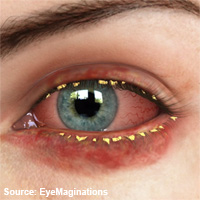
 Everyone is sensitive to light to some degree, but light sensitivity, or photophobia is an abnormal intolerance for light. Discomfort can be experienced from light sources such as sunlight and fluorescent or other artificial lights. It may cause the person with light sensitivity to squint or to have to close their eyes. It can cause pain and/or tears. In some cases, this may be accompanied by a headache.