Targeted Nutrients May Help Migraine Headaches

occular migraines is a type of migraine headacheEveryone who suffers from migraine headaches wants to know how to prevent their next migraine. Recent strong research has resulted in guidelines for doctors to help prevent their patients’ future migraines, including the use of herbs, vitamins and minerals. The guidelines make recommendations for specific types of patients, such as patients with certain other conditions, obese patients, new migraine patients, and pregnant/lactating women.

This research, conducted by the Canadian Headache Society, reviewed a large body of double-blind studies according to standardized criteria. They also did a general literature review and got expert consensus for aspects of prophylactic (preventative) migraine therapies that did not have randomized clinical trials.

Continue reading “Targeted Nutrients May Help Migraine Headaches”

ReVision Formula Uses Classic Chinese Medicine for Liver to Improve Eyes

ReVision formula addresses chi for the eye using classic Chinese medicineWhat is ReVision formula, and how can its classic Chinese medicinal ingredients help improve eye health and conditions such as eye floaters? ReVision formula is a liquid taken orally several times per day with water. This tincture is based on Rambling Powder, also known as Xiao Yao San.

ReVision Formula is designed to support healthy vision. Some of the conditions it may address include macular degeneration, eye floaters, and glaucoma. The idea is that ReVision Formula helps improve blood circulation to the eye. From the point of view of Chinese medicine, it helps eliminate stagnation of the body’s energy (chi) to the eyes.

Continue reading “ReVision Formula Uses Classic Chinese Medicine for Liver to Improve Eyes”

Experimental Electronic Retinas Implanted in Two Patients

electronic retinal implantTwo men blinded by retinitis pigmentosa have had their sight partially restored by receiving electronic retinal implants at King’s College Hospital in England.
The surgery involves implanting a 3×3 mm2 microchip with 1,500 electrodes below the retina. A thin cable is run to a special sub-dermal control unit that is implanted behind the ear. When light reaches the eye, pixels in the chip are stimulated, sending electronic signals to the optic nerve and then to the brain. An external power unit can be connected to the chip using a magnetic disk implanted on the scalp. This allows the chip’s sensitivity to be altered.

Clinical trials began more than 6 years ago. The technology is improving over time, with the more recent patients reporting better visual acuity.

Continue reading “Experimental Electronic Retinas Implanted in Two Patients”

Vitamin E Contact Lenses for Glaucoma Instead of Eye Drops

vitamin E contact lensTreatment for the second leading cause of vision loss and blindness, glaucoma, may be improved with a new type of contact lenses that are loaded with Vitamin E. These new Vitamin E contact lenses may serve as delivery devices to treat glaucoma and other eye diseases such as dry eye and cataracts.

Medicated eye drops are typically prescribed as the primary treatment for glaucoma; however, the medicine is washed away in 2 to 5 minutes and most of it doesn’t reach the target tissues. Instead, most of eye drops enter the blood stream, where they may cause unwanted side effects.

Continue reading “Vitamin E Contact Lenses for Glaucoma Instead of Eye Drops”

Macular Degeneration Twins Study Results

Image via nlm.gov

A diet that includes vitamin D, betaine and methionine can help to lower your risk of developing macular degeneration (AMD).  A study of identical twins conducted by the Tuft Medical Center also supports the assertion that smoking increases one’s chance of getting AMD.

AMD tends to run in families, and this opportunity to look at twins who exhibit different stages of the disease allowed researchers to zero in on how diet and lifestyle habits affected the condition’s progression.

According to the source of this story, Science Daily, Vitamin D, which is added to many milk products, may reduce the risk of AMD because it has anti-inflammatory properties.  Betaine (contained in fish, grains, and spinach) and methionine (found in poultry, fish, and dairy products) both seem to work at the DNA level to slow the progression of the disease.

This study was published in the July 1 issue of Ophthalmology.

Cataracts Linked to Nutrition Deficiencies Per US Government Scientists

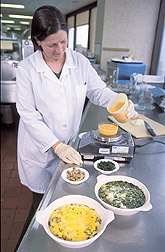
Cataracts - Nutritional Deficiencies
Image via USDA

US government scientists realize the important role that nutrition plays in the health of the eyes.

Cataracts are caused by an accumulation of free radicals that cloud the lens of the eye through a process called oxidation.  Antioxidants, these researchers agree, “are compounds in foods that help maintain healthy cells and tissues in the eye and other organs.”  Prime sources of antioxidants include: leafy greens, eggs, blueberries, and bilberries.

In a study of almost 500 middle aged and older women, it was discovered that those who consumed more riboflavin, folate, beta carotene, lutein, zeaxanthin, and vitamins C and E were less likely to suffer from cataract symptoms than did those who consumes the least amounts of these nutrients.

Another interesting fact that may affect your daily supplement regimen?  Women who took vitamin C supplements regularly over the previous decade were 64% less likely to have

Moreover, those who used vitamin C supplements for 10 or more years were 64 percent less likely to have opacity within the eyes than counterparts who did not take vitamin C.

Source: USDA Agricultural Research Service

Learn more about how to prevent cataracts with our self-help recommendations at our website.

Vitamin D Linked to Lower Macular Degeneration Risk

Women under 75Annual Survey | Vitamin D3 D Sources

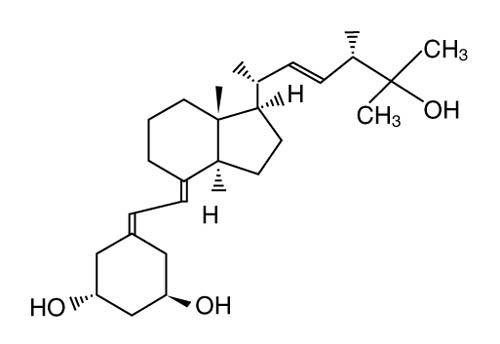
molecular structure
Image via dailymed.nlm.nih.gov

Vitamin D – and the fact that so many people are deficient in this vital compound – has been in the news a lot lately.  A lack of vitamin D has been linked to asthma in children, the development of cancers, cognitive impairment, and increased risk of cardiovascular diseases.

Vitamin D impacts the health of the eyes as well.
A number of  studies show that low vitamin D3 levels correspond to an increase in the incidence of age related macular degeneration.

Editor’s Note: Vitamin D3 is one of the super nutrients that should be part of everyone’s diet, and should be added as a supplement particularly for people who do not get much exposure daily to the sun.  Vitamin D3 has also been tied to helping prevent cancer, improve immune function and bone health, regulate insulin and blood pressure, and more. (Researchers: Parekh N, et al.)

Women Under 75 & Vitamin D

A new study published in The Archives of Ophthalmology finds that women under age 75 can reduce their risk of developing age-related macular degeneration (AMD) by increasing their intake of vitamin D.  A study of over 1300 women found that eating foods rich in vitamin D and taking dietary supplements, but not necessarily time spent in direct sunlight (often considered the best way to get vitamin D), was linked to decreased chances of AMD.  Compared to those who consumed the least vitamin D, those who consumed the most vitamin D were 59% less likely to show signs of AMD.

Those consuming the highest amount (on average about 600 IU) daily had a 59% lower risk of AMD compared to those getting the least amount of 300 IU on average.

Ref: Millen AE, et al. Vitamin D status and early age-related macular degeneration in postmenopausal women. Arch Ophthalmol 129:481-89, 2011.

Note: Research shows that the destructive effects of inflammation on the retina’s blood supply (choroid) and the pigment-containing cells of the retina may play a major role in the development of macular degeneration. Vitamin D may help due to its natural anti-inflammatory properties, as well as strong antioxidant benefits.

Another study  shows that high doses of vitamin D may help women under age 75 fight off macular degeneration (AMD).

Because of its abilities to fight inflammation and support immune health, vitamin D may help suppress the cascade of destructive inflammation  that happens during the early stages of AMD.

Women between age 50 and 79 in the Carotenoids in Age-Related Eye Disease Study were evaluated to determine protective effects of vitamin D intake in the forms of food, nutritional supplements, and sunlight.  Taking vitamin D in supplement form proved to be more helpful in preventing the onset of macular degeneration than exposure to sunlight.  Source: OSN Supersite

This study substantiates two earlier studies:

Annual National Survey

Researchers using data from the Third National Health and Nutrition Examination Survey (1988 through 1994) have found evidence that consuming vitamin D may help ward off age-related macular degeneration (AMD).

In this study, 7752 individuals (including 11% with AMD) were given retinal photographs, dietary intake questionnaires, and blood tests to calculate blood vitamin D (25-hydroxyvitamin D) levels.  Based on these vitamin D blood levels, participants were divided into 5 groups.   Participants in the group with the highest vitamin D levels showed 40% lower risk of developing early AMD than those in the lowest group.

Analysis was also conducted to evaluate associations with important food and supplemental sources of vitamin D.

  • People who drank milk daily decreased their risk of developing AMD, as did those who took supplemental vitamin D consistently but didn’t drink milk daily.
  • Fish consumption was also linked with a lower risk of advanced AMD.

Vitamin D3 Levels

A 2007 study showed the low levels of Vitamin D3 is linked to an increase in the prevalence of macular degeneration.

Source: Parekh N, Chappell RJ, Millen AE, Albert DM, Mares JA. Association Between Vitamin D and Age-Related Macular Degeneration in the Third National Health and Nutrition Examination Survey, 1988 Through 1994. Arch Ophthalmol. May 2007;125: 661-669.

Vitamin D Sources

What are good sources of vitamin D?  Consider fish — it’s naturally rich in vitamin D.  Milk and breakfast cereals are generally fortified with vitamin D as well.  If you are taking supplemental D, vitamin D3 is the most readily absorbable form of D.

Vitamin C Is a Potential Cancer Fighter

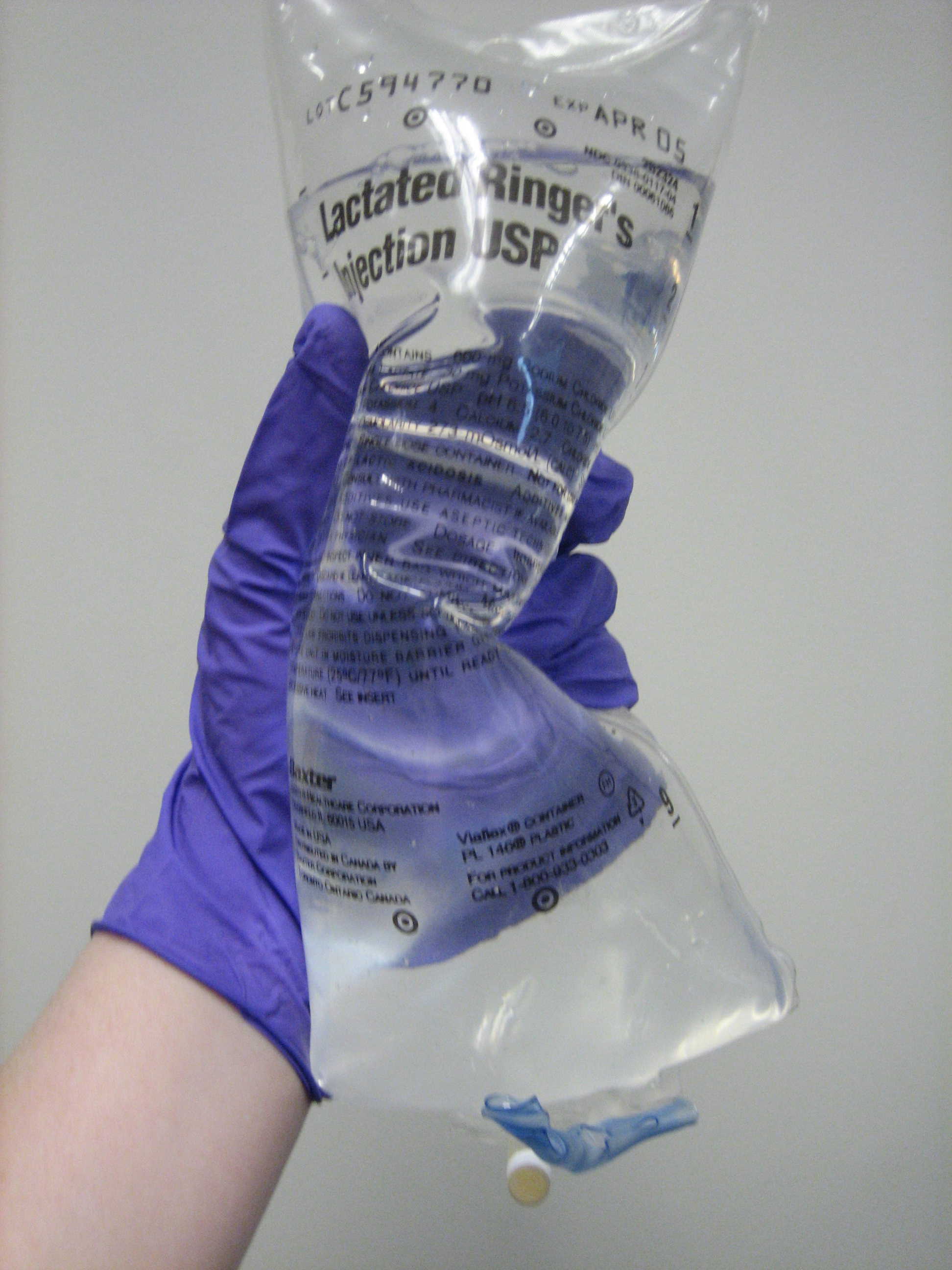
intravenous drip bag
Image via NASA

Vitamin C, given to patients intravenously, could be an effective way to fight cancer.

A study, published in the Journal of Translational Medicine, is based on the assertion that doses of vitamin C could help cancer patients who suffer from wasting (cachexia), immune system deficiencies, and compromised quality of life.  This particular article pulled together the findings from 246 previous studies.

The study sought to include perspectives from the alternative health community that has asserted the benefits of vitamin C as a cancer fighter as well the allopathic medical community that has, in part, agreed that vitamin C could be helpful to cancer patients.

In the past, studies have differed on vitamin C’s effectiveness, but it seems the determining factor in vitamin C’s cancer fighting abilities is in taking it intravenously rather than in pill form.  Source: Medical News Today


Eggs Provide Nutrients and Ward Off Eye Disease

A new study further supports the benefits of eating eggs.

Michigan State University researchers sought to determine how eggs might be part of a healthy diet and also determine the impact egg consumption may have on cholesterol.  Egg eaters showed higher levels of such vital nutrients as vitamins B12, A, E, and C.  The study does remind us to enjoy eggs in moderation – four eggs per week is optimal.  Eating more than four eggs per week can lead to increased cholesterol.

Source: maculardegenerationassociation.org

Eating eggs can also help prevent a number of eye conditions including macular degeneration, cataracts, and glaucoma.

Vitamin C

In many parts of the world, especially in Europe and Asia, the value of vitamin C is well known.  It is considered to be an important part of routine glaucoma treatment. It lowers pressure in the eye by lessening fluid production within the eyeball and improving the circulation of aqueous humor, as toxins are removed, from the eye.  Vitamin C also improves the metabolism of collagen which is possibly an underlying cause of glaucoma.

Learn more about how the nutrients in eggs and other foods can increase your eye health and overall health.

Silicon in Bottled Water Can Help Women With Osteoporosis

Scientists interested in counteracting osteoporosis and decreases in bone density are researching how the silicon found in bottled water from artesian wells can help postmenopausal women with low bone mass. Silicon is required in trace amounts for normal bone formation.

This study, published in Nutrition Journal, shows that drinking such water from artesian aquifers is a good source of silicon.  The trials only lasted 12 weeks, not enough time to show changes in the subjects’ bone markers, but researchers are optimistic and believe that further study is warranted.

Because standard treatments such as bisphosphonate drugs and hormone replacement therapy have been associated with osteonecrosis (bone death caused by decreased blood supply) or increased cardiovascular risk, it is important to find new options for women that have fewer debilitating and life threatening side effects.

There are many other compounds that can help combat osteoporosis including magnesium, vitamin D, and copper.

For other helpful supplements and a full overview of natural treatment options for osteoporosis, click here.

Source: Nutrition Journal