ReVision Formula Uses Classic Chinese Medicine for Liver to Improve Eyes

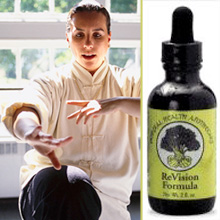
ReVision formula addresses chi for the eye using classic Chinese medicineWhat is ReVision formula, and how can its classic Chinese medicinal ingredients help improve eye health and conditions such as eye floaters? ReVision formula is a liquid taken orally several times per day with water. This tincture is based on Rambling Powder, also known as Xiao Yao San.

ReVision Formula is designed to support healthy vision. Some of the conditions it may address include macular degeneration, eye floaters, and glaucoma. The idea is that ReVision Formula helps improve blood circulation to the eye. From the point of view of Chinese medicine, it helps eliminate stagnation of the body’s energy (chi) to the eyes.

Continue reading “ReVision Formula Uses Classic Chinese Medicine for Liver to Improve Eyes”

Alpha Lipoic Acid (ALA) May Help Glaucoma

how glaucoma looksThe supplement alpha lipoic acid (ALA) showed some promise for helping glaucoma patients. Patients who had open angle glaucoma were given the 150 mg of ALA per day to see if the supplement made an difference to the effects of this common eye disease. The study showed that 45-47% of the eyes in the study enhanced color visual fields and visual sensitivity versus the controls. The controls only received topical medical therapy.

Alpha lipoic acid is present in every cell in the human body. It converts glucose into energy.

Lipoic acid is a fatty acid that is in most foods, but only in very tiny amounts. Certain organ meats, broccoli, yeast extract and spinach have Continue reading “Alpha Lipoic Acid (ALA) May Help Glaucoma”

Vitamin E Contact Lenses for Glaucoma Instead of Eye Drops

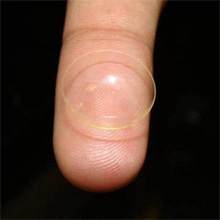
vitamin E contact lensTreatment for the second leading cause of vision loss and blindness, glaucoma, may be improved with a new type of contact lenses that are loaded with Vitamin E. These new Vitamin E contact lenses may serve as delivery devices to treat glaucoma and other eye diseases such as dry eye and cataracts.
Medicated eye drops are typically prescribed as the primary treatment for glaucoma; however, the medicine is washed away in 2 to 5 minutes and most of it doesn’t reach the target tissues. Instead, most of eye drops enter the blood stream, where they may cause unwanted side effects.

Continue reading “Vitamin E Contact Lenses for Glaucoma Instead of Eye Drops”

Baby Boomer Natural Eye Care in the 21st Century

As the “Baby Boomer” generation in the United States approaches their 60’s and beyond, the incidence of eye disease in this aging population will rise. Eye problems become more prevalent as an individual ages. What are the most common eye diseases in older people? How can eye geriatric eye disease be prevented and addressed naturally? And what does Baby Boomer natural eye care look like?

Macular Degeneration

A major reason for visual impairment and blindness in adults aged 50+ is Macular Degeneration, also known as ARMD (Aged-Related Macular Degeneration). Vision in the center of the visual field is impaired, but peripheral vision remains. People with macular degeneration have difficulty writing, driving, recognizing faces and reading. Symptoms include:

  • Colors look dim
  • Words appear blurred or difficult to read
  • Straight lines look wavy
  • Dark or blank areas block the center of your vision
  • Distinct shapes are blurry
  • Fog in the center of your vision

Anyone with any of these symptoms should Continue reading “Baby Boomer Natural Eye Care in the 21st Century”

Glaucoma Associated with Metabolic Syndrome

image via www.nih.gov

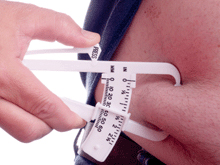
Don’t just take it from us that glaucoma risk increases in those who have diabetes, high blood pressure, and who are overweight.  Researchers publishing in the journal Ophthalmology have found that these conditions, which together are labeled “metabolic syndrome” are all linked to the development of open-angle glaucoma.

A staggering 20% of people in America are said to have metabolic syndrome.  Both metabolic syndrome and glaucoma are associated with aging, so, as the US population gets older, scientists believe that both conditions with become more prevalent.

This study included over two million adults over age 40.  The study authors analyzed the results from the subjects’ eye care records to discover the correlations between metabolic syndrome and glaucoma.  According to this story’s source, PCON Supersite, “Raw data showed that 1,576,993 subjects had at least one metabolic disease; 55,090 subjects had OAG.”

PCON Supersite goes on: “Adjusted data showed that subjects with diabetes alone had a 35% increased risk of developing OAG, and those with hypertension alone had a 17% increased risk. Those with diabetes and hypertension combined had a 48% risk. Those with hyperlipidemia alone had a 5% decreased risk. Obese subjects had a 14% increased risk.”

Learn more about your glaucoma risk factors.


Glaucoma Is About More Than Elevated Eye Pressure

GlaucomaThe role of intraocular pressure (a.k.a. IOP or eye pressure) and glaucoma is still a point of discussion.

At a meeting of the World Glaucoma Association, speaker Felipe Medeiros, MD described a common myth: “21 mm Hg threshold, above which IOP is supposed to be abnormal and below which is thought to be normal.”

In fact, according to this story’s source, the OSN Supersite, only 9.5% of patients with what is considered a high IOP are ever diagnosed with glaucoma.

Dr. Medeiros told the audience that corneal thickness is actually a major predictor of one’s likeliness of developing glaucoma.  Those with thinner corneas run a higher chance of developing the condition.

At Natural Eye Care, we tell our clients and patients about a host of other factors that may influence one’s likelihood of developing glaucoma including genetics, diet, and stress levels.

Socioeconomic Status & Glaucoma

A British study finds a correlation between “social deprivation” and the development of glaucoma.

The researchers specifically looked at acute primary angle closure and used Index of Multiple Deprivation and Townsend scores to determine a relationship between glaucoma patients conditions and socioeconomic and racial backgrounds.

Source: https://bjo.bmj.com/content/94/10/1304.abstract

Diabetics Know Lifestyle Changes Improve Health, But Behaviors Are Hard to Change

Diabetes & Lifestyle changes
Image via cancer.gov

Changes in lifestyle are usually the most important way that individuals with diabetes can control their conditions.  Most people seem to know this, but a new survey shows that many diabetics do not follow that advice.

A study called SHIELD (The Study to Help Improve Early Evaluation and Management of Risk Factors Leading to Diabetes), which was presented at the annual meeting of the American Diabetes Association, surveyed nearly 4,000 people with type 2 diabetes.  In response to questions about the link between diabetes and obesity, 87% said they knew excessive weight contributed the disease, but only 70% of respondents reported trying to lose weight in the preceding year.  Only a third of those surveyed had managed to maintain their target weight for longer than six months.  Almost one-fifth of those studied (17%) said they preferred to take medication to control their conditions rather than try diet and exercise.

Source: WebMD

At Natural Eye Care, we recommend that those with diabetes and the related condition diabetic retinopathy manage their condition with proper lifestyle habits, dietary changes, nutritional supplementation, and exercise.  We also recommend this approach to people with a host of other eye conditions including macular degeneration and glaucoma.  When there is something wrong with your eyes, it is so rarely just about the eyes themselves – so often the eyes are indicating that there is an issue affecting the rest of the body as well. For example, glaucoma has been linked to cardiovascular deaths and Alzheimer’s disease.


Failing Eyesight Linked to Increased Fall Risk In Seniors

Failing eyesight is a key factor in increased fall risk in older adults.

A study out of the UK shows that 270,000 individuals over age 60 who have fallen in the last two years can blame poor vision.  This research also shows that many older adults in the UK do not take advantage of the free vision tests to which they are entitled.

An organization called Age UK is hoping to raise awareness about the need for regular vision exams and about the correlation between accidents and eye conditions that hinder sight.  Source: Medical News Today

Prevention is the best medicine when it comes to warding off potentially blinding conditions like glaucoma and macular degeneration.  Learn more about our Vision Wellness Protocol.

Glaucoma Treatment: A Holistic Approach

Glaucoma Treatment
Image via nei.nih.gov

Ideally, doctors look at patients in a holistic manner, rather than just a collection of symptoms. At Natural Eye Care, when we talk to glaucoma patients, we are concerned about more than their intraocular pressure measurements.  We want to talk about diet, lifestyle habits, and stress levels.  We want to get an idea of the whole person, and understand their overall health. Learn more about these complementary approaches to glaucoma management.

An article appearing at the site EyeWorld by Tony Realini, M.D. describes how many eye doctors take an “event-based approach” to managing glaucoma patients’ care.  Though he posits that there is still validity in this approach, he points out that it does not help determine the rate of progression of an individual’s condition.

According to one source quoted in Realini’s commentary, Claude F. Burgoyne, M.D., senior scientist and research director, Optic Nerve Head Research Laboratory, Devers Eye Institute, Portland, Oregon says, “Determination of the rate of progression can help us to identify those patients at the highest risk of vision loss,” he said. “A patient’s current rate of progression may inform us about future progression rates. If we then factor in life expectancy, we can begin to assess the risk of vision loss within a given patient’s lifetime.”

Dr. Realini recommends that a combination of “data acquired from visual field tests, from optic nerve imaging devices, or a combination of both.”

Source: EyeWorld.org, “Evaluating rate of change in glaucoma”


Conventional Glaucoma Medication Prices Increase by 25%

Glaucoma medicationWe’re eye experts, not economists, but we know that a 25% increase in the cost of medications taken to treat glaucoma over a five year period is significant.

A study published in Archives of Ophthalmology describes how the average yearly expenditure for glaucoma medication went from $445 in 2001 to $557 in 2006.

Source: Arch Ophthalmol, 2011

At Natural Eye Care, we offer alternative regimens that anyone interested in taking a holistic approach to health and wellness should consider.  Learn more about our complementary medicine recommendations for glaucoma patients and glaucoma suspects.