
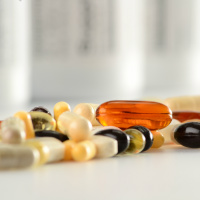
 Patients with early signs of age-related macular degeneration (AMD) may benefit from an oral treatment of key nutrients. In a study published in the journal Ophthalmology, a solution of carotenoids with co-antioxidants was shown to both improve vision and slow further degeneration in participants with early AMD.
In the randomized double-masked trial, 433 adults with early AMD who were 55 years of age or older were given either an active solution or a placebo. At the start of the trial, all participants had either early AMD in one eye and late-stage AMD in the other, or early AMD in both eyes. The active oral solution contained Continue reading “Carotenoids & Co-antioxidants for Macular Degeneration”
Smart Glasses for Visually Impaired
 Researchers at Oxford University have developed smart glasses intended to aid people with severe loss of sight. The glasses, which enhance an individual’s residual vision, are currently in trial, both in a closed obstacle course setting and in a “real life” trial in the streets of Oxford.
The smart glasses use a set of video cameras that record nearby objects and movement, which are projected onto the glasses lenses with the help of Continue reading “Smart Glasses for Visually Impaired”
What is Optic Nerve Atrophy?
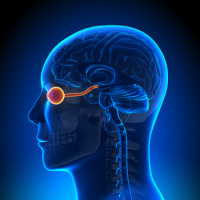 Optic nerve atrophy, also called optic neuropathy, is damage to the optic nerve from any cause.
Some of these causes include: diabetes, glaucoma, certain health problems associated with aging, brain tumors, head trauma, infection, multiple sclerosis, radiation, inflammatory blood vessel diseases, sleep apnea, excessive blood coagulation, high cholesterol, genetic disorders, poisoning, malnutrition, and drug side effects.
The optic nerve is the conduit between the retina of the eye and the visual processing center at the back of the brain. It contains 1.2 million nerve fibers that send sight signals to be processed by the brain. It is sheathed in the fatty nerve casing called myelin. Myelin protects nerves from damage and speeds nerve signals along. When it becomes damaged, nerves are exposed. Then they are very vulnerable to damage, much like an exposed Continue reading “What is Optic Nerve Atrophy?”
Oraya Therapy for Wet AMD Gains Popularity
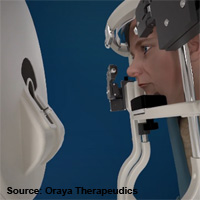 A one-time treatment for patients with wet age-related macular degeneration (AMD) is gaining popularity in Europe. Oraya Therapy, made by US-based company Oraya Therapeutics, Inc., is being offered at more locations in Europe, including a National Health Service hospital in the UK and several hospitals in Germany.
Oraya Therapy has already been a regular treatment option in hospitals throughout Germany, the UK, and Switzerland, increasingly embraced by patients, doctors, and insurance providers. The one-time treatment is a non-invasive therapy for wet AMD patients meant to maintain or improve vision and decrease frequency of anti-vascular endothelial growth Continue reading “Oraya Therapy for Wet AMD Gains Popularity”
Inflamed Eye Lids: All About Blepharitis
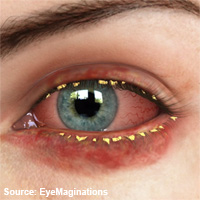 Blepharitis is inflammation of the eyelids, and for many this is a chronic condition. It is a common condition that affects both adults and children. There are two kinds of blepharitis – anterior (front) and posterior (back) blepharitis. Anterior blepharitis affects the front of the eye, including the eyelid and eyelashes. It is often associated with a bacterial growth and/or an increase in the activity of the meibomian gland. Posterior blepharitis causes dry eyes and is created by the dysfunction of the meibomian gland. So it generally isn’t caused by a bacterial infection.
In the eyes, the meibomian glands (also called the “tarsal glands”) are a type of Continue reading “Inflamed Eye Lids: All About Blepharitis”
Exercise Improves Retinal Health
 Research shows that simple exercise could be the answer to improving your vision. Exercise is linked to improved retinal health and prevention of common eye diseases. Although exercise in general is considered to be essential to overall health, for the first time a study has linked exercise directly with retinal health. This research could lead to better prevention and treatment of common retinal diseases, including age-related macular degeneration (AMD).
Using the Eyes to Detect Diseases
 The eyes are not just the mirrors of our souls – they also reflect many of our diseases. Because they are the only place in the body where you can easily see blood vessels and even part of the brain via the optic nerve, they can be used to detect a number of diseases.
A large study of 120,000 people by the insurance company, VSP Vision Care, found that 34% of diabetes patients first found out about their disease from an eye exam. High blood pressure Continue reading “Using the Eyes to Detect Diseases”
How to Gain Optimal Vitamin D Levels from the Sun
 Vitamin D is responsible for overall immune system health as well as vastly reducing the risk of numerous chronic diseases and cancers. The best way to receive vitamin D3 is through the sun, but it is essential to achieve a fine balance between healthy exposure and overexposure.
UVB rays from the sun present an unusual contradiction. They are the wavelength that can quickly cause sunburn on the surface of the skin, but they are also essential to vitamin D production. The body requires sun exposure to convert a cholesterol derivative into vitamin D3.
In order to gain safe and adequate exposure to UVB, a Continue reading “How to Gain Optimal Vitamin D Levels from the Sun”
Watermelon Helps Fight Heart Disease, Diabetes, and Eye Disease

File this heart healthy fact away for next summer’s barbecue season: watermelon can help fight hypertension.
Florida State University gave nine prehypertensive study participants the amino acid L-citrulline/L-arginine from watermelon extract for six weeks and all of them exhibited improved arterial function and lower aortic blood pressure.
Watermelon is also a source of vitamins A, B6, C, fiber, potassium and the antioxidant lycopene. Antioxidants are vital to eye health and help to fight the free radical oxidation damage that causes eye diseases like macular degeneration.
Study author Arturo Figueroa highlights another condition that could benefit from daily watermelon intake: diabetes. “Individuals with increased blood pressure and arterial stiffness especially those who are older and those with chronic diseases such as type 2 diabetes would benefit from L-citrulline in either the synthetic or natural (watermelon) form,” he said. “The optimal dose appears to be four to six grams a day.”
Diabetes can lead to the eye condition diabetic retinopathy.
Learn more about nutrients in food that can treat and prevent disease.
Source: https://www.medicalnewstoday.com/articles/204527.php
7 Foods to Avoid If You Have High Blood Pressure or Hypertension
 Do you have high blood pressure or hypertension? If so, take a look at these foods you should avoid due to their high sodium content. The upper limit of sodium per day is 2300 mg (1 teaspoon). Too much sodium does direct damage to the heart and arteries and raises blood pressure significantly.
Here are common foods that quickly add up sodium in your diet:
- Pickles – one medium size pickle (about 5 inches long) has approximately 570 mg of sodium.
- Canned Chicken Noodle Soup – up to 880 mg of sodium per one-cup serving
- Sauerkraut – ½ cup has about 460 mg of sodium
- Fast food French fries – has approximately 270 mg of sodium and 19 grams of unhealthy fat.
- Bacon – 3 slices has about 270 mg of sodium and 4.5 grams of fat
- Frozen pot pies – one serving has about 1300-1400 mg of sodium.
- Ramen noodles – one package has about 1580 mg of sodium
Continue reading “7 Foods to Avoid If You Have High Blood Pressure or Hypertension”