
 Scientists are putting significant focus on Age-Related Macular Degeneration in their research. This eye disease strikes mostly older adults, over aged 50. The “Baby Boomer” generation is well above age 50, as are their living parents. Understanding the causes and potential treatments for Macular Denegation (ARMD) are important, because vision-impaired elderly people need extra help with their daily activities. Also, quality of life is lowered when vision is poor.
The macula is a tiny yellowish spot in the back of the eye, on the retina. It allows for central vision. Central vision is possible because of the macula. If it breaks down, reading, writing, watching TV, cooking, driving and even facial recognition are impaired. Macular Degeneration is degenerative, meaning that it gets worse over time.
ARMD comes in two forms. The more common Continue reading “AMD Research – Part 2”
 Antioxidants have been studied as a way of preventing eye diseases such as macular degeneration and cataracts. Oxidative damage (free radical damage) may be a contributing cause of these diseases. People concerned about developing these problems may consider taking both dietary and supplemental
  Turmeric’s ability to support the body has been well-researched; however, this spice by itself is difficult for the body to absorb. This bright yellow spice is also called curcumin, and it contains a prized antioxidant. Research is verifying
 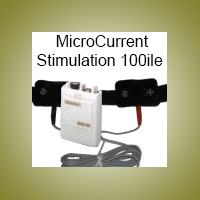 A small study has shown microcurrent stimulation (electrotherapy) to benefit macular degeneration patients. While the study did not have controls, the research on 25 eyes with dry age-related macular degeneration, and 6 eyes with wet age-related macular degeneration found:
 Blue light is emitted from all handheld electronic devices as well as desktop and laptop computers and televisions. It is the shortest wave length light in the visible spectrum and causes significant damage to many parts of the eye seriously impacting present and future vision capacity. Damage from blue light from smartphones is particularly important because smartphones are often used in dim light and are used close to the eyes. Unlike ordinary computer vision fatigue, damage from blue light is serious, cumulative and irreversible.
 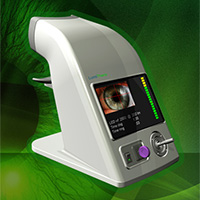 A low-level light treatment called photobiomodulation may be a future treatment for macular degeneration. A company called LumiThera is developing devices for treating vision loss. The devices expose the eye to low-level laser light or light emitting diodes to stimulate cellular function. This is called low level light therapy (LLLT). It is distinct from surgical or aesthetic laser treatments, which destroy tissue.
 Myopia, also called “nearsightedness,” is a common eye condition that requires correction with eye glasses. If severe, it can lead to serious eye conditions. Myopia is a refractive error in which close objects are clear, but distant objects are blurry. This is because the refracted image is in focus in front of the retina. Typically, the myopic eye is elongated; however, myopia can also be caused by a distorted cornea.
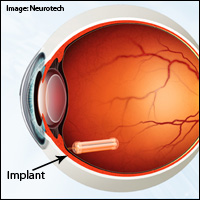 Clinical trials are underway for an implantable device that delivers medication directly to the eyes of people with
  Experiments on mice show promise for a treatment that expresses a light-sensitive human protein, called rod opsin, on the undamaged retinal cells. These cells are turned into photoreceptors, which allow vision.
 Women with specific genes may be more likely to develop age-related macular degeneration (AMD) if they are deficient in Vitamin D, according to new research in JAMA Ophthalmology.