
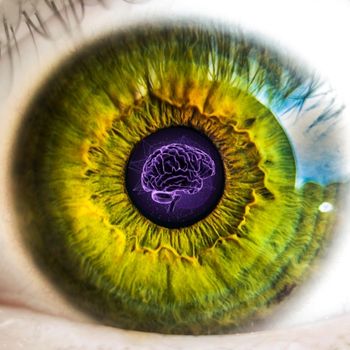
 The eyes and the brain are more closely linked than you might realize. Amyloid-beta plaque, the hallmark of Alzheimer’s disease, starts building up in the eyes for a long time before obvious symptoms of dementia appear. Early detection of this brain disease is crucial for slowing its progression. Doctors can screen for Alzheimer’s disease by running a retinal scan. Why? The eyes are neural tissue. Therefore, what is good for the eyes is also good for the brain.
Based on scientific research, Natural Eye Care has recommendations for keeping both your brain and your eyes healthier as you age. We take a holistic approach to Alzheimer’s prevention and management. Early detection, lifestyle, nutrition, and exercise are all important to healthy aging.
The Eyes Mirror The Brain
Why Does Alzheimer’s Show Up in the Eyes? Continue reading “Why Alzheimer’s Disease is Visible in the Eyes”

 The antioxidants lutein and zeaxanthin help keep the eyes healthy. A new study has found that these nutrients also improve the circulation of blood to the brain. Seniors experience gradual cognitive decline. A recent study showed that taking enough of these antioxidants halted cognitive decline. Research supports the idea that nutrition has a direct impact on the brains and eyes throughout one’s lifespan from infancy (breast milk contains lutein) to old age.[1. Johnson EJ. (2014). Role of lutein and zeaxanthin in visual and cognitive function throughout the lifespan. Nutr Rev. Sep;72(9):605-12.]
 Parkinson’s disease is a multi-neurological disease. Currently, most Parkinson’s treatments focus on increasing dopamine production and reducing motor symptoms and tremors through medication. However, this disease has many causative or contributing factors that cause changes in healthy brain function. Many of these factors are also relevant for dementia, Alzheimer’s, Huntington’s, and Wilson’s diseases as well. Which factors impact brain functioning and the development of brain disease? Are there natural approaches to preventing and slowing the progress of such devastating diseases? This article offers a brief overview, based on the new book, Natural Parkinson’s Support: Your Guide to Preventing and Managing Parkinson’s.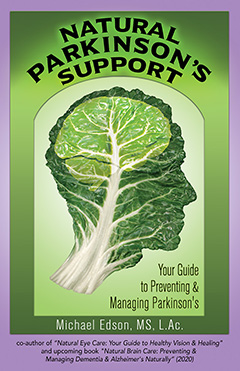
 Three time-tested supplements stand out as champions for eye and brain health: garlic, ginseng, and ginkgo. Research on these supplements backs up why they have been used for thousands of years. Garlic plays an important role in all three major traditional medicines–Traditional European Herbal Medicine, Ayurveda, and Traditional Chinese Medicine. Ginseng and ginkgo are crucial herbs in Traditional Chinese Medicine. Do these supplements work? Are they beneficial for aging brains and eyes? What does the research show?
  As we age, how can we prevent or support dementia, Alzheimer’s Disease, and other age-related brain diseases? Looking at the scientific research, much emphasis is on curing neurological disease after it is well-established. Reacting to a crisis is logical, though, after many years of research and money spent, there is still no cure. However, preventing a crisis is even better. Why wait for possible brain deterioration to affect your quality-of-life?
  Did you know that certain vision changes can indicate early-stage Alzheimer’s disease? Alzheimer’s is the #3 killer in the United States, right behind cancer and heart disease. Scientists are researching early detection. Catching this disease in its earliest stages opens up potential treatments, before significant brain damage sets in. Treatments for early Alzheimer’s are also being heavily researched. The retina develops from neural tissue, and the entire eye reflects the health of an individual. Therefore, non-invasive screening
  Alzheimer’s Disease and Parkinson’s Disease may appear first in the eye, possibly years before the first clear symptoms of the either disease appear. This offers hope of detecting two devastating and common diseases in their earliest stages. Damage from these brain and central nervous system diseases may prove very difficult to reverse. Detecting these illnesses, which impact mostly the elderly, as early as possible could mean treatments that slow the diseases’ progress and preserve functioning. Several recent studies on the eye hold promise of reliable early detection, routine screening and therefore, early intervention.