
 Chinese Medicine can support eye health and help preserve vision. This traditional modality is helpful for people looking to reduce the risk developing eye disease and maintain healthy vision. Additionally, patients with existing eye conditions such as chronic dry eyes, cataracts, glaucoma, macular degeneration, and eye floaters can benefit from Traditional Chinese Medicine as part of their treatment plan.
Chinese medicine includes the use of acupuncture, herbs, as well as Tui Na (massage therapy), Gui Sha (skin scraping), and Qigong (physical exercises and breathing techniques). Acupuncture involves tiny, disposable needles painlessly inserted at certain points on the body. Continue reading “Preserving Vision Naturally Through Chinese Medicine”
 For dry eyes, not all fish oils supplements are the same. A recent study found that re-esterified triglyceride omega-3 fatty acids were superior for tackling dry eye symptoms. The triglyceride form is similar but more economical than the re-esterified triglyceride form.
 Acupuncture has been used for millennia to treat eye disease. Today, acupuncture can help preserve vision for those with a wide range of eye conditions including macular degeneration, glaucoma, eye floaters, dry eyes, cataracts and much more. Part of Traditional Chinese Medicine, acupuncture involves a practitioner inserting tiny needles into the skin. It is licensed and regulated by most states in the US. How does acupuncture work, and what are its effects on supporting eye conditions? What could you expect from acupuncture treatments? What can you do at home?
 A homeopathic eye drop called Pleo-MUC (Mucokehl) is designed to increase circulation and reduce congestion in the eye. The drops are aimed at helping dry, irritated eyes. They are indicated for cataracts, glaucoma, dry eye syndrome and conjunctivitis.
 Methylsulfonylmethane, known as MSM, is commonly utilized in the form of
 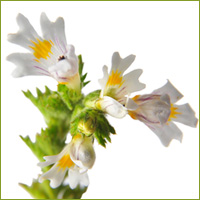 European researchers have been looking at what makes eyebright tick and why it has long been regarded in traditional folk medicine as a helpful herb for eye conditions. Turns out that eyebright supports more than eye health. Wikipedia describes eyebright as having possible benefits not only for blepharitis and conjunctivitis, but for eye strain, colds and sinus infections, allergies and hay fever and sore throats and coughs.
 Everyone is sensitive to light to some degree, but light sensitivity, or photophobia is an abnormal intolerance for light. Discomfort can be experienced from light sources such as sunlight and fluorescent or other artificial lights. It may cause the person with light sensitivity to squint or to have to close their eyes. It can cause pain and/or tears. In some cases, this may be accompanied by a headache.
 Sjogren’s syndrome is an autoimmune disorder of the rheumatoid type. Rheumatoid type diseases are characterized by inflammation and pain, dry eyes and a dry mouth. There are two types. In Primary Sjogren’s syndrome, the disorder occurs without the presence of an accompanying autoimmune disorder. In Secondary Sjogren’s syndrome, it occurs in conjunction with another autoimmune disorder.
 A pilot study published in Phytotherapy Research compared curcumin – derived from natural turmeric – with the drug diclofenac for treating rheumatoid arthritis (RA). Natural curcumin actually reduced RA symptoms even better than the RA drug diclofenac: a 44% reduction in symptoms on the Disease Activity Score and the American College of Rheumatology criteria for reduction of swelling and tenderness of joins. Patients receiving diclofenac had a 42% reduction.