
 You may have heard that medical marijuana is sometimes used by glaucoma patients. When most people in the United States think of marijuana, many different images, words, and opinions come to mind. Marijuana, or cannabis, is known for its psychoactive effects and medicinal properties caused by a chemical within the plant called tetrahydrocannabinol, also known as THC. Marijuana is most commonly recognized as a recreational drug and is subject to many legal restrictions ranging from its use, to possession of certain amounts of the plant product.
Continue reading “Medical Marijuana and Glaucoma: Does It Help?”
 Should you take extra Vitamin A if you have Stargardt’s Disease? Vitamin A supplementation is frequently recommended for certain eye diseases (AMD and Retinitis Pigmentosa, for example). This nutrient is crucial for rebuilding photoreceptors cells and proper retinal functioning. However, a study on mice published in “Investigative Ophthalmology and Visual Science” indicated that Stargardt’s Disease patients may be damaged by taking Vitamin A.
 The FDA has approved a patented device called the iStent® Trabecular Micro-Bypass Stent that helps reduce eye pressure from glaucoma in patients who also have cataracts. The new device addresses the fact that 90 of patients with glaucoma are not compliant with their glaucoma eye drop instructions, and half stop using their drops after 6 months. iStent allow patients to use eye drops less often, and may even make the drops unnecessary.
 An enzyme acts as a catalyst to increase the rate of a chemical reaction. Enzymes are proteins. Scientists have named 3,000+ different enzymes, but perhaps 50,000 additional enzymes may exist. Enzymes all have specific functions that result in biochemical reactions. For example, certain enzymes are involved in the absorption of oxygen and production of energy; other enzymes help nutrients get into the cells.
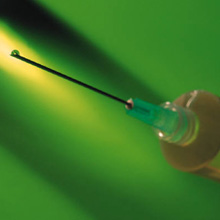 The eye drug Lucentis has been approved by the Food and Drug Administration for treating the disease diabetic macular edema (DME). This drug was originally developed by Roche to treat cancer. Lucentis has also been approved to treat two eye disorders,
  Breakthrough research into vision restoration may result in a new type of prosthetic for people suffering from vision loss due to retinal degenerative diseases such as macular degeneration and retinitis pigmentosa.
 Did you know that the leading cause of blindness in children is eye inquires, and that most eye injuries in schoolchildren are sports-related? According to The National Eye Institute, the damage from eye injuries can be temporary or, or they can lead to permanent loss of vision.
 Guest Blogger, Richard Keane
 Age-related macular degeneration is a serious and common eye ailment in the aging population, but an Italian study showed that taking just 4mg of astaxanthin per day mitigated the symptoms.