
 Astaxanthin is a superfood for the eyes, but our absorption rates are low. Only about half of the astaxanthin we ingest is usable by the body.[1. Mol Nutr Food Res. 2012 Sep;56(9):1385-97.] Astaxanthin is prized for easily crossing the blood/eye barrier and providing antioxidants to the eyes. These free radical fighters help prevent and support a wide variety of age-related eye diseases. A supplement company has added harmless emulsifiers called “phospholipids” to astaxanthin to increase absorption.
What is Astaxanthin?
Many have not heard of astaxanthin. The human body Continue reading “How to Increase Astaxanthin Absorption for Vision Support”
 A large body of research shows green tea is a “super-antioxidant” that benefits the entire body, including the eyes. Eyes are highly vulnerable to oxidative stress, so any antioxidant could have ocular benefits. However, green tea contains polyphenols, potent antioxidants that also reduce inflammation. Catechins in green tea are highly absorbable by eye tissues, unlike many other antioxidants. What does the research into green tea and vision show? How much green tea do you need to get these benefits? If you do not like tea, is there an alternative?
  Eye vitamins are crucial to vision health. In fact, the eye is the most vitamin-hungry organ in the body proportional to its size. It is the second most physiologically active part of our body only second to our brain. We believe the eyes require approximately 25% of the nutrients taken into the body to maintain full health. Any less may eventually result in eye diseases such as macular degeneration, glaucoma and cataracts.
 People who have advanced eye disease have waited too long to improve their vision health. Keeping the eyes health is a lifetime endeavor. An unhealthy lifestyle and poor nutrition lead to a higher risk of eye diseases. Researchers have linked cataracts, macular degeneration, glaucoma, optic neuropathy, retinal vein occlusions, and other eye conditions to mostly-controllable risk factors. Seniors are especially at risk. Natural Eye Care offers this guide to improving vision health.
  Carotenoid supplements could mitigate the deleterious effects of electronics screens on sleep, visual performance, and macular pigment density. Eyes that are glued to screens most of the day are exposed to excessive blue light. In a recent study[1. J.M. Stringham, N.T. Stringham, et al. “Macular Carotenoid Supplementation Improves Visual Performance, Sleep Quality, and Adverse Physical Symptoms in Those with High Screen Time Exposure,” Foods, June, 2017], subjects who took a combination of macular carotenoids — lutein, zeaxanthin, and mesozeaxanthin — reported better sleep patterns, reduced eyestrain and fewer headaches. They also had better visual performance and higher macular pigment optical density.
 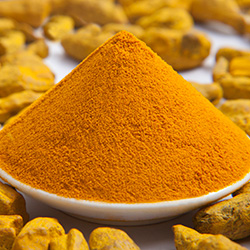 Curcumin is a powerful antioxidant and anti-inflammatory spice. Inflammation plays a role in many eye conditions, including uveitis, glaucoma, and macular degeneration. Used for millennia in Indian cooking, curcumin is the main ingredient in turmeric. Turmeric gives mustard its yellow color. When combined with black pepper, this spice is easier to absorb. You can use turmeric in cooking and take it as a supplement.
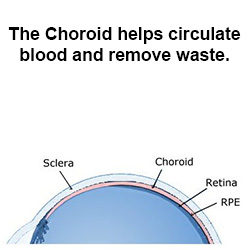 The eye has a delicate vascular system. Eye circulation brings oxygen and nutrients to the eyes. It also removes waste products. The “choroid” is the part of the eye that circulates blood. Fats and blood clots that damage the arteries can also clog the arteries and veins in the eyes. This condition is common as people age. Poor circulation is associated with many eye diseases:
 A paper presented to the annual meeting of the American Academy of Opthomology found that a fruit-heavy Mediterranean diet and caffeine appeared to reduce the risk of developing Age-Related Macular Degeneration (ARMD). For the first time caffeine has been shown to protect against this eye disease.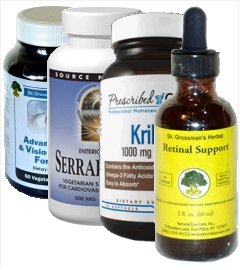
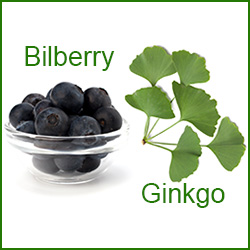 Natural Eye Care has created a new antioxidant supplement, “Dr. Grossman’s Bilberry/Ginkgo Combination Wild Crafted Extract Formula” to help support vision health and circulation. These natural extracts contain powerful antioxidants that counteract free radicals. The formula is designed to help prevent cellular damage, and even reverse it. Many eye diseases, including macular degeneration, cataracts, and glaucoma, are rooted in cellular damage from free radicals.[1. Alpha-Lipoic Acid Antioxidant Treatment Limits Glaucoma-Related Retinal Ganglion Cell Death and Dysfunction,” June 2013, https://www.ncbi.nlm.nih.gov/pmc/articles/PMC3673940/] [2. Ophthalmic Res. 2010;44(3):191-8. doi: 10.1159/000316476. Epub 2010 Sep 9. “Free radicals, antioxidants and eye diseases: evidence from epidemiological studies on cataract and age-related macular degeneration.” Fletcher AE]