
 Middle-aged people and seniors are far more likely to develop Macular Degeneration, glaucoma, cataracts and diabetic retinopathy than those in their youth. It is true that some eye diseases strike the young. These tend to be genetically-based diseases, and they are rare. The incidence of eye diseases in the United States goes up dramatically with age: Continue reading “Eye Disease in Seniors & Age 40+ Cataracts, Glaucoma, Diabetic Retinopathy, Macular Degeneration”
Category: Eye Conditions
Can Myopia Be Prevented by Sunlight? The Connection with Dopamine.
 Research is pointing toward a link between myopia and the brain chemical dopamine. All-natural sunlight may be the antidote.
Myopia is called “near sightedness” because the eyeball is too long. The image from the lens falls short of the retina, causing blurring of distance vision. The condition is corrected using glasses or contact lenses. It is on the rise all over the world. In the United States, incidence has risen from 25% to 50% Continue reading “Can Myopia Be Prevented by Sunlight? The Connection with Dopamine.”
Dry Macular Degeneration May Improve with High-Dose Statin Cholesterol Drug
 Some patients with dry Age-Related Macular Degeneration (ARMD) have vision improvements after taking high doses a statin. The common cholesterol-lowering drug is called Atorvastatin. It is the statin drug used in a phase I/II clinical trial at Massachusetts Eye and Ear at Harvard Medical School and the University of Crete. A higher-than-normal dose of the drug caused lipid deposits behind the retina to dissolve in some patients.
Statin drugs are FDA approved for controlling blood Continue reading “Dry Macular Degeneration May Improve with High-Dose Statin Cholesterol Drug”
Glaucoma Progression May Be Detectable with Special Contact Lens
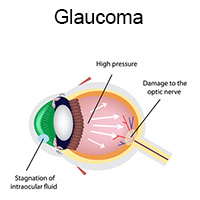 A new “smart” contact lens has been shown to detect accurately intraocular pressure in glaucoma patients. This technology may be useful for predicting which patients are deteriorating rapidly. Their treatment plan can be modified accordingly to help preserve more vision.
This study used the Sensimed Triggerfish® contact lens system. Columbia University Medical Center researchers found that specific electrical signals from the “smart” contact lenses correlated with the rate of the disease’s Continue reading “Glaucoma Progression May Be Detectable with Special Contact Lens”
Warning for Macular Degeneration Patients Who Undergo Cataract Surgery
Eye disease and aging generally go hand-in-hand. That means that more people are likely to need surgery for cataracts, but that also means that those same patients are likely to suffer from other conditions like macular degeneration, glaucoma, and diabetic retinopathy. According to the OSN Supersite, this changes the ways that doctors counsel their patients and how they proceed with treatment plans, especially in relation to cataract surgery.
Some sources say that the risk of AMD decreases after one undergoes cataract surgery, but no conclusive scientific studies on the topic have yet been published.
Avoid Multifocal IOL Implants
According to Rosa Braga-Mele, MD, FRCSC, OSN Cataract Surgery Section Editor, people with AMD should probably avoid multifocal IOL implants (lenses intended to help you live without glasses because nearsightedness and farsightedness are meant to be corrected). Dr. Braga-Mele says that these lenses are not ideal for cataract surgery patients with AMD “because of the fact that contrast sensitivity is decreased with a multifocal implant and contrast sensitivity is already decreased” when people have macular degeneration. Source: “Cataract surgery with comorbidities requires careful surgical management” at osnsupersite.com.
Manage Your AMD
It is especially important that those who suffer from cataracts as well as macular degeneration manage their AMD. Take natural approaches to preventing the deterioration of your sight due to AMD by eating well, wearing UV protection sunglasses, reducing stress, and taking high quality supplements as described in our “self-help” protocol.
Retinal Vein Occlusion: A Complete Overview from Natural Eye Care
 Retinal Vein Occlusion is the blockage of veins that drain blood from the retina in the eye. The eye circulatory system depends on releasing blood back to the heart after it has nourished the retina. When the vein is blocked, hemorrhaging occurs, damaging the retina. It is typically caused by atherosclerosis, a common condition especially in older people that damages the arteries. “Occlusion” means the blockage or closing of a blood vessel.
Symptoms and How Retinal Vein Occlusion Is Diagnosed
A sudden change in vision may indicate retinal vein occlusion.
- A blurred or missing area of vision is the most common, indicating a branch vein occlusion
- Less commonly, there is a severe loss of central vision, associated with a central vein becoming blocked.
Any sudden vision changes should be reported Continue reading “Retinal Vein Occlusion: A Complete Overview from Natural Eye Care”
Zinc Deficiency Linked to Chronic Inflammation in Study
 Researchers at Oregon State University found a link between chronic inflammation, immune dysfunction and zinc deficiency. [1. “Zinc deficiency enhanced inflammatory response by increasing immune cell activation and inducing IL6 promoter demethylation.” Carmen P. Wong, Nicole A. Rinaldi and Emily Ho. Molecular Nutrition and Food Research. Article first published online: 17 MAR 2015 DOI: 10.1002/mnfr.201400761] Inflammation is involved in cardiovascular disease and other diseases.
They introduced an inflammation-provoking substance to a human white blood cell culture. This resulted in an increase in the responses of the cytokines interleukin Continue reading “Zinc Deficiency Linked to Chronic Inflammation in Study”
Cataract Surgery Not Linked to Increased Age-Related Macular Degeneration
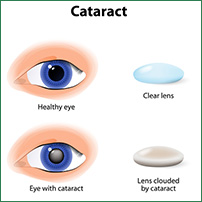 A large study has found no association between prior cataracts surgery and the development of Age-Related Macular Degeneration (ARMD).[1. Association between Previous Cataract Surgery and Age-Related Macular Degeneration. Taylor & Francis. Rim, Tyler Hyungtaek; Lee, Christopher Seungkyu; Chul Lee, Sung; Kim, Sangah; Kim, Sung Soo; Society, Epidemiologic Survey Committee of the Korean Ophthalmological Retrieved: 16 24, May 05, 2016 (GMT)] This study supports the long-term safety and low possibility of side-effects from replacing a cataract-damaged lens with an artificial lens.
Both cataracts and ARMD are eye diseases associated with Continue reading “Cataract Surgery Not Linked to Increased Age-Related Macular Degeneration”
Dry Macular Degeneration May Be Treated by Anti-Placental Growth Factor Antibody, Aflibercept
 Aflibercept is currently a treatment for wet Age-Related Macular Degeneration (AMD), but it may also prove useful for patients with dry AMD.
The researchers accidentally discovered that an anti-placental growth factor antibody could provide retinal protection for the dry form of Macular Degeneration. They tried using a known protein called placental growth factor (PlGF) on a simulation of wet AMD in animal tissues. The PIGF made the retinal cells worse. So, they tried an anti-PlGF antibody treatment. This treatment provided protection against retinal damage.
Aflibercept is an anti-PlGF antibody treatment. It is used Continue reading “Dry Macular Degeneration May Be Treated by Anti-Placental Growth Factor Antibody, Aflibercept”
Music Reduces Glaucoma Patients’ Intraocular Pressure Temporarily
 A small study on glaucoma patients found that relaxation music temporarily improved certain measurements associated with this eye disease. Specifically, daily intraocular pressure was significantly reduced, and best corrected visual acuity improved. Also, short-term mental state was improved.
The beneficial effects of certain types of music are well-documented. Soothing music that helps the listener relax has been found to reduce indicators of stress, such as faster recovery from a stressor, the Continue reading “Music Reduces Glaucoma Patients’ Intraocular Pressure Temporarily”