
 What is this new buzzword “glycation”? When sugars bind with protein molecules, aging apparently accelerates.
Doctors are starting to offer the hemoglobin A1c blood test to more patients because tissue glycation is suspected of accelerating aging. This simple blood test was typically reserved for diabetics. However, research is pointing to its usefulness for all ageing individuals. The test results are good indicators of poor blood sugar control, disease risk, and longevity.
Glycation is the binding together of sugar and protein molecules. A visible result of glycation is Continue reading “Does Glycation Accelerate Ageing?”
 A study in the Journal of the American Geriatrics Society found that seniors had better memory and attention if they followed the Mediterranean Diet. Many seniors struggle with memory and attention impairment. Research is finding that what you put in your mouth strongly impacts brain functioning. A large body of research shows that certain types of diets have better cognitive outcomes than others.
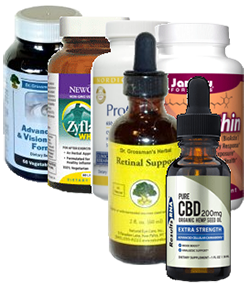 More and more research is pointing to inflammation as playing a role in a wide range of diseases. Alzheimer’s disease, heart disease, cancer, and arthritis, and even the visible signs of aging are all linked to chronic inflammation. Autoimmune disorders such as rheumatoid arthritis, multiple sclerosis, lupus, and Sjogren’s Syndrome can damage the eyes. Also, major eye diseases including Inflammatory (Uveitic) Glaucoma and Wet Macular Degeneration involve inflammation. Anti-inflammatory supplements can help tackle these conditions.
 While Americans spend billions of dollars each year on how they LOOK, little attention is given to how they SEE. Seniors are especially vulnerable to eye diseases such as glaucoma, age-related macular degeneration, and cataracts, as well as hypertension-related eye damage such as retinal vein occlusion.
 Alzheimer’s Disease and Parkinson’s Disease may appear first in the eye, possibly years before the first clear symptoms of the either disease appear. This offers hope of detecting two devastating and common diseases in their earliest stages. Damage from these brain and central nervous system diseases may prove very difficult to reverse. Detecting these illnesses, which impact mostly the elderly, as early as possible could mean treatments that slow the diseases’ progress and preserve functioning. Several recent studies on the eye hold promise of reliable early detection, routine screening and therefore, early intervention.
 Middle-aged people and seniors are far more likely to develop Macular Degeneration, glaucoma, cataracts and diabetic retinopathy than those in their youth. It is true that some eye diseases strike the young. These tend to be genetically-based diseases, and they are rare. The incidence of eye diseases in the United States goes up dramatically with age:
  Age-Related Macular Denegation is a significant cause of vision loss that can often be managed and even improved through targeted nutritional support. It affects mostly people over age 50. While the precise cause of ARMD is not clear, oxidative damage is suspected as being a major factor. It strikes the elderly possibly due to poor diet and nutritional intake over a lifetime, less efficient absorption of nutrients and poor circulation as the body ages. The care needed by vision-impaired elderly could become overwhelming. Let’s take a look at some of the newest research in preventing macular degeneration, as well as treatment and support options.
 Guest Blogger, Richard Keane
 As people age, eye diseases and conditions that commonly occur include macular degeneration, cataracts, vitreous tears/retinal tears and detachments, glaucoma, diabetic retinopathy, dry eyes, and eye floaters.
 A breakthrough laboratory study has found that DHA, an Omega 3 fatty acid, prevented Age-Related Macular Degeneration (ARMD).