
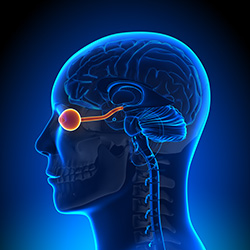
 Several nutrients and vitamins such as bilberry and taurine help protect the optic nerve from damage. Glaucoma causes optic nerve damage. Optic neuritis and optic nerve atrophy are serious conditions that harm the optic nerve. Since the optic nerve sends electrical signals from the eye to the brain, any interruption damages vision. How does the optic nerve work? Which diseases damage the optic nerve? What does the research show about how nutrients, foods, and vitamins protect the optic nerve? Taurine, gingko biloba, a fruit called bilberry, Vitamin C, and Vitamin B12 among others have demonstrated their usefulness. Continue reading “Protect the Optic Nerve with Taurine, Bilberry, and More”
Category: Ginkgo Biloba
New Bilberry and Ginkgo Antioxidant Extract Formula from Dr. Marc Grossman
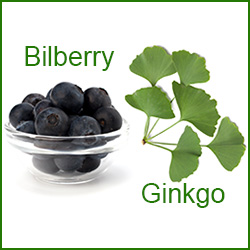 Natural Eye Care has created a new antioxidant supplement, “Dr. Grossman’s Bilberry/Ginkgo Combination Wild Crafted Extract Formula” to help support vision health and circulation. These natural extracts contain powerful antioxidants that counteract free radicals. The formula is designed to help prevent cellular damage, and even reverse it. Many eye diseases, including macular degeneration, cataracts, and glaucoma, are rooted in cellular damage from free radicals.[1. Alpha-Lipoic Acid Antioxidant Treatment Limits Glaucoma-Related Retinal Ganglion Cell Death and Dysfunction,” June 2013, https://www.ncbi.nlm.nih.gov/pmc/articles/PMC3673940/] [2. Ophthalmic Res. 2010;44(3):191-8. doi: 10.1159/000316476. Epub 2010 Sep 9. “Free radicals, antioxidants and eye diseases: evidence from epidemiological studies on cataract and age-related macular degeneration.” Fletcher AE]
Bilberry for Vision
A relative of the blueberry, bilberry contains Continue reading “New Bilberry and Ginkgo Antioxidant Extract Formula from Dr. Marc Grossman”
Retinal Vein Occlusion: A Complete Overview from Natural Eye Care
 Retinal Vein Occlusion is the blockage of veins that drain blood from the retina in the eye. The eye circulatory system depends on releasing blood back to the heart after it has nourished the retina. When the vein is blocked, hemorrhaging occurs, damaging the retina. It is typically caused by atherosclerosis, a common condition especially in older people that damages the arteries. “Occlusion” means the blockage or closing of a blood vessel.
Symptoms and How Retinal Vein Occlusion Is Diagnosed
A sudden change in vision may indicate retinal vein occlusion.
- A blurred or missing area of vision is the most common, indicating a branch vein occlusion
- Less commonly, there is a severe loss of central vision, associated with a central vein becoming blocked.
Any sudden vision changes should be reported Continue reading “Retinal Vein Occlusion: A Complete Overview from Natural Eye Care”
Traumatic Brain Injury in Football Players Reversed with Ginko, Fish Oil, and Other Natural Supplements
 A significant study has found that the deleterious effects of traumatic brain injury in American football players can be mitigated using a natural regimen of weight loss (if needed), fish oil, vitamins, and brain-enhancing supplements including ginkgo biloba. The positive results could help reverse brain damage in contact sport athletes, alcohol and drug addicts, chronic traumatic encephalopathy (CTE) and people who have had brain damage from concussions.
Night Blindness Improved by Transplanted Photoreceptor Cells in Animal Experiment
 Transplanting light-sensitive photoreceptor cells into mice with night blindness resulted in improved night vision. Night blindness means seeing poorly in the darkness, but seeing normally when there is enough light. In this groundbreaking research, scientists injected light-sensitive photoreceptor cells into night-blind mice’s eyes. After this treatment, the animals were able to see well enough to navigate a water maze and swim toward a visual cue in dimly lit conditions. Controls who did not receive the treatment were unable to efficiently navigate the maze.
Continue reading “Night Blindness Improved by Transplanted Photoreceptor Cells in Animal Experiment”
Ginkgo Biloba Extract May Improve Low-Tension Glaucoma
 A study has found that a type of glaucoma called “low-tension” may be helped using gingko biloba extract, a natural supplement.
At the optometrist’s office, a puff of air is one of the ways patients are screened for glaucoma risk. This test measures intraocular pressure (IOP). When the tension in the eye is high (ocular hypertension), the patient receives further tests for glaucoma. Glaucoma is a progressive eye disease that damages the optic nerve, leading to serious vision loss and blindness.
Continue reading “Ginkgo Biloba Extract May Improve Low-Tension Glaucoma”
ReVision Formula Uses Classic Chinese Medicine for Liver to Improve Eyes
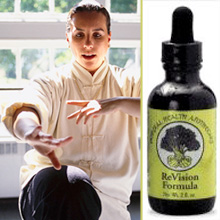 What is ReVision formula, and how can its classic Chinese medicinal ingredients help improve eye health and conditions such as eye floaters? ReVision formula is a liquid taken orally several times per day with water. This tincture is based on Rambling Powder, also known as Xiao Yao San.
ReVision Formula is designed to support healthy vision. Some of the conditions it may address include macular degeneration, eye floaters, and glaucoma. The idea is that ReVision Formula helps improve blood circulation to the eye. From the point of view of Chinese medicine, it helps eliminate stagnation of the body’s energy (chi) to the eyes.
Continue reading “ReVision Formula Uses Classic Chinese Medicine for Liver to Improve Eyes”
Diabetic Retinopathy Patients May Benefit From Nutritional Supplements
Diabetic retinopathy is a potentially blinding condition that affects almost 5% of diabetics. Peer reviewed scientific research has found that the following nutritional supplements may help people who are concerned about diabetic retinopathy and diabetes in general.
Chromium: 73% of type I and II diabetics who took chromium supplements reduced their requirement for insulin or oral hypoglycemic agents. Taking chromium and niacin together reduced fasting blood sugar levels and improved glucose tolerance.
Bilberry: 79% of 37 patients with visible diabetic retinal abnormalities improved after taking 160 mg of bilberry extract twice daily, compared to 0% of the placebo control group, and 86% of those with abnormalities of angiography findings showed moderate to considerable improvement.
Ginkgo Biloba: According to the following double blind study, gingko biloba can help improve diabetic retinopathy by improving the flow of blood to the brain and extremities.
Pine Bark Extract: A 2010 study suggests that pine bark extract (containing procyanidins) may be helpful to diabetics who have early diabetic retinopathy through improved retinal blood flow and lowering swelling edema.
About 40-50% of Americans who have been diagnosed with diabetes already have some stage of diabetic retinopathy, according to NIH.
Reference: Steigerwalt R, et al. Pycnogenol® improves microcirculation, retinal edema, and visual acuity in early diabetic retinopathy. J Ocular Pharmacol Therap 25:537-40, 2009.
Fatty Acids Reduce PMS and Ward Off Eye Disease

Here’s another reason to include fatty acids in your diet: they may help relieve premenstrual syndrome (PMS).
A study published in the journal Reproductive Health showed that, compared to placebo, women who took one to two grams of fatty acids per day reported an alleviation of PMS symptoms. Researchers note that taking a daily dose of fatty acids did not increase cholesterol levels.
Source: nutraceuticalsworld.com
Fatty acids, in the form of omega-3s and omega 6-s have been shown to help prevent and improve conditions such as macular degeneration and diabetic retinopathy.
Ginkgo & PMS
Another study shows that supplementing with Gingko Biloba can significantly reduce physical and psychological symptoms due to PMS. Overall severity of symptoms in the Gingko groups was 34.80% before the treatment and reduced to 11.11% after the treatment.
Ozgoli G, Selselei E. Mojab F. Majd H. A randomized placebo-controlled trial of Gingko Biloba L., in the treatment of premenstrual syndrome. J Altern Complement Med. 2009 Aug:15(8):845-51
Treating Glaucoma Naturally; Focusing on the Needs of Individual Patients
At Natural Eye Care, we tend to have a different philosophy on how to treat and prevent eye conditions such as glaucoma compared to those in the conventional medical community. One thing we definitely agree with, however, is that patients need to be seen as individuals with specific needs, especially when it comes to a disease like glaucoma.
An article at OSN SuperSite discusses the importance of crafting a specific medical regimen for glaucoma patients. They talk about pharmaceutical options, while we are advocates of natural approaches including diet, exercise, stress management, and nutritional supplementation. (See our Vision Wellness Protocol for an introduction to this approach.)
While the doctors interviewed in the above mentioned article focus a great deal on managing intraocular pressure and look at it as the major way to manage the progression of glaucoma, we know that more and more people are developing normal-tension glaucoma (NTG) and that progressive vision deterioration can occur even with IOP-lowering intervention. We advocate natural supplements such as ginkgo biloba that have been proven to improve pre-existing visual field damage in some individuals suffering from glaucoma.