
 Parkinson’s disease is a multi-neurological disease. Currently, most Parkinson’s treatments focus on increasing dopamine production and reducing motor symptoms and tremors through medication. However, this disease has many causative or contributing factors that cause changes in healthy brain function. Many of these factors are also relevant for dementia, Alzheimer’s, Huntington’s, and Wilson’s diseases as well. Which factors impact brain functioning and the development of brain disease? Are there natural approaches to preventing and slowing the progress of such devastating diseases? This article offers a brief overview, based on the new book, Natural Parkinson’s Support: Your Guide to Preventing and Managing Parkinson’s. Continue reading “Natural Parkinson’s Disease Prevention and Support: Help for Neurological Diseases?”
Category: Wellness
11 Brain-Boosting Foods for Seniors
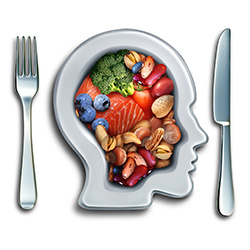 Brain health is especially important in seniors. Seniors are susceptible to dementia, Alzheimer’s disease, memory problems, and cognitive decline. Which foods boost brain power the most? At Natural Eye Care, we have picked eleven common foods that have brain-saving properties. Scientists have been studying the nutrients in foods for decades. They have isolated specific nutrients that cross the blood-brain barrier. These types of nutrients get direct access to the brain and even the retina. The retina is made from neural tissue. Researchers find that many of the nutrients helpful for the brain also stave off eye diseases such as macular degeneration and glaucoma.
Try adding some of these foods to your regular diet. Seniors need fewer calories than younger folks. Therefore, replace “junk food” like cookies, candy, and chips with these brain-boosters. Continue reading “11 Brain-Boosting Foods for Seniors”
Blue Light Harms Fruit Fly Eyes and Brains
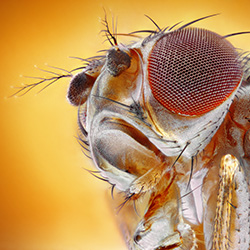 Findings from a recent study suggest that blue light, the same light emitted from smartphones and fluorescent light bulbs, causes brain damage and premature aging in fruit flies.
Why would research on fruit flies be important for human brains? Surprisingly, many of the genes of fruit flies are the same as the genes in humans, and studies on fruit flies often reveal information valuable for human health. Fruit flies’ life cycle is short so scientists can see aging patterns.
As published in the journal Aging and Mechanisms of Disease, researchers at Oregon State University conducted an experiment where they subjected adult fruit flies to blue light. The targeted group of adult flies was exposed to twelve hours of blue light, followed by twelve hours of darkness. They then compared these flies to the control group. Those flies were kept in total darkness for twenty-four hours or bathed in light where blue wavelengths were blocked. Continue reading “Blue Light Harms Fruit Fly Eyes and Brains”
DHA Supports Healthy Fetal Development
DHA (Docosahexaenoic acid) is an omega-3 fatty acid found throughout the body. This essential nutrient supports optimal visual, nervous system and brain development in the fetus. It is important for pregnant women to supplement with a high quality fish oil (or through an algae supplement if vegetarian) as developing infants cannot efficiently produce their own DHA. Babies must obtain this vital nutrient. The fetus gets DHA through the placenta during pregnancy and from breast milk after birth.
Docosahexaenoic acid (C22:6, DHA) is a highly unsaturated omega-3 fatty acid that forms part of the central nervous and visual system structures. DHA is synthesized from its precursor, alfa-linolenic acid, that is also a omega-3 fatty acid and can be obtained from vegetable oils. marine organisms, specially fish, are good nutritional sources of DHA and eicosapentaenoic acid (EPA), another omega-3 fatty acid that has a role in vascular homeostasis.
DHA increases membrane fluidity, improving neurogenesis, synaptogenesis and the activity of retinal photoreceptors. The fetus, specially during the last trimester of pregnancy, has high DHA requirements. It is provided by the mother, since fetal DHA synthesis is negligible in this stage of development. Breast feeding provides DHA to the child, but most replacement artificial formulas do not provide this fatty acid. At the present moment, many products for infant nutrition contain DHA.
Ref: PMID:11775350[PubMed – indexed for MEDLINE]
Editor’s Note: DHA (Docosahexaenoic acid) is an omega-3 fatty acid found throughout the body. This essential nutrient supports optimal visual, nervous system and brain development in the fetus. It is important for pregnant women to supplement with a high quality fish oil (or through an algae supplement if vegetarian) as developing infants cannot efficiently produce their own DHA. Babies must obtain this vital nutrient. The fetus gets DHA through the placenta during pregnancy and from breast milk after birth.
Ginkgo, Garlic, and Ginseng Research on Eye Health and Dementia
 Three time-tested supplements stand out as champions for eye and brain health: garlic, ginseng, and ginkgo. Research on these supplements backs up why they have been used for thousands of years. Garlic plays an important role in all three major traditional medicines–Traditional European Herbal Medicine, Ayurveda, and Traditional Chinese Medicine. Ginseng and ginkgo are crucial herbs in Traditional Chinese Medicine. Do these supplements work? Are they beneficial for aging brains and eyes? What does the research show? Continue reading “Ginkgo, Garlic, and Ginseng Research on Eye Health and Dementia”
The Paleo Diet and Eye Health
Th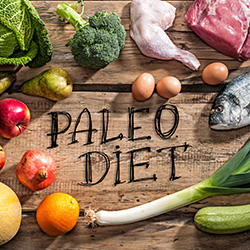 e Paleo Diet or “Caveman Diet” is trendy, but what effect could it have on the eyes? The idea is to eat like hunter-gatherers in the Stone Age. These early humans had no agriculture–and no processed foods. Nearly devoid of grains and dairy products, this diet focuses on meat, fruit, nuts, seeds, and vegetables. Continue reading “The Paleo Diet and Eye Health”
Biohacking the Eyes for Vision Health
 Biohacking refers to hacking human biology. The term “hacking” implies rogue, off-road, off-label, do-it-yourself activities. It stems from computer terminology, referring to illicitly defeating security protocols. However, the term has evolved to mean solving problems by undermining the established methods.
Regarding vision health, we have identified three types of biohacks: Nutrition Biohacks (Nutrigenomics), Quantified Self Biohacking (personal tracking devices), and Grinders (cyborgs devices). Continue reading “Biohacking the Eyes for Vision Health”
Phytonutrients for Your Eyes and Brain: Love Your Fruits and Vegetables

Mother always told you to eat your fruits and vegetables – but why? Modern researchers are finding more and more about antioxidants for health. Scientists publish mountains of peer-reviewed research a year on antioxidants found in fruits and veggies. One type of antioxidant is called “phytonutrients.” Found in plant pigments, phytonutrients are especially good for the eyes and brain. How do phytonutrients slow the impact of aging and reduce disease risk? Which foods contain significant amounts of the best types of phytonutrients?
Continue reading “Phytonutrients for Your Eyes and Brain: Love Your Fruits and Vegetables”
Manage Glaucoma With More Than Decreasing Eye Pressure – Natural Approaches to Glaucoma Care
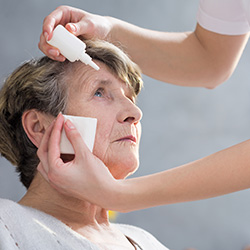 Glaucoma is an eye disease typically associated with high intraocular pressure, but managing glaucoma is more than decreasing eye pressure. Some cases of glaucoma have normal or low intraocular pressure. Natural approaches to glaucoma care, in addition to standard ophthalmology, can help reduce vision loss. The purpose of treatment is to slow down the damage. What are the symptoms of glaucoma? What causes it? How is glaucoma detected? What is the prognosis? How can decreasing intraocular pressure help? And how can you try to reduce vision loss? Continue reading “Manage Glaucoma With More Than Decreasing Eye Pressure – Natural Approaches to Glaucoma Care”
New Year’s Resolutions for Vision Health
 As the New Year approaches, resolve to improve your vision health. Dr. Marc Grossman and Michael Edson, co-authors of Natural Eye Care 2nd Edition, developed this checklist of New Year resolutions for vision health. Pick one or more resolution. Regardless of your age, you can reduce your risk of developing eye disease. Eye disease such as cataracts, macular degeneration, and glaucoma are prevalent in seniors. A few simple steps can help preserve the precious gift of sight. Continue reading “New Year’s Resolutions for Vision Health”