
 Carotenoid supplements could mitigate the deleterious effects of electronics screens on sleep, visual performance, and macular pigment density. Eyes that are glued to screens most of the day are exposed to excessive blue light. In a recent study[1. J.M. Stringham, N.T. Stringham, et al. “Macular Carotenoid Supplementation Improves Visual Performance, Sleep Quality, and Adverse Physical Symptoms in Those with High Screen Time Exposure,” Foods, June, 2017], subjects who took a combination of macular carotenoids — lutein, zeaxanthin, and mesozeaxanthin — reported better sleep patterns, reduced eyestrain and fewer headaches. They also had better visual performance and higher macular pigment optical density. Continue reading “Screen Damage Mitigated by Carotenoids Supplement”
Current Genetic Eye Disease Research on Fuch’s, Leber’s and Retinitis Pigmentosa
 Current research on genetic eye diseases focuses mostly on genetic therapies. Scientists have learned how to sequence DNA at a relatively low cost. New tools for modifying genetic materials, such as the CRISPR, have opened the door for new treatments and even cures. Certain eye disorders are caused by mutated genes and genetic predispositions. This article highlights current research into four genetic eye disorders Continue reading “Current Genetic Eye Disease Research on Fuch’s, Leber’s and Retinitis Pigmentosa”
Leber Congenital Amaurosis Gene Therapy Approved by FDA
 The rare eye disease Leber Congenital Amaurosis, caused by a defective gene, has a new genetic treatment. This is the first time the US Food and Drug Administration has approved gene therapy for an inherited disease.
The RPE65 gene provides a blueprint for a protein that makes light receptors work properly. Individuals with a defective RPE65 gene eventually go blind. Eye doctors may diagnose them with Leber Continue reading “Leber Congenital Amaurosis Gene Therapy Approved by FDA”
Anti-Inflammatory Vision Diet for the Holidays
 Inflammation is a factor in many eye diseases, and what you eat affects inflammation. Whenever major holidays comes along, we are tempted to eat special foods. Many of these treats are high in calories and sugar, which contribute to inflammation. While you don’t want to spoil anyone’s fun, you can choose to eat foods that are anti-inflammatory. At the end of this article, you will find tips for limiting the damage while still enjoying the holiday. Continue reading “Anti-Inflammatory Vision Diet for the Holidays”
Alzheimer’s Disease Indicated in the Eyes
 Did you know that certain vision changes can indicate early-stage Alzheimer’s disease? Alzheimer’s is the #3 killer in the United States, right behind cancer and heart disease. Scientists are researching early detection. Catching this disease in its earliest stages opens up potential treatments, before significant brain damage sets in. Treatments for early Alzheimer’s are also being heavily researched. The retina develops from neural tissue, and the entire eye reflects the health of an individual. Therefore, non-invasive screening Continue reading “Alzheimer’s Disease Indicated in the Eyes”
Eye Movements May Reveal Autism
 Certain rapid eye movements of a subgroup of people on the Autism Spectrum Disorder may aid in diagnosis. The brain controls the eyes. Therefore, certain eye movement tests provide insight into the brain’s functioning.
Researchers at the University of Rochester Medical Center Continue reading “Eye Movements May Reveal Autism”
Protect Your Eyes During Dry, Windy Weather
 You need to protect your eyes when the weather is dry or windy. During the colder seasons, relative humidity indoors is low. Outdoors, wind can blow dust, pollution, ice and snow. Find out how to protect yourself from dry eyes, allergens, irritation, and injury.
Dry Eye from Low Indoor Humidity
Dry eye is a common eye complaint. The eyes may feel itchy, burning, irritated, sore or gritty.
The tear film has three layers: a thin mucus layer, Continue reading “Protect Your Eyes During Dry, Windy Weather”
Curcumin for Glaucoma, Uveitis, and Macular Degeneration
 Curcumin is a powerful antioxidant and anti-inflammatory spice. Inflammation plays a role in many eye conditions, including uveitis, glaucoma, and macular degeneration. Used for millennia in Indian cooking, curcumin is the main ingredient in turmeric. Turmeric gives mustard its yellow color. When combined with black pepper, this spice is easier to absorb. You can use turmeric in cooking and take it as a supplement.
Uveitis Curcumin Study
Uveitis is inflammation of the uvea, the eye’s middle layer. Symptoms may include redness, floaters, sensitivity to light, Continue reading “Curcumin for Glaucoma, Uveitis, and Macular Degeneration”
How to Give Your Eyes Enough Nutrition
 Have you ever heard that your eyes need plenty of nutrition? It’s true, and research backs this up. But did you know that the Standard American Diet tends to be very low in some eye-essential nutrients? The eyes are the second most physiologically active part of our body (#1 is the brain). At Natural Eye Care, we believe the eyes require approximately 25% of the nutrients we take into our body, if we eat a healthy diet. Even though most Americans consume enough calories, we may still have poor nutrition for the eyes. No wonder Macular Degeneration, cataracts, glaucoma, optic nerve Continue reading “How to Give Your Eyes Enough Nutrition”
Smart Graphene Contact Lenses for Glaucoma and Diabetes Control
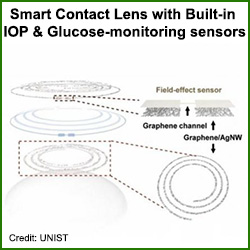 Diabetics and glaucoma patients could start wearing comfortable smart contact lenses to monitor blood sugar and intraocular pressure. Professor Jang-Ung Park and colleagues in South Korea[1. Ulsan National Institute of Science and Technology(UNIST). “‘Smart contact lens sensor’ for diabetic and glaucoma diagnosis.” ScienceDaily. ScienceDaily, 4 May 2017] have solved some of the problems associated with smart contact lenses by using graphene. They recently released a study documenting their breakthrough research. These biosensors may have broad applications for detecting and treating disease.
Why Smart Contact Lenses?
Tears can indicate glucose levels in the body. Insulin-dependent diabetics Continue reading “Smart Graphene Contact Lenses for Glaucoma and Diabetes Control”