
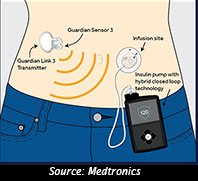
 The Food and Drug Administration has granted approval for a new artificial pancreas that is hailed as a breakthrough for patients with Type I diabetes. Manufactured by Medtronic Plc, the MiniMed 670G[1. “FDA approves Medtronic’s ‘artificial pancreas’ for diabetes,” by Ransdell Pierson and Toni Clarke. Reuters Health News. 9/28/16] combines an insulin pump with an insulin sensor. The sensor sends blood sugar data to the pump every five minutes. Then, the pump releases the correct amount of insulin. This technology saves finger-pricks and frequent monitoring of blood glucose levels.
Monitoring blood sugar levels is Continue reading “New “Artificial Pancreas” for Diabetes”
 While Americans spend billions of dollars each year on how they LOOK, little attention is given to how they SEE. Seniors are especially vulnerable to eye diseases such as glaucoma, age-related macular degeneration, and cataracts, as well as hypertension-related eye damage such as retinal vein occlusion.
 As we age, our chances of developing a serious vision problem increase significantly. More than half of people over the age of 70 years old have an eye condition such as cataracts, glaucoma, and macular degeneration; people with diabetes often develop diabetic retinopathy. These limiting conditions decrease the quality of life. Being a retired senior means having time to enjoy life, read, travel, play golf, enjoy hobbies, and socialize with friends and family. However, participating in these activities requires clear vision.
 Americans are spending at least 5 hours per day close-up looking at computers, tablets and smartphones.[1.
  Alzheimer’s Disease and Parkinson’s Disease may appear first in the eye, possibly years before the first clear symptoms of the either disease appear. This offers hope of detecting two devastating and common diseases in their earliest stages. Damage from these brain and central nervous system diseases may prove very difficult to reverse. Detecting these illnesses, which impact mostly the elderly, as early as possible could mean treatments that slow the diseases’ progress and preserve functioning. Several recent studies on the eye hold promise of reliable early detection, routine screening and therefore, early intervention.
 Lifestyle can have a significant impact on the progression of glaucoma. Patients should follow their ophthalmologist’s advice. Also, research has shown that certain behavioral changes can help preserve vision. Natural Eye Care offers these tips.
 Macular edema is a swelling of the macula, the part of the eye responsible for central vision. When fluid builds up in the macula, it becomes swollen and thicker. This distorts vision. There are several causes, including diabetic retinopathy, post-eye surgery complications, macular degeneration, injury, systemic inflammatory diseases that can affect the eye, and/or vein blockages. If an eye disease causes damage to blood vessels in the retina, it can cause macular edema. Left untreated, this problem can cause serious vision loss and even blindness.
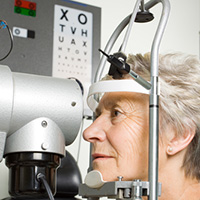 Examining the eyes of animals has revealed a test for very early Parkinson’s Disease. This research may translate into an eye test for humans. If so, it offers hope to the 1 in 500 people worldwide who will develop Parkinson’s by allowing treatment to slow the condition in its earliest stages.
 Acupuncture has been used for millennia to treat eye disease. Today, acupuncture can help preserve vision for those with a wide range of eye conditions including macular degeneration, glaucoma, eye floaters, dry eyes, cataracts and much more. Part of Traditional Chinese Medicine, acupuncture involves a practitioner inserting tiny needles into the skin. It is licensed and regulated by most states in the US. How does acupuncture work, and what are its effects on supporting eye conditions? What could you expect from acupuncture treatments? What can you do at home?
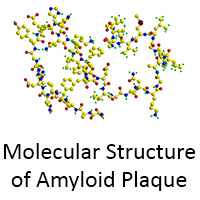 The presence of amyloid plaque deposits in the brain are characteristic Alzheimer’s disease. The condition presents as amyloid plaque deposits, tangles in the brain neurons, poorly functioning nerve synapses and nerve cell deterioration. Alzheimer’s is linked to