
 Three time-tested supplements stand out as champions for eye and brain health: garlic, ginseng, and ginkgo. Research on these supplements backs up why they have been used for thousands of years. Garlic plays an important role in all three major traditional medicines–Traditional European Herbal Medicine, Ayurveda, and Traditional Chinese Medicine. Ginseng and ginkgo are crucial herbs in Traditional Chinese Medicine. Do these supplements work? Are they beneficial for aging brains and eyes? What does the research show? Continue reading “Ginkgo, Garlic, and Ginseng Research on Eye Health and Dementia”
Cataracts – what’s new?
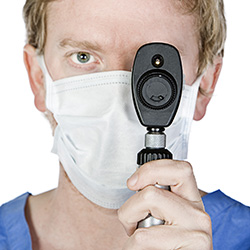 Cataracts can not only be prevented, but can even be reversed through nutrition, supplementation and lifestyle changes. Learn about products to support lens health.
Cataracts were once considered an inevitability for seniors. In the United States, only 10% of 55-year-olds have experienced cataracts. However, half of 75-year-olds have developed cataracts and at age 85, the number is 70%.[1. National Eye Institute. Cataracts. Retrieved Jan 7, 2018 from https://nei.nih.gov/eyedata/cataract.] Continue reading “Cataracts – what’s new?”
Macular Degeneration Glasses May Restore Vision: Pixium Vision’s Bionic PRIMA System Sees Improvements
 People with vision loss due to retinal disease may be able to use a bionic system to improve sight in the near future. Pixium Vision is running a feasibility study on is PRIMA System, and they got better-than-expected results. The study is on patients with dry Age-Related Macular Degeneration. Currently, medical science cannot restore vision in those with retinal dystrophies. The PRIMA System may lead to vision restoration for patients with Macular Degeneration, Retinitis Pigmentosa and other retinal diseases. Continue reading “Macular Degeneration Glasses May Restore Vision: Pixium Vision’s Bionic PRIMA System Sees Improvements”
Why Astaxanthin Helps Prevent Sun Damage
 Astaxanthin is a potent antioxidant that helps prevent sun damage to the body by blocking free radical damage. This bright red molecule forms in certain algae, pink seafood, and yeast. Unlike beta-carotene, this carotenoid crosses the blood-brain barrier to help maintain healthy brain function. Astaxanthin helps the brain by promoting neurogenesis, the generation of new brain neurons. This nutrient also supports existing neurons by reducing oxidative stress. Scientists have found that astaxanthin can protect against cumulative sun damage to the eye. This nutrient may help reduce the risk of eye disease such as macular degeneration. It may also protect against cataracts and vision loss from glaucoma. In addition, related carotenoids called lutein and zeaxanthin block blue light and work synergistically with astaxanthin. Continue reading “Why Astaxanthin Helps Prevent Sun Damage”
The Paleo Diet and Eye Health
Th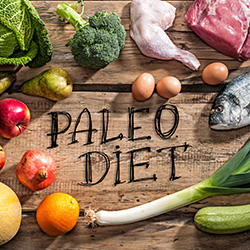 e Paleo Diet or “Caveman Diet” is trendy, but what effect could it have on the eyes? The idea is to eat like hunter-gatherers in the Stone Age. These early humans had no agriculture–and no processed foods. Nearly devoid of grains and dairy products, this diet focuses on meat, fruit, nuts, seeds, and vegetables. Continue reading “The Paleo Diet and Eye Health”
Chronic Fatigue Virus not Associated with Virus XMRV
The Independent reports that US government officials have persuaded the editors of the Proceedings of the National Academy of Sciences to hold off from publishing a scientific paper establishing the link between chronic fatigue syndrome and the virus XMRV. The study supporting the link was headed by virologists working for the Food and Drug Administration, but scientists at the Centers for Disease Control have authored another study that contradicts the FDA findings and finds no trace of XMRV in CF patients.
There has been controversy over this new cause of CF ever since an initial paper was published in the journal Science in October, 2009 as researchers have spoken out on both sides of the issue. Some see an obvious connection between the virus and chronic fatigue syndrome, while others state that CF sufferers are no more likely to have the virus than healthy people.[1. Retrieved from https://www.independent.co.uk/news/science/study-that-solves-chronic-fatigue-syndrome-blocked-2022195.html.]
Update: 2014 recent research does not find such an association.[2. Irlbeck DM, et al. (2014). No association found between the detection of either xenotropic murine leukemia virus-related virus or polytropic murine leukemia virus and chronic fatigue syndrome in a blinded, multi-site, prospective study by the establishment and use of the SolveCFS BioBank. BMC Res Notes. Aug 4;7:461.]
Update, 2016: Molecular biologists traced the development of XMRV to a propagation of the virus from cell lines in a lab mouse in about 1993. The virus apparently spread through contamination of lab samples of prostate cancer and/or CFS. “Well-controlled experiments showed that detection of XMRV was due to contaminated samples and was not a marker of or a causal factor in prostate cancer or CFS.”[3. Johnson AD, et al. (2016). Xenotropic Murine Leukemia Virus-Related Virus (XMRV) and the Safety of the Blood Supply. Clin Microbiol Rev. Oct;29(4):749-57.]
Learn more about managing chronic fatigue.
Brain Boosters for Seniors: Prevent or Support Alzheimer’s and Dementia
 As we age, how can we prevent or support dementia, Alzheimer’s Disease, and other age-related brain diseases? Looking at the scientific research, much emphasis is on curing neurological disease after it is well-established. Reacting to a crisis is logical, though, after many years of research and money spent, there is still no cure. However, preventing a crisis is even better. Why wait for possible brain deterioration to affect your quality-of-life? Continue reading “Brain Boosters for Seniors: Prevent or Support Alzheimer’s and Dementia”
Halting Diabetic Retinopathy: Every Diabetic Patient’s Guide to Preserving Vision
 Diabetic retinopathy is a vision-stealing effect of diabetes. What causes diabetes, and how can you prevent it? Can diabetic patients prevent this eye disease? What can you do to halt diabetic retinopathy? How can patients preserve their vision?
Step 1: Don’t Get Diabetes
Avoiding Type 1 Diabetes is a virtual impossibility. Doctors do not know why the immune system attacks the pancreas. The underlying cause is typically genetic, but a trigger also seems to be needed. Type 1 is usually diagnosed in childhood and represents less than 10% of diabetic cases. Continue reading “Halting Diabetic Retinopathy: Every Diabetic Patient’s Guide to Preserving Vision”
Can Omega-7 Fish Oil Reduce Dry Eyes and Metabolic Syndrome?
 Scientists recently discovered a fat molecule that they called “palmitoleic acid”, a type of Omega-7 fatty acid. The substance appears to have special anti-inflammatory properties. Omega-7 occurs in certain fish oils and nuts. You may have heard of Omega-3 fatty acids, which come mostly from cold water fatty fish. Omega-3s reduce inflammation and heart disease risk. Omega-6 fatty acids occur in primarily in nuts and seeds, vegetable oil and grains. Omega-6 fatty acids are polyunsaturated fats. Omega-7s are monounsaturated fats, similar to olive oil. How are these types of fats different? What makes palmitoleic acid so important for preventing Type 2 diabetes and metabolic syndrome? Should you get them through food or supplements? How much should you take? Continue reading “Can Omega-7 Fish Oil Reduce Dry Eyes and Metabolic Syndrome?”
Glaucoma Study Finds Lower Intra-ocular Pressure from Mindfulness Meditation
 According to a small study published in the Journal of Glaucoma, a short course of mindfulness meditation reduced intraocular pressure (IOP) in patients with primary open angle glaucoma (POAG). The practice also normalized stress biomarkers and positively modified gene expression. Mindfulness meditation may be a therapeutic resource to reduce IOP and help glaucoma patients.
Continue reading “Glaucoma Study Finds Lower Intra-ocular Pressure from Mindfulness Meditation”