

Eye disease and aging generally go hand-in-hand. That means that more people are likely to need surgery for cataracts, but that also means that those same patients are likely to suffer from other conditions like macular degeneration, glaucoma, and diabetic retinopathy. According to the OSN Supersite, this changes the ways that doctors counsel their patients and how they proceed with treatment plans, especially in relation to cataract surgery.
Some sources say that the risk of AMD decreases after one undergoes cataract surgery, but no conclusive scientific studies on the topic have yet been published.
Avoid Multifocal IOL Implants
According to Rosa Braga-Mele, MD, FRCSC, OSN Cataract Surgery Section Editor, people with AMD should probably avoid multifocal IOL implants (lenses intended to help you live without glasses because nearsightedness and farsightedness are meant to be corrected). Dr. Braga-Mele says that these lenses are not ideal for cataract surgery patients with AMD “because of the fact that contrast sensitivity is decreased with a multifocal implant and contrast sensitivity is already decreased” when people have macular degeneration. Source: “Cataract surgery with comorbidities requires careful surgical management” at osnsupersite.com.
Manage Your AMD
It is especially important that those who suffer from cataracts as well as macular degeneration manage their AMD. Take natural approaches to preventing the deterioration of your sight due to AMD by eating well, wearing UV protection sunglasses, reducing stress, and taking high quality supplements as described in our “self-help” protocol.
 Retinal Vein Occlusion is the blockage of veins that drain blood from the retina in the eye. The eye circulatory system depends on releasing blood back to the heart after it has nourished the retina. When the vein is blocked, hemorrhaging occurs, damaging the retina. It is typically caused by atherosclerosis, a common condition especially in older people that damages the arteries. “Occlusion” means the blockage or closing of a blood vessel.
 Researchers at Oregon State University found a link between chronic inflammation, immune dysfunction and zinc deficiency. [1. “Zinc deficiency enhanced inflammatory response by increasing immune cell activation and inducing IL6 promoter demethylation.” Carmen P. Wong, Nicole A. Rinaldi and Emily Ho. Molecular Nutrition and Food Research. Article first published online: 17 MAR 2015 DOI: 10.1002/mnfr.201400761] Inflammation is involved in cardiovascular disease and other diseases.
 A long-term study of patients receiving gene therapy shows positive results.[1.New England Journal of Medicine. Visual Acuity after Retinal Gene Therapy for Choroideremia by Robert Maclaren April 27, 2016DOI: 10.1056/NEJMc1509501] Researcher Dr. Robert Maclaren published a letter in the New England Journal of Medicine indicating that 5 out of the 6 patients with a rare genetic eye disease either improved or stayed the same after treatment. This may lead to approval of gene therapy for Choroideremia. This type of research may ultimately result in the approval of gene therapy for other more common eye diseases.
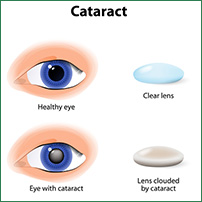 A large study has found no association between prior cataracts surgery and the development of Age-Related Macular Degeneration (ARMD).[1. Association between Previous Cataract Surgery and Age-Related Macular Degeneration. Taylor & Francis. Rim, Tyler Hyungtaek; Lee, Christopher Seungkyu; Chul Lee, Sung; Kim, Sangah; Kim, Sung Soo; Society, Epidemiologic Survey Committee of the Korean Ophthalmological Retrieved: 16 24, May 05, 2016 (GMT)] This study supports the long-term safety and low possibility of side-effects from replacing a cataract-damaged lens with an artificial lens.
 Aflibercept is currently a treatment for wet Age-Related Macular Degeneration (AMD), but it may also prove useful for patients with dry AMD.
 A small study on glaucoma patients found that relaxation music temporarily improved certain measurements associated with this eye disease. Specifically, daily intraocular pressure was significantly reduced, and best corrected visual acuity improved. Also, short-term mental state was improved.
 Rod-Cone Dystrophy is a genetically-based deterioration of vision caused by damage to the photoreceptors in the eye. Rods and cones are the photoreceptor cells in the retina that give us daytime and night time vision. Genes that provide the blueprint for manufacturing proteins crucial to the eye’s rods and cones are damaged. Without enough of these proteins, vision deteriorates and blindness may result.
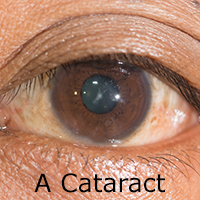 In the United States, cataract surgery is widely available. Cataracts mostly affects seniors. Even though the surgery is common with little risk of side-effects, some patients want to hold off on the surgery or avoid it completely. Preliminary research on certain eye drops designed to address cataracts may offer hope to these patients.
 An animal study has shown gene therapy to be effective even in the later stages of retinitis pigmentosa, which gives hope to more patients of this often inherited condition. This eye disease affects approximately 1 in 4,000 people. Up to 20% of these patients have X-linked retinitis pigmentosa. These individuals, mostly male, have night blindness before they enter puberty, and gradual vision loss by middle age. Around 70% of them have a genetic mutation that prevents the correct production of a protein important for the health of the photo receptors.