
 Collagen can help reduce the risk of eye conditions such as glaucoma, cataracts, and macular degeneration. Connective tissue is made up primarily of collagen. This scaffolding provides elasticity and strength to the tendons, bones, ligaments, and skin. The eyes depend on collagen to function properly. As we age, we produce less collagen. This causes wrinkles in the skin. Losing collagen leads to an eye condition in middle age called “presbyopia” – a longer focal distance. Adding collagen may improve the elasticity of the eye. This article explores the research on collagen and glaucoma. Continue reading “Can Collagen Reduce Glaucoma Risk?”
Category: Eye Conditions
Reducing Digital Eye Strain, Tired Eyes and Fatigue Naturally
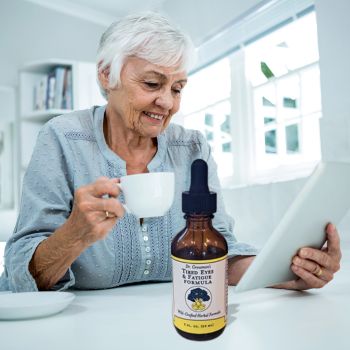 In today’s digital age, our eyes are under constant stress from extended screen time on computers, tablets and smartphones. This leads to digital eye strain, tired eyes, fatigue, and even long-term vision concerns. At Natural Eye Care, we are committed to helping you maintain healthy vision naturally. This blog post discusses the scientifically studied ingredients in our new wild-crafted herbal formula: Dr. Grossman’s Tired Eyes and Fatigue Formula. This powerful tincture is a blend of natural ingredients, including ginger, ginseng, bilberry, green tea, ashwagandha, and schisandra. We selected the ingredients carefully to support eye health and combat eye fatigue. Continue reading “Reducing Digital Eye Strain, Tired Eyes and Fatigue Naturally”
Nattokinase Supplements for Heart Health Benefits
Did you know that two substances of Asian origin, nattokinase and serrapeptase, have significant health benefits? Scientific studies have revealed some of the reasons why longevity is associated with regular consumption of serrapeptase and nattokinase supplements. Specifically, we will discuss cardiovascular disease, eye issues such as floaters, macular degeneration, and diabetic retinopathy, internal scar tissue from autoimmune disorders, lung disease, sinusitis, neurological disorders, and inflammatory bowel disease. Continue reading “Nattokinase Supplements for Heart Health Benefits”
Blue Light and Macular Degeneration (AMD) Risk
 We are exposed to blue light daily when we over-use computers, smartphones, tablets, and televisions. We also get blue light from the sun, and LED and fluorescent lights The risks associated with blue-light exposure increase with the duration of exposure. Therefore, take steps to keep your eyes safer. We will explain research on blue light and macular degeneration, and provide tips for reducing blue light exposure.
Blue Light Affects the Retina
New research links blue light and Macular Degeneration risk. Antioxidants can play an important role in protecting against the adverse effects of blue light exposure. Continue reading “Blue Light and Macular Degeneration (AMD) Risk”
Green Tea Benefits for Seniors – Antioxidants for the Eyes, Brain, and Body
 Oxidative stress happens everywhere in the body and can create havoc over time. Many eye and brain diseases are triggered or exacerbated by oxidative stress. The body counteracts this stress by producing antioxidants. However, you must also ingest additional antioxidants through healthy food, drinks, and supplements. Green tea, rich in antioxidants, offers protective benefits for eye health by combating oxidative damage.[1. Merin, S. (1991). Inherited cataracts. In Merin S. editor. Inherited Eye Diseases, (pp. 86-120), New York: Mercel Dekker.] At pennies per cup, this convenient and tasty beverage has been studied for its special antioxidant properties. What are the green tea benefits for seniors? Read on to find out. Continue reading “Green Tea Benefits for Seniors – Antioxidants for the Eyes, Brain, and Body”
What Are Macular Holes And Can They Heal Naturally?
 The macula, located at the center of the retina, plays a vital role in providing sharp, central vision necessary for tasks like reading, driving, and perceiving fine details. However, when a hole forms in the macula, it can lead to central vision becoming distorted, darkened, or even lost over time if left untreated. In the United States, macular holes are relatively rare, with a prevalence of approximately 0.33% among individuals over the age of 55. The condition becomes more common as patients enter their 70s. Continue reading “What Are Macular Holes And Can They Heal Naturally?”
Staying Hydrated for Better Health and Wellness
 Staying hydrated is an essential part of maintaining health. Drinking healthy fluids throughout the day helps the body detoxify and is critical in maintaining temperature control and proper blood viscosity. Seniors, in particular, generally do not drink enough water.
Why are we told to stay hydrated for our health? At Natural Eye Care, we care about the eyes and the body. Thus, keeping the body’s fluid balance is part of maintaining vision health. While 60% of the human body is composed of water, the eye is 98% water. Dehydration impairs the functioning of all systems in the body. Overhydration is also dangerous. In this article, we discuss the benefits of hydration, the deleterious effects of chronic dehydration, and how much water you need to drink. Continue reading “Staying Hydrated for Better Health and Wellness”
Diabetic Retinopathy, Sugar Balance and Retinal Support
 Diabetic retinopathy is a leading cause of blindness among adults. Poor blood sugar balance can damage nerves, so nerve support is crucial for people with diabetes. Diabetic retinopathy is a serious eye condition stemming primarily from imbalances in blood sugar levels. When blood sugar is not properly managed, the body’s delicate nerve tissues, including the retina, can be injured.
At Natural Eye Care, we have examined the research on nutrients that help protect the eye, including the retina and blood flow to the eye. Research has identified oxidative stress and inflammation as key contributors to the onset and development of numerous eye conditions.[1.Levkovitch-Verbin, H. (2015). Retinal ganglion cell apoptotic pathway in glaucoma: Initiating and downstream mechanisms. Prog. Brain Res, 220:37–57.] [2.Kowluru, R.A., Mishra, M. (2015). Oxidative stress, mitochondrial damage and diabetic retinopathy. Biochem. Biophys. Acta. 1852:2474–2483.] [3.Dib, B., Lin, H., Maidana, D.E., Tian, B., Miller, J.B., et al. (2015). Mitochondrial DNA has a pro-inflammatory role in AMD. Biochem Biophys Acta, 1853:2897–2906.] These conditions include macular degeneration, glaucoma, cataracts, macular edema, and diabetic retinopathy. Without intervention, these eye diseases can result in a gradual decline in vision, potentially leading to blindness. Studies suggest that incorporating specific antioxidant and anti-inflammatory nutrients may be beneficial in preventing and managing these eye disorders.[4.Rhone, M., Basu, A. (2008). Phytochemicals and age-related eye diseases. Nutr Rev, 66:465–472.]
Continue reading “Diabetic Retinopathy, Sugar Balance and Retinal Support”
Eating Habits Can Impair Circulation, Increasing the Risk of Glaucoma, Retinal Vascular Occlusions, Dry Eyes, Macular Degeneration
 We might not connect our eating habits to eye disease, but poor nutrition impairs circulation. Reduced circulation can contribute to eye diseases, including cataracts, glaucoma, retinal vascular occlusions, ischemic optic neuropathy (ION), dry eyes, macular degeneration, and diabetic retinopathy. Instead of being a “victim” of eye diseases in your senior years, you can take charge of your health today!
At Natural Eye Care, we believe that the visual system uses approximately 25% of the nutrients we take into the body. Only the brain needs more. Therefore, a nutrient-rich diet helps keep your eyes healthy. Anything that impairs the free flow of blood, oxygen, and nutrients can significantly increase the risk of eye disease. Over time, you could experience vision loss, making you less independent in your senior years.
Poor Circulation is Linked to Macular Degeneration, Glaucoma and Diabetic Retinopathy
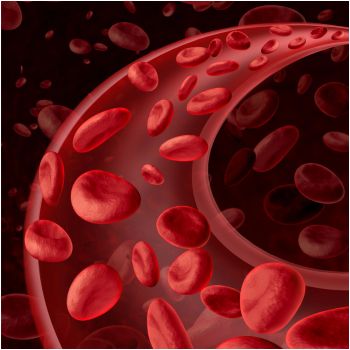 Poor circulation significantly contributes to eye diseases, including macular degeneration, glaucoma, and diabetic retinopathy. Heart disease and diabetes lead to poor circulation. Our eyes and brain require the most oxygen and nutrients, so they need healthy blood circulation. In this article, we will explore the connections between age-related macular degeneration (AMD) and poor circulation. We will also examine the relationship between heart disease and glaucoma. Additionally, we will discuss how diabetes affects circulation and leads to diabetic retinopathy.
Macular Degeneration and Poor Circulation
Age-related macular degeneration (AMD) is the leading cause of severe and irreversible vision loss in developed countries.[1.Klein R Klein BE Tomany SC Cruickshanks KJ . The association of cardiovascular disease with the long-term incidence of age-related maculopathy: The Beaver Dam Eye Study. Ophthalmology. 2003;110:636–643.] [2.Evans J Wormald R . Is the incidence of registrable age-related macular degeneration increasing? Br J Ophthalmol. 1996;80:9–14.].The macula is a tiny spot in the middle of the eye’s retina, where we get our most detailed vision. Heart disease is a major contributing factor. Numerous studies have linked hypertension and atherosclerosis with AMD.[3.Vingerling JR Dielemans I Bots ML Hofman A Grobbee DE de Jong PT . Age-related macular degeneration is associated with atherosclerosis: The Rotterdam Study. Am J Epidemiol. 1995;142:404–409.] [4.Hyman L Schachat AP He Q Leske MC . Hypertension, cardiovascular disease, and age-related macular degeneration. Age-Related Macular Degeneration Risk Factors Study Group. Arch Ophthalmol. 2000;118:351–358.] [5.van Leeuwen R Ikram MK Vingerling JR Witteman JC Hofman A de Jong PT . Blood pressure, atherosclerosis, and the incidence of age-related maculopathy: The Rotterdam Study. Invest Ophthalmol Vis Sci. 2003;44:3771–3777.] [6.Klein R Klein BE Tomany SC Cruickshanks KJ . The association of cardiovascular disease with the long-term incidence of age-related maculopathy: The Beaver Dam Eye Study. Ophthalmology. 2003;110:636–643.] Hundreds of peer-reviewed studies indicate that AMD can be very responsive to diet, exercise, and targeted supplementation.
The choroid is a thin layer of tissue in the eye’s middle wall, rich in blood vessels that supply oxygen and nutrients to the eye. Several cross-sectional studies have shown that blood flow in the choroid and retina is reduced in AMD.[7.Agnes Boltz, Alexandra Luksch, Barbara Wimpissinger, Noemi Maar, Günther Weigert, Sophie Frantal, Werner Brannath, Gerhard Garhöfer, Erdem Ergun, Michael Stur, Leopold Schmetterer; Choroidal Blood Flow and Progression of Age-Related Macular Degeneration in the Fellow Eye in Patients with Unilateral Choroidal Neovascularization. Invest. Ophthalmol. Vis. Sci. 2010;51(8):4220-4225.] [8.M.L. Hibert, Y.I. Chen, N. Ohringer, W.J. Feuer, N.K. Waheed, J.S. Heier, M.W. Calhoun, P.J. Rosenfeld and J.R. Polimeni. Altered Blood Flow in the Ophthalmic and Internal Carotid Arteries in Patients with Age-Related Macular Degeneration Measured Using Noncontrast MR Angiography at 7T. American Journal of Neuroradiology September 2021, 42 (9) 1653-1660]
Poor circulation hurts the body’s ability to provide a healthy blood supply to the retina. This appears to induce ischemia (an inadequate blood supply) and hypoxia (inadequate supply of oxygen to the body’s tissues) in the retina. The retina is essentially starved of oxygen and essential nutrients. In severe cases, dry AMD develops into the more dangerous wet AMD.