
 The links between antioxidants and vision health are strong. Antioxidants are the antidote to oxidization. Normal metabolism creates free radicals. These are atoms that lack an electron. Free radicals roam about the body, scavenging electrons and stealing electrons from healthy cells. This results in permanent damage to these afflicted cells which ultimately can result in disease. Significant research has shown that antioxidants protect against this cellular damage and are essential for maintaining health. The eye is especially vulnerable to free radical damage. Therefore, providing the body with sufficient antioxidants Continue reading “Antioxidants, Eye Disease and Oxidative Stress”
Category: Amino acids
Macular Degeneration Stabilized by Acetyl-L-carnitine, Omega-3 fatty acids, and Coenzyme Q10
 Patients with early Age-Related Macular Degeneration (AMD) improved when taking a combination of nutrients. The nutrients were acetyl-L-carnitine, omega-3 fatty acids, and coenzyme Q10.[1. Ophthalmologica. 2005 May-Jun;219(3):154-66. “Improvement of visual functions and fundus alterations in early age-related macular degeneration treated with a combination of acetyl-L-carnitine, n-3 fatty acids, and coenzyme Q10.” Feher J et. al.]
The double-blind trial was controlled with a soy oil placebo. The study included over 100 patients with AMD. They were assigned to take two capsules per day for 12 months of either the treatment capsule or the placebo. Nearly all of the subjects who took the supplements for one year showed significant improvement in visual acuity (Snellen Chart & ETDRS chart), foveal sensitivity and changes in the back of the eye. The fovea is the only part of the eye where 100% visual acuity is possible. Only 2% of these subjects had clinically significant worsening of their condition. But 17% of the control group who received a placebo got worse.
Rod-Cone Dystrophy – A Complete Overview by Natural Eye Care
 Rod-Cone Dystrophy is a genetically-based deterioration of vision caused by damage to the photoreceptors in the eye. Rods and cones are the photoreceptor cells in the retina that give us daytime and night time vision. Genes that provide the blueprint for manufacturing proteins crucial to the eye’s rods and cones are damaged. Without enough of these proteins, vision deteriorates and blindness may result.
Much of the current research into rod-cone dystrophy is focused on genetic research. Scientists are busy identifying the faulty genes and how they function. Stem cells or other genetic therapy offers hope for a treatment and possibly cure in the future. In the meantime, nutritional and lifestyle choices may Continue reading “Rod-Cone Dystrophy – A Complete Overview by Natural Eye Care”
Computers & Your Eyes II: How Blue Light Damages Vision
 Blue light is emitted from all handheld electronic devices as well as desktop and laptop computers and televisions. It is the shortest wave length light in the visible spectrum and causes significant damage to many parts of the eye seriously impacting present and future vision capacity. Damage from blue light from smartphones is particularly important because smartphones are often used in dim light and are used close to the eyes. Unlike ordinary computer vision fatigue, damage from blue light is serious, cumulative and irreversible. Continue reading “Computers & Your Eyes II: How Blue Light Damages Vision”
Amino Acid Taurine is Crucial to Healthy Vision
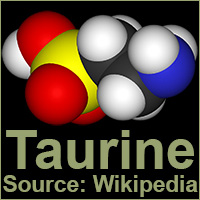 Your body is 1/1000th taurine, a chemical essential to life. The amino acid taurine is crucial for vision. It supports function of the heart, skeletal muscle, and the central nervous system.[1] The pancreas produces taurine, and taurine is a major component of digestive bile. The chemical can be ingested from meats, fish and supplements, such as pills and energy drinks.
In the 1970s, experiments on animals deprived of taurine found they did not develop proper vision. Since then, Continue reading “Amino Acid Taurine is Crucial to Healthy Vision”
Watermelon Helps Fight Heart Disease, Diabetes, and Eye Disease
File this heart healthy fact away for next summer’s barbecue season: watermelon can help fight hypertension.
Florida State University gave nine prehypertensive study participants the amino acid L-citrulline/L-arginine from watermelon extract for six weeks and all of them exhibited improved arterial function and lower aortic blood pressure.
Watermelon is also a source of vitamins A, B6, C, fiber, potassium and the antioxidant lycopene. Antioxidants are vital to eye health and help to fight the free radical oxidation damage that causes eye diseases like macular degeneration.
Study author Arturo Figueroa highlights another condition that could benefit from daily watermelon intake: diabetes. “Individuals with increased blood pressure and arterial stiffness especially those who are older and those with chronic diseases such as type 2 diabetes would benefit from L-citrulline in either the synthetic or natural (watermelon) form,” he said. “The optimal dose appears to be four to six grams a day.”
Diabetes can lead to the eye condition diabetic retinopathy.
Learn more about nutrients in food that can treat and prevent disease.
Source: https://www.medicalnewstoday.com/articles/204527.php
What is Fuchs’ Corneal Dystrophy?
 Fuchs’ Corneal Dystrophy is named for the Austrian ophthalmologist Ernst Fuchs, who first described the condition in 1910. He described thirteen patients who suffered from corneal clouding, blisters on the corneal epithelia and loss of corneal sensation.
“Dystrophy” refers to any disorder or condition in which a particular tissue or organ of the body wastes away. In Fuchs’ Dystrophy, the tissue that wastes away is the corneal endothelium. Just as epithelium refers to an external skin layer, endothelium refers to an internal skin layer. The corneal endothelium is the back Continue reading “What is Fuchs’ Corneal Dystrophy?”
Taurine Keeps Diabetics’ Eyes Healthy
 Taurine is something you will often see in reference to your cats – it’s essential to feline health. You may not know that it is essential to your own eye health as well, especially if you are a person with diabetes.
Diabetes increases the retina’s requirements for taurine. Uptake of taurine is increased in the retina and retinal pigment epithelium when the body is suffering from higher levels of insulin and glucose concentrations.
Also, Taurine also appears to protect the lens against the development of “sugar cataracts” because it has excellent antioxidant properties.
Good sources of taurine are fish and eggs. You can also visit our Vision Store to find supplements that will help you boost your taurine levels.
See research on taurine and more information on this and other important amino acids.
Diminished Cognitive Function in Elderly Linked to Homocysteine
 Homocysteine is an amino acid that can be measured with a simple blood test. The study, which appeared in the Journal of Affective Disorders in August 2013, studied 358 people aged 50 and up who had symptoms of depression.
They gave the subjects cognitive tests that looked at immediate and delayed memory, as well as global cognitive performance. They measured Continue reading “Diminished Cognitive Function in Elderly Linked to Homocysteine”
Macular Degeneration Twins Study Results

A diet that includes vitamin D, betaine and methionine can help to lower your risk of developing macular degeneration (AMD). A study of identical twins conducted by the Tuft Medical Center also supports the assertion that smoking increases one’s chance of getting AMD.
AMD tends to run in families, and this opportunity to look at twins who exhibit different stages of the disease allowed researchers to zero in on how diet and lifestyle habits affected the condition’s progression.
According to the source of this story, Science Daily, Vitamin D, which is added to many milk products, may reduce the risk of AMD because it has anti-inflammatory properties. Betaine (contained in fish, grains, and spinach) and methionine (found in poultry, fish, and dairy products) both seem to work at the DNA level to slow the progression of the disease.
This study was published in the July 1 issue of Ophthalmology.