
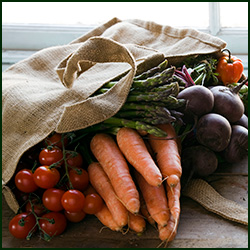
 What you eat directly affects your health and even your vision health. Whether you get your food from your local grocer, your community’s farmer’s market, your local CSA, or your own garden, you can eat the foods that will best support healthy vision.
Fresh versus Store-Bought
The biggest issue between store-bought and fresh produce from your own garden or your local farmer’s market is that fresh Continue reading “From Farm to Table: Eye Care Veggies – Part I”
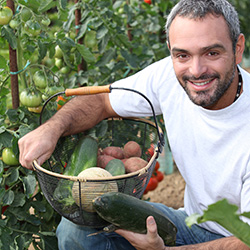 Growing your own is the very best option. From the garden straight to the salad or the pan is the finest choice for flavor, nutrition, and satisfaction! You may not have garden space or the inclination to garden, but you can accomplish a surprising amount in less space than you thought possible. Don’t skip the essentials, below.
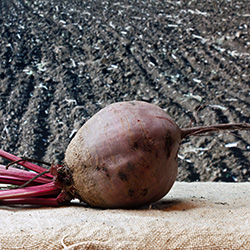 Now, let’s learn about the foods that you can readily find not only at your grocery store, but in your farmer’s market or CSA and which you could also easily grow on your own. These provide great support for your vision health.
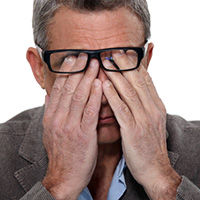 A strong study in the International Journal of Ophthalmology found that omega-3 fatty acids significantly reduced dry eyes. Dry eye syndrome is becoming more prevalent in the West from extended close-up work on computers and phone screens. The condition can also be caused by an autoimmune disorder; it can accompany menopause; and it can have other causes. Symptoms include burning, dryness, irritation, a feeling of grit, and difficulty reading for extended periods.
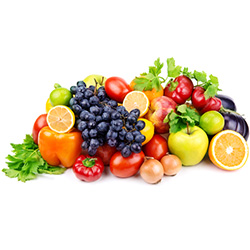 The links between antioxidants and vision health are strong. Antioxidants are the antidote to oxidization. Normal metabolism creates free radicals. These are atoms that lack an electron. Free radicals roam about the body, scavenging electrons and stealing electrons from healthy cells. This results in permanent damage to these afflicted cells which ultimately can result in disease. Significant research has shown that antioxidants protect against this cellular damage and are essential for maintaining health. The eye is especially vulnerable to free radical damage. Therefore, providing the body with sufficient antioxidants
 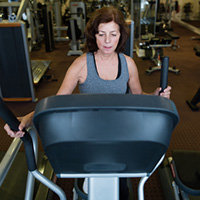 A recent study found that aerobic exercise had a larger positive effect on the brain than stretching alone.[1. Radiological Society of America Press Release, November 30, 2016. “Aerobic Exercise Preserves Brain Volume and Improves Cognitive Function.” Suzanne Craft, Ph.D., Youngkyoo Jung, Ph.D., and Christopher T. Whitlow, M.D., Ph.D.] The volume of the brain increased, according to MRIs. Also, the aerobic exercise group had a significant improvement on executive brain functioning tests. The researchers are hoping to find ways to head off or reduce the impact of Alzheimer’s Disease in seniors.
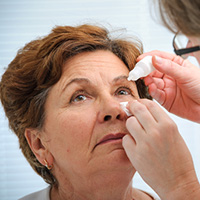 Eye drops may soon replace gene therapy injections for Age-Related Macular Degeneration and Diabetic Retinopathy. [1. “Facile Noninvasive Retinal Gene Delivery Enabled by Penetratin” by Chang Liu, Kuan Jiang, Lingyu Tai, Yu Liu, Gang Wei, Weiyue Lu, and Weisan Pan. ACS Applied Materials & Interfaces, 2016, 8 (30), pp 19256–19267 DOI: 10.1021/acsami.6b04551 Publication Date (Web): July 11, 2016] Delivering drugs to the back of the eye currently requires an invasive injection. The associated discomfort discourages many patients from consenting to this type of treatment. The new delivery technique is special eye drops that gently make their way to the back of the eye.
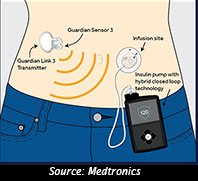 The Food and Drug Administration has granted approval for a new artificial pancreas that is hailed as a breakthrough for patients with Type I diabetes. Manufactured by Medtronic Plc, the MiniMed 670G[1. “FDA approves Medtronic’s ‘artificial pancreas’ for diabetes,” by Ransdell Pierson and Toni Clarke. Reuters Health News. 9/28/16] combines an insulin pump with an insulin sensor. The sensor sends blood sugar data to the pump every five minutes. Then, the pump releases the correct amount of insulin. This technology saves finger-pricks and frequent monitoring of blood glucose levels.
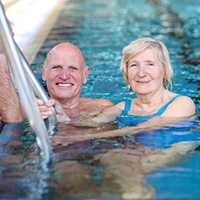 While Americans spend billions of dollars each year on how they LOOK, little attention is given to how they SEE. Seniors are especially vulnerable to eye diseases such as glaucoma, age-related macular degeneration, and cataracts, as well as hypertension-related eye damage such as retinal vein occlusion.
 As we age, our chances of developing a serious vision problem increase significantly. More than half of people over the age of 70 years old have an eye condition such as cataracts, glaucoma, and macular degeneration; people with diabetes often develop diabetic retinopathy. These limiting conditions decrease the quality of life. Being a retired senior means having time to enjoy life, read, travel, play golf, enjoy hobbies, and socialize with friends and family. However, participating in these activities requires clear vision.