
 Dry eyes are among the most prevalent issues reported by our customers and patients. Women experiencing perimenopause and menopause frequently have dry eyes. However, it is increasingly observed across all age groups, largely attributable to prolonged use of digital devices such as computers, laptops, tablets, and smartphones. [1. Stapleton F, Alves M, Bunya VY, et al. TFOS DEWS II epidemiology report. Ocul Surf. 2017;15(3):334–365.] [2. LeBlanc AG, Gunnell KE, Prince SA, Saunders TJ, Barnes JD, Chaput J-P. The ubiquity of the screen: an overview of the risks and benefits of screen time in our modern world. Transl J Am Sports Med. 2017;2(17):104–113.] This extended screen time alters blinking patterns over time and exposes us to environmental pollutants, contributing to the development of dry eye symptoms and meibomian gland dysfunction. Continue reading “Dry Eyes, Computer Screens, and Meibomian Gland Dysfunction (MGD)”
Category: Eye Conditions
How to Keep Your Brain Healthy–And Your Eyes!
 What is the relationship between brain health and eye health as we age? Our brains adapt and form new connections throughout our lives. Nutrition, lifestyle choices, and early detection play major roles in keeping the brain healthy, and the eyes. Find out about Natural Eye Care’s holistic approach to brain and eye health. Continue reading “How to Keep Your Brain Healthy–And Your Eyes!”
Eye Studies Reveal Natural Eye Care Effectiveness
 At Natural Eye Care, we view vision health from a whole-body perspective. Eye studies can reveal how to manage the visual system. However, the health of the eyes is connected to overall health. The visual system requires as much as 25% of the nutrients we take into our bodies. The brain needs even more. How we take care of ourselves goes a long way in helping to preserve healthy vision. Personal care includes emotional balance, and lifestyle considerations such as eating a healthy diet, exercising regularly, and targeted supplementation. Continue reading “Eye Studies Reveal Natural Eye Care Effectiveness”
Why Avoid Myopia? How to Reduce the Risk of Nearsightedness
 Myopia is one of the main reasons people start wearing glasses when they are young. Far objects are blurry, and close-up objects are clear when you are nearsighted or myopic. Did you know that lifestyle and daily habits can have a big impact on the development of myopia? Reducing the risk of myopia in children and teens is essential because this eye condition can lead to more serious eye problems. For example, it increases the risk of retinal detachment, glaucoma, and cataracts. Myopia can also strike adults. Avoiding corrective lenses entirely should be enough motivation to head off the problem. What can you do to help yourself and your family? Continue reading “Why Avoid Myopia? How to Reduce the Risk of Nearsightedness”
NMN (Nicotinamide Mononucleotide): The New Anti-Aging Nutrient?
 Is it possible that NMN – nicotinamide mononucleotide – is an anti-aging nutrient? This chemical occurs naturally in the body, but levels drop in seniors. Researchers are finding that taking NMN supplements appears to have benefits. How does NMN work? What does it do? And, could seniors slow down the aging process by taking it?
Continue reading “NMN (Nicotinamide Mononucleotide): The New Anti-Aging Nutrient?”
Molecular Hydrogen for Macular Degeneration, Cataracts, and Diabetic Retinopathy
 Molecular Hydrogen is gaining popularity as a therapy for everything from skin problems to eye disease to arthritis to cancer. Is molecular hydrogen the latest supplement craze? Or is there merit to using this therapy? Find out how it works, and look at the research.
The Smallest Molecule Has Advantages
Hydrogen is the very first molecule on the Periodic Table of Elements. As the smallest molecule, hydrogen can reach places that other molecules cannot. For example, hydrogen easily crosses the blood-brain barrier and reaches the interior of the eyes. It can also get into the smallest parts of the cells, which many other antioxidants cannot. Modular hydrogen is two molecules of hydrogen bonded to each other. Water is H2O — two molecules of hydrogen plus a molecule of oxygen. Molecular hydrogen is written as H2. Continue reading “Molecular Hydrogen for Macular Degeneration, Cataracts, and Diabetic Retinopathy”
Sleep Is Fundamental for the Eyes, Brain and Overall Health
 Getting enough sleep is crucial to your daily life and long-term health. However, many seniors struggle to get sufficient sleep. They also may have difficulty with the quality of sleep. What do the statistics show? How bad is sleep deprivation for your health? And what are some natural solutions?
Shocking Sleep Statistics
Sleep comes naturally. So why do we see these shocking sleep statistics? Continue reading “Sleep Is Fundamental for the Eyes, Brain and Overall Health”
Alzheimer’s Disease, Glaucoma and Macular Degeneration: New Research
 New research studies have found strong relationships between lifestyle and the aging brain. How can you help prevent or delay Alzheimer’s Disease and other forms of dementia? The eye’s retina is brain tissue. Not surprisingly, researchers have found connections between Alzheimer’s Disease, glaucoma, and lifestyle. What does the new research show? Are nutrition, supplements, exercise, and smoking avoidance shown to help?
What Are The Chances?
By the age of 65, 10% of seniors have Alzheimer’s Disease. Every five years, the risk doubles. Instead of waiting for any type of dementia to strike, you can take steps right now!
Alzheimer’s Disease is a complex brain disease. Amyloid-beta plaque builds up in the brain. Early symptoms include memory loss, impaired judgment, disorientation, losing items, and personality changes. Later, the brain is fully impaired, resulting in the need for caregivers. Multiple systems in the brain break down, including: Continue reading “Alzheimer’s Disease, Glaucoma and Macular Degeneration: New Research”
Taurine: An Amino Acid Crucial for Health and Aging
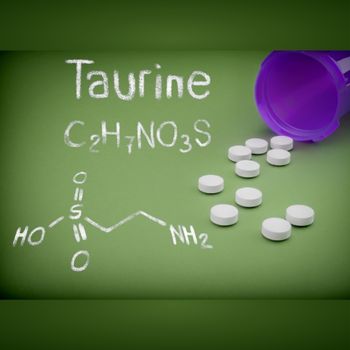 Taurine is an amino acid that your body manufactures and obtains from food. Crucial to health, taurine has many benefits for the eyes, heart, and brain. It is also an antioxidant that reduces inflammation and bad cholesterol levels. However, seniors often have taurine levels that are 80% lower than younger people.[1. Ito T, Yoshikawa N, Inui T, et al. Tissue depletion of taurine accelerates skeletal muscle senescence and leads to early death in mice. PLoS One. 2014;9(9):e107409] [2. Singh P, Gollapalli K, Mangiola S, et al. Taurine deficiency as a driver of aging. Science. 2023 Jun 9;380(6649):eabn9257.]
Night vision, eye health, cardiovascular fitness, brain health, the gastrointestinal system, immunity, bones, and diabetes are all linked to taurine.[3. Ibid. Science. 2023 Jun 9;380(6649):eabn9257] This article covers the benefits of this amino acid and how to check your taurine levels. It also discusses ways to get extra taurine if needed. Continue reading “Taurine: An Amino Acid Crucial for Health and Aging”
Omega-3 Fatty Acids and Carotenoids Fight Macular Degeneration
 Age-related macular degeneration is an eye disease you do not want to get! One of the treatments is injections directly into the eye on a regular basis. The consequences can be devastating. The loss of central can steal your driving independence and your ability to recognize faces, watch TV, read, do crafts and hobbies, and cook. Research studies on carotenoids and essential fatty acids such as omega-3 fatty acids show hope for preventing and supporting Age-Related Macular Degeneration (ARMD or AMD). Continue reading “Omega-3 Fatty Acids and Carotenoids Fight Macular Degeneration”