
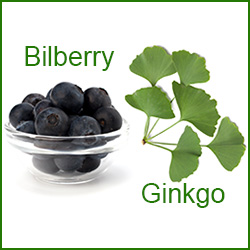
 Natural Eye Care has created a new antioxidant supplement, “Dr. Grossman’s Bilberry/Ginkgo Combination Wild Crafted Extract Formula” to help support vision health and circulation. These natural extracts contain powerful antioxidants that counteract free radicals. The formula is designed to help prevent cellular damage, and even reverse it. Many eye diseases, including macular degeneration, cataracts, and glaucoma, are rooted in cellular damage from free radicals.[1. Alpha-Lipoic Acid Antioxidant Treatment Limits Glaucoma-Related Retinal Ganglion Cell Death and Dysfunction,” June 2013, https://www.ncbi.nlm.nih.gov/pmc/articles/PMC3673940/] [2. Ophthalmic Res. 2010;44(3):191-8. doi: 10.1159/000316476. Epub 2010 Sep 9. “Free radicals, antioxidants and eye diseases: evidence from epidemiological studies on cataract and age-related macular degeneration.” Fletcher AE]
Bilberry for Vision
A relative of the blueberry, bilberry contains Continue reading “New Bilberry and Ginkgo Antioxidant Extract Formula from Dr. Marc Grossman”
 Everywhere you look, sunglasses are for sale! Sunglasses are found in malls, street corner vendor stalls, drug stores, sports stores, and even supermarkets. Prices vary from $2 to $300. Did you know that a high percentage of the protecting effects advertised are mislabeled? How can you find a pair of sunglasses that really provides protection against the harmful effects of sunlight? Does a higher price mean the glasses are better?
 A strong study in the International Journal of Ophthalmology found that omega-3 fatty acids significantly reduced dry eyes. Dry eye syndrome is becoming more prevalent in the West from extended close-up work on computers and phone screens. The condition can also be caused by an autoimmune disorder; it can accompany menopause; and it can have other causes. Symptoms include burning, dryness, irritation, a feeling of grit, and difficulty reading for extended periods.
 The links between antioxidants and vision health are strong. Antioxidants are the antidote to oxidization. Normal metabolism creates free radicals. These are atoms that lack an electron. Free radicals roam about the body, scavenging electrons and stealing electrons from healthy cells. This results in permanent damage to these afflicted cells which ultimately can result in disease. Significant research has shown that antioxidants protect against this cellular damage and are essential for maintaining health. The eye is especially vulnerable to free radical damage. Therefore, providing the body with sufficient antioxidants
 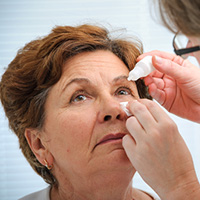 Eye drops may soon replace gene therapy injections for Age-Related Macular Degeneration and Diabetic Retinopathy. [1. “Facile Noninvasive Retinal Gene Delivery Enabled by Penetratin” by Chang Liu, Kuan Jiang, Lingyu Tai, Yu Liu, Gang Wei, Weiyue Lu, and Weisan Pan. ACS Applied Materials & Interfaces, 2016, 8 (30), pp 19256–19267 DOI: 10.1021/acsami.6b04551 Publication Date (Web): July 11, 2016] Delivering drugs to the back of the eye currently requires an invasive injection. The associated discomfort discourages many patients from consenting to this type of treatment. The new delivery technique is special eye drops that gently make their way to the back of the eye.
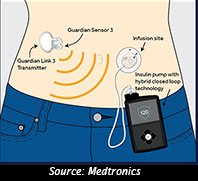 The Food and Drug Administration has granted approval for a new artificial pancreas that is hailed as a breakthrough for patients with Type I diabetes. Manufactured by Medtronic Plc, the MiniMed 670G[1. “FDA approves Medtronic’s ‘artificial pancreas’ for diabetes,” by Ransdell Pierson and Toni Clarke. Reuters Health News. 9/28/16] combines an insulin pump with an insulin sensor. The sensor sends blood sugar data to the pump every five minutes. Then, the pump releases the correct amount of insulin. This technology saves finger-pricks and frequent monitoring of blood glucose levels.
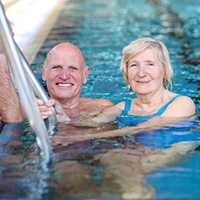 While Americans spend billions of dollars each year on how they LOOK, little attention is given to how they SEE. Seniors are especially vulnerable to eye diseases such as glaucoma, age-related macular degeneration, and cataracts, as well as hypertension-related eye damage such as retinal vein occlusion.
 As we age, our chances of developing a serious vision problem increase significantly. More than half of people over the age of 70 years old have an eye condition such as cataracts, glaucoma, and macular degeneration; people with diabetes often develop diabetic retinopathy. These limiting conditions decrease the quality of life. Being a retired senior means having time to enjoy life, read, travel, play golf, enjoy hobbies, and socialize with friends and family. However, participating in these activities requires clear vision.
 Americans are spending at least 5 hours per day close-up looking at computers, tablets and smartphones.[1.
  Chinese Medicine can support eye health and help preserve vision. This traditional modality is helpful for people looking to reduce the risk developing eye disease and maintain healthy vision. Additionally, patients with existing eye conditions such as chronic dry eyes, cataracts, glaucoma, macular degeneration, and eye floaters can benefit from Traditional Chinese Medicine as part of their treatment plan.