
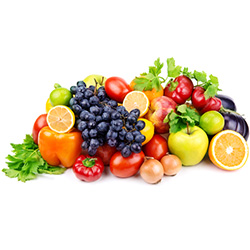
 The links between antioxidants and vision health are strong. Antioxidants are the antidote to oxidization. Normal metabolism creates free radicals. These are atoms that lack an electron. Free radicals roam about the body, scavenging electrons and stealing electrons from healthy cells. This results in permanent damage to these afflicted cells which ultimately can result in disease. Significant research has shown that antioxidants protect against this cellular damage and are essential for maintaining health. The eye is especially vulnerable to free radical damage. Therefore, providing the body with sufficient antioxidants Continue reading “Antioxidants, Eye Disease and Oxidative Stress”
Category: Vitamins
Keep Your Eyes Young and Healthy: Avoid Cataracts, Macular Degeneration, Glaucoma
 As we age, our chances of developing a serious vision problem increase significantly. More than half of people over the age of 70 years old have an eye condition such as cataracts, glaucoma, and macular degeneration; people with diabetes often develop diabetic retinopathy. These limiting conditions decrease the quality of life. Being a retired senior means having time to enjoy life, read, travel, play golf, enjoy hobbies, and socialize with friends and family. However, participating in these activities requires clear vision.
We can learn to help preserve our vision and to become active Continue reading “Keep Your Eyes Young and Healthy: Avoid Cataracts, Macular Degeneration, Glaucoma”
Opposite Vitamin A Recommendations for Stargardt’s Disease vs Retinitis Pigmentosa
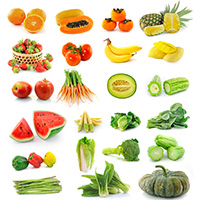 Stargardt’s Disease and Retinitis Pigmentosa are genetic eye diseases that involve the metabolism of vitamin A. However vitamin A has a different impact on the course of each disease. A recent study[1. BMC Ophthalmol. 2016; 16: 13. “Dietary profile of patients with Stargardt’s disease and Retinitis Pigmentosa: is there a role for a nutritional approach?” by Francesco Sofi et. al.] examined the total intake of vitamin A in both types of patients. It found that:
- Stargardt’s patients with high A intake had low visual acuity
- Stargardt’s patients with low A intake had better visual acuity.
- Retinitis Pigmentosa patients with low A intake had low visual acuity.
- Retinitis Pigmentosa patients with high A intake had better visual acuity
Continue reading “Opposite Vitamin A Recommendations for Stargardt’s Disease vs Retinitis Pigmentosa”
Rod-Cone Dystrophy – A Complete Overview by Natural Eye Care
 Rod-Cone Dystrophy is a genetically-based deterioration of vision caused by damage to the photoreceptors in the eye. Rods and cones are the photoreceptor cells in the retina that give us daytime and night time vision. Genes that provide the blueprint for manufacturing proteins crucial to the eye’s rods and cones are damaged. Without enough of these proteins, vision deteriorates and blindness may result.
Much of the current research into rod-cone dystrophy is focused on genetic research. Scientists are busy identifying the faulty genes and how they function. Stem cells or other genetic therapy offers hope for a treatment and possibly cure in the future. In the meantime, nutritional and lifestyle choices may Continue reading “Rod-Cone Dystrophy – A Complete Overview by Natural Eye Care”
AMD Research: Part 1
 Age-Related Macular Denegation is a significant cause of vision loss that can often be managed and even improved through targeted nutritional support. It affects mostly people over age 50. While the precise cause of ARMD is not clear, oxidative damage is suspected as being a major factor. It strikes the elderly possibly due to poor diet and nutritional intake over a lifetime, less efficient absorption of nutrients and poor circulation as the body ages. The care needed by vision-impaired elderly could become overwhelming. Let’s take a look at some of the newest research in preventing macular degeneration, as well as treatment and support options.
Symptoms & Diagnosis
Central vision is possible because of the macula. It is a small, yellow-colored Continue reading “AMD Research: Part 1”
Genetic Variant and Vitamin D Deficiency Linked to Macular Degeneration
 Women with specific genes may be more likely to develop age-related macular degeneration (AMD) if they are deficient in Vitamin D, according to new research in JAMA Ophthalmology.
The genetic variant (Y402H) studied is the complement factor H gene, called CFH for short. The genes in question are related to the immune system. The development of macular degeneration is believed to involve inflammation. In AMD, drusen, lipids (fats) and proteins build up in the eye. The body perceives the drusen to be an invader and attacks it. The genes appear to cause a stronger immune response. Continue reading “Genetic Variant and Vitamin D Deficiency Linked to Macular Degeneration”
How to Gain Optimal Vitamin D Levels from the Sun
 Vitamin D is responsible for overall immune system health as well as vastly reducing the risk of numerous chronic diseases and cancers. The best way to receive vitamin D3 is through the sun, but it is essential to achieve a fine balance between healthy exposure and overexposure.
UVB rays from the sun present an unusual contradiction. They are the wavelength that can quickly cause sunburn on the surface of the skin, but they are also essential to vitamin D production. The body requires sun exposure to convert a cholesterol derivative into vitamin D3.
In order to gain safe and adequate exposure to UVB, a Continue reading “How to Gain Optimal Vitamin D Levels from the Sun”
Watermelon Helps Fight Heart Disease, Diabetes, and Eye Disease
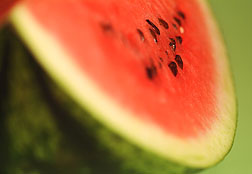
File this heart healthy fact away for next summer’s barbecue season: watermelon can help fight hypertension.
Florida State University gave nine prehypertensive study participants the amino acid L-citrulline/L-arginine from watermelon extract for six weeks and all of them exhibited improved arterial function and lower aortic blood pressure.
Watermelon is also a source of vitamins A, B6, C, fiber, potassium and the antioxidant lycopene. Antioxidants are vital to eye health and help to fight the free radical oxidation damage that causes eye diseases like macular degeneration.
Study author Arturo Figueroa highlights another condition that could benefit from daily watermelon intake: diabetes. “Individuals with increased blood pressure and arterial stiffness especially those who are older and those with chronic diseases such as type 2 diabetes would benefit from L-citrulline in either the synthetic or natural (watermelon) form,” he said. “The optimal dose appears to be four to six grams a day.”
Diabetes can lead to the eye condition diabetic retinopathy.
Learn more about nutrients in food that can treat and prevent disease.
Source: https://www.medicalnewstoday.com/articles/204527.php
Vitamin A Deficiency Causes Blindness; Prevent Night Blindness With Nutrition
Vitamin A deficiency is uncommon in the U.S., but it affects many people in the developing world. One of first symptoms of a vitamin A deficiency is night blindness, which, if untreated can develop into full scale blindness. According to the World Health Organization Report on Vitamin A Deficiency, night blindness is estimated to affect 5.2 million preschool-age children and 9.8 million pregnant women around the globe.
Writing on a case in The Lancet, doctors who treated a pregnant woman who came to the emergency room after several weeks of progressive sight loss described this particular case, “Vitamin A deficiency can be secondary to poor intestinal absorption due to weight loss surgery, Crohn’s disease or pancreatic dysfunction. Our patient had anorexia nervosa and had limited her diet to white onions, white potatoes, and red meat for the past 7 years.”
We usually recommend taking vitamin A in the form of beta-carotene, which converts to vitamin A with a small amount of fat in the diet. Food sources of vitamin A include: yellow and orange vegetables (including yams, carrots, mangoes, cantaloupe, apricots, butternut squash, and sweet potatoes), and asparagus, spinach, kale, bok choy. If you wish for additional supplementation, the recommended dose is approximately 15,000 to 25,000 I.U. of beta-carotene daily.
Learn more about food as sources of vital nutrients at our website.
Diminished Cognitive Function in Elderly Linked to Homocysteine
 Homocysteine is an amino acid that can be measured with a simple blood test. The study, which appeared in the Journal of Affective Disorders in August 2013, studied 358 people aged 50 and up who had symptoms of depression.
They gave the subjects cognitive tests that looked at immediate and delayed memory, as well as global cognitive performance. They measured Continue reading “Diminished Cognitive Function in Elderly Linked to Homocysteine”