
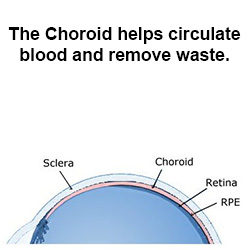
 The eye has a delicate vascular system. Eye circulation brings oxygen and nutrients to the eyes. It also removes waste products. The “choroid” is the part of the eye that circulates blood. Fats and blood clots that damage the arteries can also clog the arteries and veins in the eyes. This condition is common as people age. Poor circulation is associated with many eye diseases:
- Retinal vein occlusion is a sudden blockage that can cause serious, permanent eye damage.
- Age-Related Macular Degeneration patients have thinner choroids (thinning of the retina) – often due to lack of essential nutrients reaching the retina.
- If the choroid does not have enough oxygen, new blood vessels can form. These blood vessels unfortunately are of poor quality and often leak blood and fluids in the retina, which can result in severe vision loss (“wet” macular degeneration or choroidal neovascularization) if not treated (common treatment is an injection of either Lucentis, Avastin or EyLea to dry up the blood vessels and reduce related inflammation).
Additionally, diabetes can lead to an Continue reading “Vascular Support Packages 1 and 2 for Retinal Support and Eye Circulation”
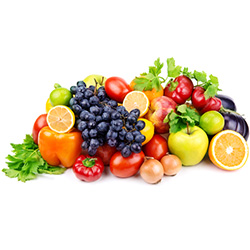 The links between antioxidants and vision health are strong. Antioxidants are the antidote to oxidization. Normal metabolism creates free radicals. These are atoms that lack an electron. Free radicals roam about the body, scavenging electrons and stealing electrons from healthy cells. This results in permanent damage to these afflicted cells which ultimately can result in disease. Significant research has shown that antioxidants protect against this cellular damage and are essential for maintaining health. The eye is especially vulnerable to free radical damage. Therefore, providing the body with sufficient antioxidants
  Middle-aged people and seniors are far more likely to develop Macular Degeneration, glaucoma, cataracts and diabetic retinopathy than those in their youth. It is true that some eye diseases strike the young. These tend to be genetically-based diseases, and they are rare. The incidence of eye diseases in the United States goes up dramatically with age:
 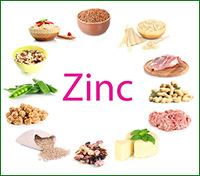 Researchers at Oregon State University found a link between chronic inflammation, immune dysfunction and zinc deficiency. [1. “Zinc deficiency enhanced inflammatory response by increasing immune cell activation and inducing IL6 promoter demethylation.” Carmen P. Wong, Nicole A. Rinaldi and Emily Ho. Molecular Nutrition and Food Research. Article first published online: 17 MAR 2015 DOI: 10.1002/mnfr.201400761] Inflammation is involved in cardiovascular disease and other diseases.
 The success of the study indicates the potential for using the drug to improve heart function in humans.
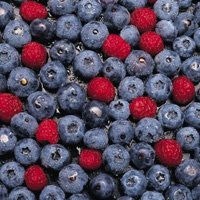 A fruit cup of mixed berries is a powerful snack: deeply colored fruits are filled with flavonoids and other antioxidants that help protect the body from disease. Antioxidants help prevent free-radical damage, which is believed to be responsible for the onset of eye diseases such as
 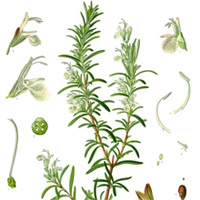 A chemical that occurs naturally in the common herb rosemary has been found to protect the eye from macular degeneration and other eye diseases. This study, published in Investigative Ophthalmology and Visual Science, is one of many recent investigations into the anti-inflammatory and antioxidant effects of the active ingredients in medicinal herbs. The compound in Rosemary is called “carnosic acid.”
 The obesity epidemic may have an impact on the health of the eyes. While scientific studies do not seem to have found a direct link between obesity and eye disease, maintaining a healthy weight supports your overall health and helps prevent diseases that can harm the eyes. Here’s why.
 A research study published in Archives of Ophthalmology showed that ingesting omega-3 fatty acids and fish affects the incidence of AMD (age-related macular degeneration, or ARMD) in women. This large study (nearly 40,000 participants) over 10 years found that women who had the highest of intake of Docosahexaenoic acid (DHA, an omega-3 fatty acid) had the lowest risk of AMD versus subjects with the lowest intake. Women who ate at least one serving of fish per week had a relative risk of AMD of 0.58 compared with women who ate less than one serving per month.