
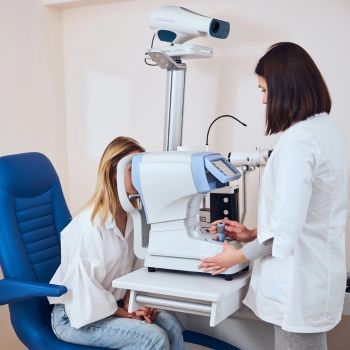
 Retinal scans are proving to be an effective way to detect early signs of diseases like diabetes, multiple sclerosis, and dementia. They can sometimes detect disease before symptoms appear. The best news about retinal scans is that they are painless and non-invasive. You may have looked into machines that scan the retina at your optometrist or eye surgeon’s office. Why are retinal scans helpful for detecting diseases that are not, technically, eye diseases? How is the retina connected to the brain and brain health? Continue reading “Retinal Scans Can Detect Diabetes, MS and Dementia Early”
Category: Diabetes
Diabetic Retinopathy, Sugar Balance and Retinal Support
 Diabetic retinopathy is a leading cause of blindness among adults. Poor blood sugar balance can damage nerves, so nerve support is crucial for people with diabetes. Diabetic retinopathy is a serious eye condition stemming primarily from imbalances in blood sugar levels. When blood sugar is not properly managed, the body’s delicate nerve tissues, including the retina, can be injured.
At Natural Eye Care, we have examined the research on nutrients that help protect the eye, including the retina and blood flow to the eye. Research has identified oxidative stress and inflammation as key contributors to the onset and development of numerous eye conditions.[1.Levkovitch-Verbin, H. (2015). Retinal ganglion cell apoptotic pathway in glaucoma: Initiating and downstream mechanisms. Prog. Brain Res, 220:37–57.] [2.Kowluru, R.A., Mishra, M. (2015). Oxidative stress, mitochondrial damage and diabetic retinopathy. Biochem. Biophys. Acta. 1852:2474–2483.] [3.Dib, B., Lin, H., Maidana, D.E., Tian, B., Miller, J.B., et al. (2015). Mitochondrial DNA has a pro-inflammatory role in AMD. Biochem Biophys Acta, 1853:2897–2906.] These conditions include macular degeneration, glaucoma, cataracts, macular edema, and diabetic retinopathy. Without intervention, these eye diseases can result in a gradual decline in vision, potentially leading to blindness. Studies suggest that incorporating specific antioxidant and anti-inflammatory nutrients may be beneficial in preventing and managing these eye disorders.[4.Rhone, M., Basu, A. (2008). Phytochemicals and age-related eye diseases. Nutr Rev, 66:465–472.]
Continue reading “Diabetic Retinopathy, Sugar Balance and Retinal Support”
Poor Circulation is Linked to Macular Degeneration, Glaucoma and Diabetic Retinopathy
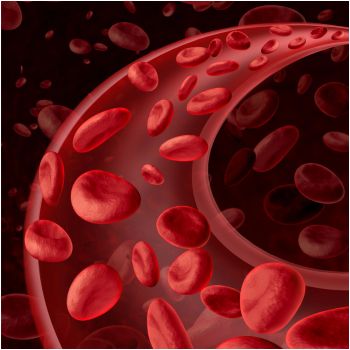 Poor circulation significantly contributes to eye diseases, including macular degeneration, glaucoma, and diabetic retinopathy. Heart disease and diabetes lead to poor circulation. Our eyes and brain require the most oxygen and nutrients, so they need healthy blood circulation. In this article, we will explore the connections between age-related macular degeneration (AMD) and poor circulation. We will also examine the relationship between heart disease and glaucoma. Additionally, we will discuss how diabetes affects circulation and leads to diabetic retinopathy.
Macular Degeneration and Poor Circulation
Age-related macular degeneration (AMD) is the leading cause of severe and irreversible vision loss in developed countries.[1.Klein R Klein BE Tomany SC Cruickshanks KJ . The association of cardiovascular disease with the long-term incidence of age-related maculopathy: The Beaver Dam Eye Study. Ophthalmology. 2003;110:636–643.] [2.Evans J Wormald R . Is the incidence of registrable age-related macular degeneration increasing? Br J Ophthalmol. 1996;80:9–14.].The macula is a tiny spot in the middle of the eye’s retina, where we get our most detailed vision. Heart disease is a major contributing factor. Numerous studies have linked hypertension and atherosclerosis with AMD.[3.Vingerling JR Dielemans I Bots ML Hofman A Grobbee DE de Jong PT . Age-related macular degeneration is associated with atherosclerosis: The Rotterdam Study. Am J Epidemiol. 1995;142:404–409.] [4.Hyman L Schachat AP He Q Leske MC . Hypertension, cardiovascular disease, and age-related macular degeneration. Age-Related Macular Degeneration Risk Factors Study Group. Arch Ophthalmol. 2000;118:351–358.] [5.van Leeuwen R Ikram MK Vingerling JR Witteman JC Hofman A de Jong PT . Blood pressure, atherosclerosis, and the incidence of age-related maculopathy: The Rotterdam Study. Invest Ophthalmol Vis Sci. 2003;44:3771–3777.] [6.Klein R Klein BE Tomany SC Cruickshanks KJ . The association of cardiovascular disease with the long-term incidence of age-related maculopathy: The Beaver Dam Eye Study. Ophthalmology. 2003;110:636–643.] Hundreds of peer-reviewed studies indicate that AMD can be very responsive to diet, exercise, and targeted supplementation.
The choroid is a thin layer of tissue in the eye’s middle wall, rich in blood vessels that supply oxygen and nutrients to the eye. Several cross-sectional studies have shown that blood flow in the choroid and retina is reduced in AMD.[7.Agnes Boltz, Alexandra Luksch, Barbara Wimpissinger, Noemi Maar, Günther Weigert, Sophie Frantal, Werner Brannath, Gerhard Garhöfer, Erdem Ergun, Michael Stur, Leopold Schmetterer; Choroidal Blood Flow and Progression of Age-Related Macular Degeneration in the Fellow Eye in Patients with Unilateral Choroidal Neovascularization. Invest. Ophthalmol. Vis. Sci. 2010;51(8):4220-4225.] [8.M.L. Hibert, Y.I. Chen, N. Ohringer, W.J. Feuer, N.K. Waheed, J.S. Heier, M.W. Calhoun, P.J. Rosenfeld and J.R. Polimeni. Altered Blood Flow in the Ophthalmic and Internal Carotid Arteries in Patients with Age-Related Macular Degeneration Measured Using Noncontrast MR Angiography at 7T. American Journal of Neuroradiology September 2021, 42 (9) 1653-1660]
Poor circulation hurts the body’s ability to provide a healthy blood supply to the retina. This appears to induce ischemia (an inadequate blood supply) and hypoxia (inadequate supply of oxygen to the body’s tissues) in the retina. The retina is essentially starved of oxygen and essential nutrients. In severe cases, dry AMD develops into the more dangerous wet AMD.
Oxidative Stress and Metabolic Syndrome
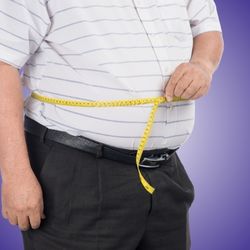 Extra weight around the belly may not seem hazardous. However, a higher abdominal circumference is one of several contributing factors to Metabolic Syndrome. As a risk factor for diabetes and cardiovascular disease, Metabolic Syndrome can creep up over time. Hormones, insulin resistance, genetics, organ dysfunction, and mitochondrial dysfunction can play a role.
Lifestyle, including nutrition and exercise, are factors that contribute to Metabolic Syndrome, and are under our control. Therefore, preventing or reversing metabolic syndrome can improve both lifespan and quality of life. Diabetic retinopathy, central retinal artery occlusion, cataract, age-related macular degeneration, glaucoma, and dry eye syndrome are eye diseases with similar underlying risk factors to Metabolic Syndrome. Oxidative stress ties into all these problems. What is the science behind Metabolic Syndrome? What can you do to head it off? Continue reading “Oxidative Stress and Metabolic Syndrome”
DHA is a Crucial Omega-3 Fatty Acid
 DHA is one of the omega-3 fatty acids that nutritionists implore us to eat. Why are grilled salmon and canned tuna part of nearly every diet and nutrition plan? Fatty fish is just one good source of DHA and other crucial nutrients. Find out how omega-3 fatty acids reduce chronic inflammation and help prevent diseases such as macular degeneration (ARMD), glaucoma, and diabetes. Pregnant people need omega-3’s to help the fetus develop. How much omega-3 fatty acids should you eat? And how do you balance them with omega-6 fatty acids, found in refined foods and certain meats? Continue reading “DHA is a Crucial Omega-3 Fatty Acid”
Physical Exercise Reduces Eye Disease and Dementia
 Physical exercise is vital for eye health and overall health. Research shows the positive impacts of exercise on common eye conditions. What is the intricate relationship between exercise and eye health? Can regular physical activity reduce the risk of age-related eye diseases? What role does nutrition play? And, can physical exercise help stave off neurological disease, heart disease, and other chronic illnesses associated with aging? At Natural Eye Care, we want to support you with knowledge and practical tips for getting the exercise you need. Continue reading “Physical Exercise Reduces Eye Disease and Dementia”
NMN (Nicotinamide Mononucleotide): The New Anti-Aging Nutrient?
 Is it possible that NMN – nicotinamide mononucleotide – is an anti-aging nutrient? This chemical occurs naturally in the body, but levels drop in seniors. Researchers are finding that taking NMN supplements appears to have benefits. How does NMN work? What does it do? And, could seniors slow down the aging process by taking it?
Continue reading “NMN (Nicotinamide Mononucleotide): The New Anti-Aging Nutrient?”
Sleep Is Fundamental for the Eyes, Brain and Overall Health
 Getting enough sleep is crucial to your daily life and long-term health. However, many seniors struggle to get sufficient sleep. They also may have difficulty with the quality of sleep. What do the statistics show? How bad is sleep deprivation for your health? And what are some natural solutions?
Shocking Sleep Statistics
Sleep comes naturally. So why do we see these shocking sleep statistics? Continue reading “Sleep Is Fundamental for the Eyes, Brain and Overall Health”
Taurine: An Amino Acid Crucial for Health and Aging
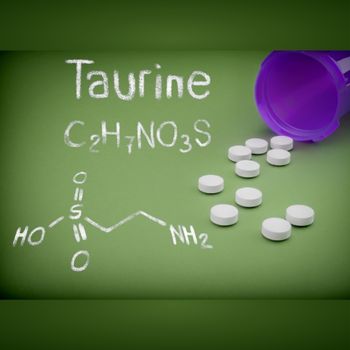 Taurine is an amino acid that your body manufactures and obtains from food. Crucial to health, taurine has many benefits for the eyes, heart, and brain. It is also an antioxidant that reduces inflammation and bad cholesterol levels. However, seniors often have taurine levels that are 80% lower than younger people.[1. Ito T, Yoshikawa N, Inui T, et al. Tissue depletion of taurine accelerates skeletal muscle senescence and leads to early death in mice. PLoS One. 2014;9(9):e107409] [2. Singh P, Gollapalli K, Mangiola S, et al. Taurine deficiency as a driver of aging. Science. 2023 Jun 9;380(6649):eabn9257.]
Night vision, eye health, cardiovascular fitness, brain health, the gastrointestinal system, immunity, bones, and diabetes are all linked to taurine.[3. Ibid. Science. 2023 Jun 9;380(6649):eabn9257] This article covers the benefits of this amino acid and how to check your taurine levels. It also discusses ways to get extra taurine if needed. Continue reading “Taurine: An Amino Acid Crucial for Health and Aging”
Nutrition for Diabetic Retinopathy
 Did you know that proper nutrition and exercise can help prevent diabetic retinopathy?[1. Bryl A, Mrugacz M, Falkowski M, Zorena K. (2022). The Effect of Diet and Lifestyle on the Course of Diabetic Retinopathy-A Review of the Literature. Nutrients. Mar 16;14(6):1252.] Diabetic retinopathy (DR) is a potentially blinding complication of diabetes that damages the eye’s retina; it is a leading cause of vision loss in the world. About 10% of Americans have diabetes. One in three people with diabetes has symptoms of diabetic retinopathy. Of these, a further one-third have vision-threatening DR, including diabetic macular edema. And yet, the condition can potentially be preventable. Continue reading “Nutrition for Diabetic Retinopathy”